



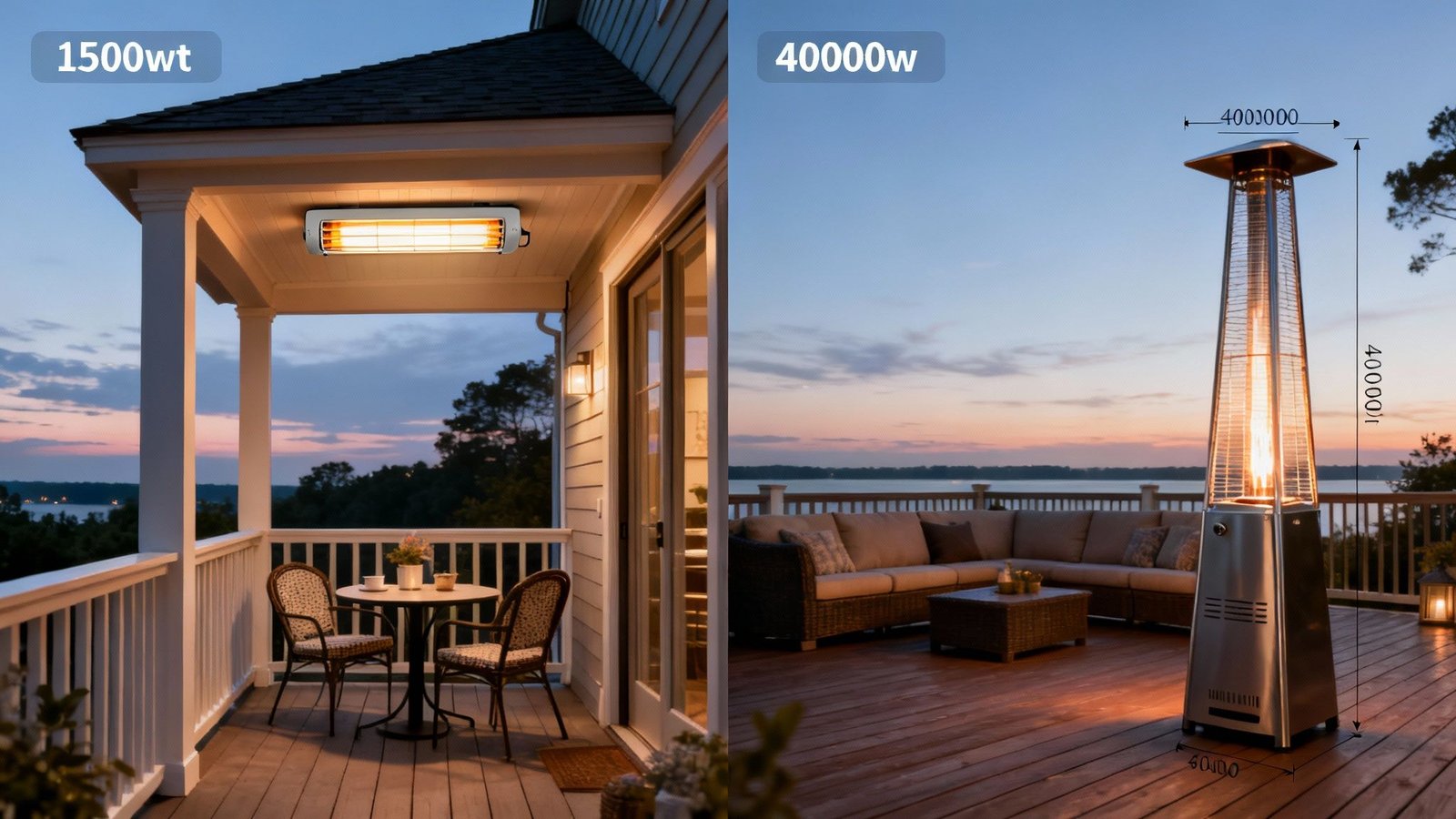
The best outdoor heaters manage to blend serious, efficient warmth with safety and style, and you’ll often see top-rated models from brands like Bromic and RADtec leading the pack. For most people, a versatile propane heater hits that sweet spot of portability and power. If you’re working with a covered patio or a more enclosed space, electric infrared models are tough to beat.
This guide is here to cut through the noise and demystify the real differences between propane, electric, and infrared heaters so you can make a smart buy. Imagine actually using your patio on a crisp autumn night or a cool spring morning, not just during those perfect summer evenings. The right outdoor heater can do just that—it transforms your deck, balcony, or backyard into a space you can enjoy year-round, effectively extending the seasons and maximizing your home’s footprint.
Finding the Perfect Heater for Your Space
Picking from the top-rated outdoor heaters can feel a bit overwhelming, but it really just boils down to matching the heater type to your actual needs. Are you trying to warm up a small, sheltered balcony or a big, open deck? Is portability a must-have, or would you rather have a permanent, set-and-forget solution? Getting clear on these core differences is the first step.
For a little more inspiration on creating the ultimate backyard setup, check out our guide on outdoor living space ideas.
Here’s a quick breakdown of the main options we’ll get into in this guide:
| Heater Type | Best For | Key Advantage | Main Consideration |
|---|---|---|---|
| Propane | Open patios, decks, and versatile use cases | High heat output and excellent portability | Requires propane tank refills |
| Electric | Covered patios, balconies, and garages | Consistent, targeted heat and easy setup | Needs access to an electrical outlet |
| Natural Gas | Permanent installations and large spaces | Powerful, continuous heat with low running costs | Requires professional installation and a gas line |
Comparing The Core Types Of Outdoor Heaters
Picking the right fuel source is the single most important decision you’ll make when shopping for an outdoor heater. This one choice ripples out to affect everything—portability, how much it costs to run, how complex the installation is, and even the kind of heat you feel on your skin.
Let’s break down the three main players in the game: propane, electric, and natural gas. Seeing how they stack up will make it much easier to figure out which one fits your backyard lifestyle.
This flowchart gives you a quick visual starting point to narrow things down based on your space.
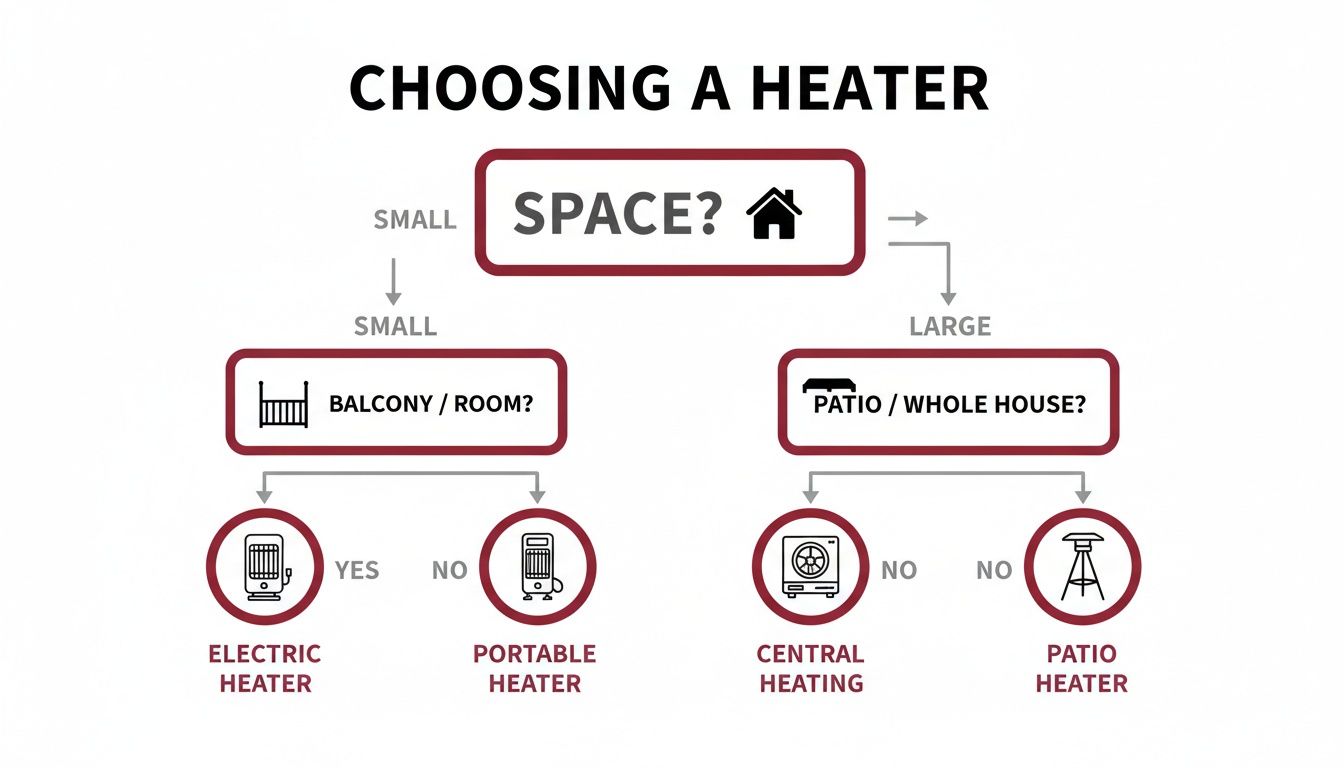
As you can see, the size and setup of your outdoor area really steer the decision. Smaller, more sheltered spaces are a natural fit for electric models, while bigger, open areas are where fuel-burning options truly shine.
Propane Heaters: The Portable Powerhouses
When you picture that classic tall, mushroom-topped patio heater you see at restaurants, you’re thinking of a propane heater. They’re incredibly popular for a good reason—they hit that sweet spot between high heat output and total portability.
These heaters run on a standard 20-pound propane tank (the same kind you use for a gas grill), which means you can roll them anywhere you need a pocket of warmth. That grab-and-go convenience is perfect for open decks, big patios, or any backyard party where the seating arrangement is likely to shift.
The trade-off for all that freedom, of course, is the need to refill or swap out those propane tanks. A single tank will give you about 10 hours of heat on a medium setting, but you’ll have to keep an eye on the fuel gauge to make sure you don’t run out of warmth right in the middle of a great conversation.
Real-World Scenario: A propane heater is perfect for a homeowner who loves hosting parties on a large, open-air deck. It can be moved from the dining area to the lounge space as the evening winds down, delivering powerful, widespread heat exactly where the guests are congregating.
Electric Heaters: The Silent And Targeted Solution
Electric outdoor heaters take a completely different approach. Instead of heating the air around them (convection), most electric models use infrared technology to directly warm up people and objects in their path. It’s a lot like the feeling of the sun on your skin—it’s direct, it’s efficient, and a gust of wind won’t just blow it all away.
This makes them a fantastic choice for smaller, semi-enclosed spaces like covered patios, balconies, or gazebos. Since they don’t produce any fumes or have an open flame, they’re a much safer option for spots with less ventilation. Plus, they’re totally silent and you never have to worry about fuel—just plug them in and you’re good to go.
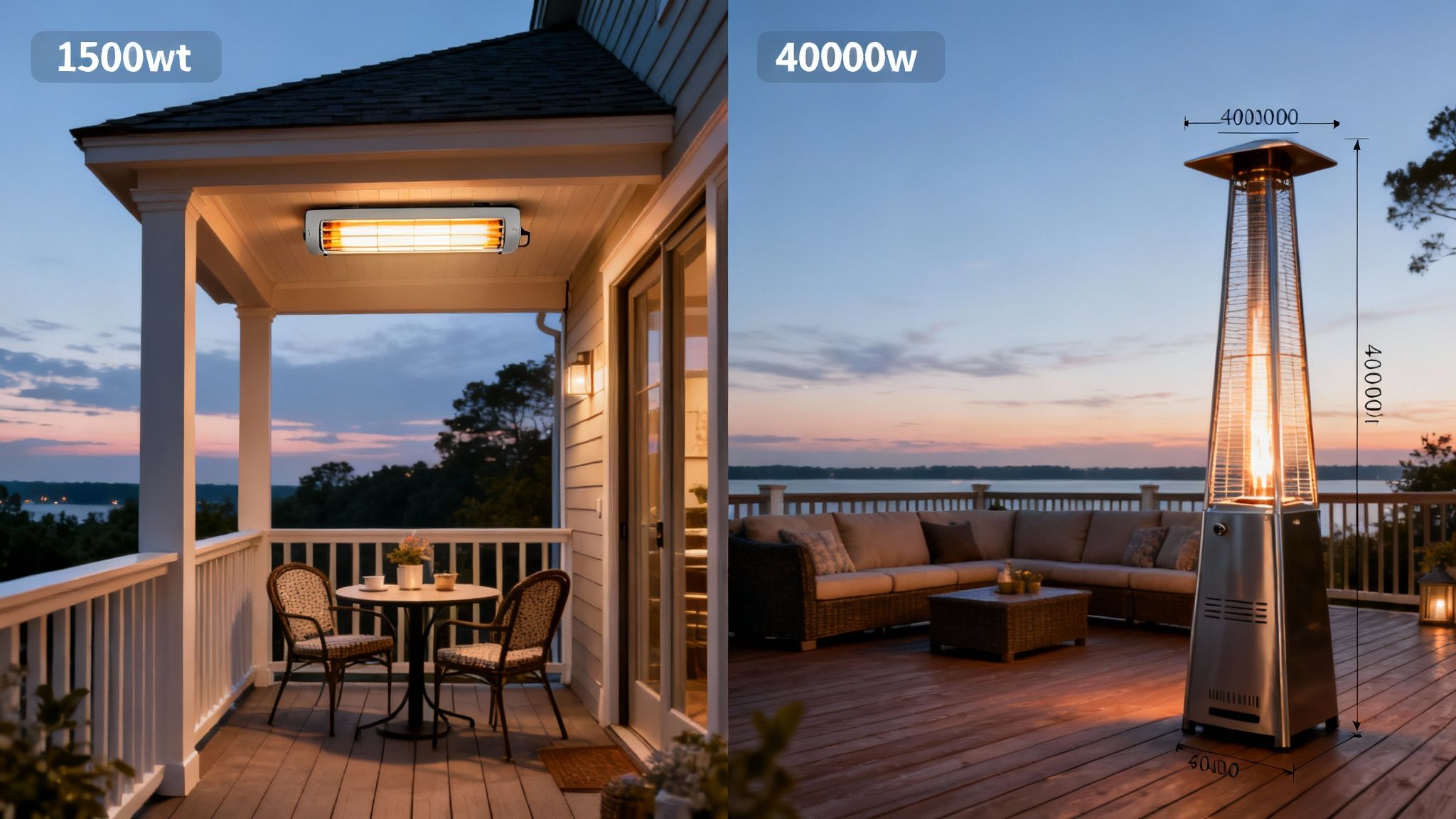
Their main limitation is being tethered to an electrical outlet, which obviously restricts where you can put them. And while they are incredibly efficient, a single 1500-watt unit just doesn’t have the raw power to heat a large, exposed deck the way a 40,000 BTU propane heater can. You’ll find them in all sorts of styles, from wall- and ceiling-mounted units to freestanding models.
For those who love the idea of a warm, ambient centerpiece but are leaning toward a different kind of flame-based warmth, checking out the best fire pit for your patio can be a great alternative that delivers both heat and a mesmerizing fire.
Natural Gas Heaters: The Permanent And Powerful Option
If you’re looking for a permanent, set-it-and-forget-it heating solution, natural gas heaters are the top of the line. These units are hooked up directly to your home’s natural gas line, giving you a powerful and continuous flow of heat without ever thinking about a tank running dry.
Natural gas is also usually the cheapest fuel source, so the ongoing running costs are lower than propane. This makes them a smart long-term investment for businesses like restaurants or for homeowners who are serious about creating a high-end, permanent outdoor living room.
The big catch is the installation. You’ll need to hire a professional to run a dedicated gas line out to your patio, which comes with a significant upfront cost and commitment. And unlike their propane cousins, these heaters are fixed in place—zero portability.
Outdoor Heater Types At a Glance
To make sense of it all, here’s a quick table that lays out the key differences between the main heater types. It’s a simple way to see the trade-offs at a glance.
| Heater Type | Heat Source | Best For | Average Cost to Run | Portability |
|---|---|---|---|---|
| Propane | Convection (heats air) | Open patios, versatile use | Moderate | High (easy to move) |
| Electric | Infrared (heats objects) | Covered patios, balconies | Low to Moderate | Low (needs an outlet) |
| Natural Gas | Convection (heats air) | Large, permanent setups | Lowest | None (fixed in place) |
Ultimately, the best choice really boils down to your specific space and how you plan to use it.
If you have a big, open area and value flexibility above all else, propane is a fantastic contender. If you’re working with a smaller, covered spot and want convenient, targeted warmth, electric is probably the way to go. And for a powerful, permanent setup with the lowest running costs, natural gas is simply unmatched.
Matching Heater Power to Your Outdoor Space
Picking one of the top rated outdoor heaters isn’t just about style; it’s about matching the right amount of power to your actual space. A heater that’s too weak for a big, open deck is just a waste of money and propane. On the other hand, a super-powered unit crammed onto a tiny balcony is overkill and can even be a safety hazard. Nailing the size is everything if you want to create an outdoor spot you’ll actually use when it’s chilly.
The language of heater power can sound a bit technical at first, but it’s pretty simple once you know the lingo. Let’s break down the two most important numbers you’ll run into.
Decoding BTUs and Watts
When you start comparing heaters, you’ll see two measurements pop up constantly: BTUs (British Thermal Units) for gas heaters and watts for electric models. Just think of these as the horsepower rating for your heater—they tell you exactly how much heat the unit can kick out.
- BTUs (British Thermal Units): This is the go-to metric for propane and natural gas heaters. A classic freestanding propane heater, the kind you see at restaurants, usually puts out around 40,000 BTUs. That’s enough juice to warm up a circle about 10 feet across, assuming there’s not much wind.
- Watts (W): You’ll see this on all electric heaters. A very common power level for an electric infrared model is 1500 watts, which happens to be the max you can safely pull from a standard 120-volt household outlet. This is perfect for targeted heat in a smaller, more defined zone, like right over your patio couch.
Knowing these numbers is step one, but they don’t tell the whole story. You have to connect them to the real-world conditions of your own backyard.
Calculating Your Heating Needs
To figure out what you actually need, you have to look at three things: the size of your space, how enclosed it is, and what your local climate is like. It’s common sense, really. A windy, open patio in a cool state is going to need a lot more firepower than a sheltered balcony in a mild climate.
A good starting point is to measure the square footage of the area you want to keep warm. Just multiply the length by the width. Once you have that number, you can use some general guidelines to get in the right ballpark.
A Quick Sizing Guide:
| Space Size (Sq. Ft.) | Type of Space | Recommended Electric Power | Recommended Gas Power |
|---|---|---|---|
| Up to 100 | Small, covered balcony | 1500W | Not recommended |
| 100 – 150 | Sheltered patio | 1500W – 3000W | 30,000 BTU |
| 150 – 250 | Open deck | Multiple 1500W units | 40,000+ BTU |
| 250+ | Large, open area | Multiple powerful units | Multiple 40,000+ BTU units |
This table is a solid baseline, but always be ready to adjust based on your specific situation.
Key Takeaway: If your patio is constantly getting hit with wind, you will need a stronger heater (or maybe a few smaller ones) to make up for all that heat being blown away. Wind is the number one enemy of outdoor warmth, especially for gas heaters that warm the air.
Real-World Sizing Scenarios
Let’s make this practical. Imagine you have a 10×10 foot (100 sq. ft.) covered balcony. It’s pretty well-protected from the wind. For a space like this, a single wall-mounted 1500-watt electric infrared heater is the perfect solution. It will beam direct, efficient warmth right onto your seating area without turning the small space into a sauna.
Now, let’s picture a totally different setup: a big 20×15 foot (300 sq. ft.) open-air deck that gets a consistent breeze. A lone 1500-watt electric heater would be completely lost out there; you’d barely feel it. This is where a brawny, freestanding 40,000 to 48,000 BTU propane heater comes in. You need that high output and wide heat radius to create a comfortable bubble of warmth in such an exposed spot. For bigger parties, you might even think about getting a second one.
A Spotlight on RADtec’s Real Flame Propane Patio Heater
For most homeowners, flexibility is king. You want a heater you can roll over to the dining table for dinner, then shift to the lounge area for drinks afterward. That’s where a powerful, portable propane heater really shines. To give you a clear idea of what makes a great all-arounder, we’re putting the RADtec Real Flame Propane Patio Heater under the microscope. This popular model from RADtec, a trusted brand in outdoor heating, is an excellent example of a heater that balances power, design, and user-friendly features, making it ideal for anyone looking to extend their patio season.
Key Features & Benefits
- Serious Heat Output: This model kicks out a substantial 40,000 BTUs, which is the sweet spot for creating a cozy 10 to 12-foot bubble of warmth on a calm evening. This feature provides the practical benefit of effectively warming a standard-sized patio or deck, making outdoor gatherings comfortable even on chilly nights.
- Durable Stainless Steel Construction: It’s built with high-quality stainless steel, a material chosen for its resistance to rust and corrosion. This design detail ensures the heater can withstand the elements and maintain its sleek appearance season after season, offering better long-term value than cheaper powder-coated alternatives.
- Enhanced Portability: The heater features a set of integrated wheels, making it simple to move the unit around your outdoor space. This adds immense practical value, allowing you to reposition the heat source exactly where it’s needed most, whether it’s by the outdoor sofa or the dining set.
- Reliable Ignition and Safety: Equipped with an easy-start electronic ignition, firing it up is quick and hassle-free. It also includes an essential safety feature: an automatic tip-over switch that instantly cuts the gas supply if the heater is knocked over.
Pros & Cons
- Pros:
- Powerful Performance: At 40,000 BTUs, it provides genuinely effective warmth for open patio areas.
- Built to Last: High-quality stainless steel construction resists rust and wear.
- Effortless Mobility: The integrated wheels make it easy to reposition as needed.
- Simple Operation: The electronic ignition system is reliable and user-friendly.
- Cons:
- Ongoing Fuel Costs: Like all propane heaters, it requires regular 20 lb tank refills.
- Wind Sensitivity: The convective heat is most effective on calm nights and can be diminished by strong winds.
- Assembly Required: Initial setup is required, though most users find it straightforward.
What Customers Are Saying
Customer feedback highlights the heater’s blend of performance and convenience. Here is a summary of typical impressions:
- One owner praised its sturdy build, stating, “I was tired of heaters that felt flimsy. This one is solid, easy to move around the deck, and puts out serious heat. We used our patio a dozen more times this fall because of it.”
- Another user loved the reliable startup, commenting, “The push-button ignition works every time. It’s so much better than fiddling with lighters. It makes me actually want to use it.”
- A point of constructive feedback came from a customer in a windy area, who noted, “It’s fantastic on still nights, but a strong breeze definitely cuts down on how far the heat travels. It’s something to be aware of if your deck is very exposed.”
Alternatives to Consider
If the RADtec Real Flame doesn’t seem like the perfect fit, here are a couple of other top-rated outdoor heaters to explore:
- Bromic Tungsten Smart-Heat Electric Heater: A premium choice for covered patios. It uses efficient infrared technology for targeted warmth and offers a sleek, space-saving design by mounting to a wall or ceiling.
- RADtec Tower Flame Propane Patio Heater: If you want to add visual flair, this “pyramid” style heater showcases a dancing flame in a glass tube. It provides great ambiance along with 41,000 BTUs of heat.
What to Look for When Buying an Outdoor Heater
A great outdoor heater is about more than just raw power. It’s about smart design, long-term durability, and the critical safety features that let you actually relax and enjoy the warmth. When you’re comparing the top-rated outdoor heaters, looking beyond the BTUs and watts is what separates a good purchase from a great one.
These are the non-negotiable features you should always check for.
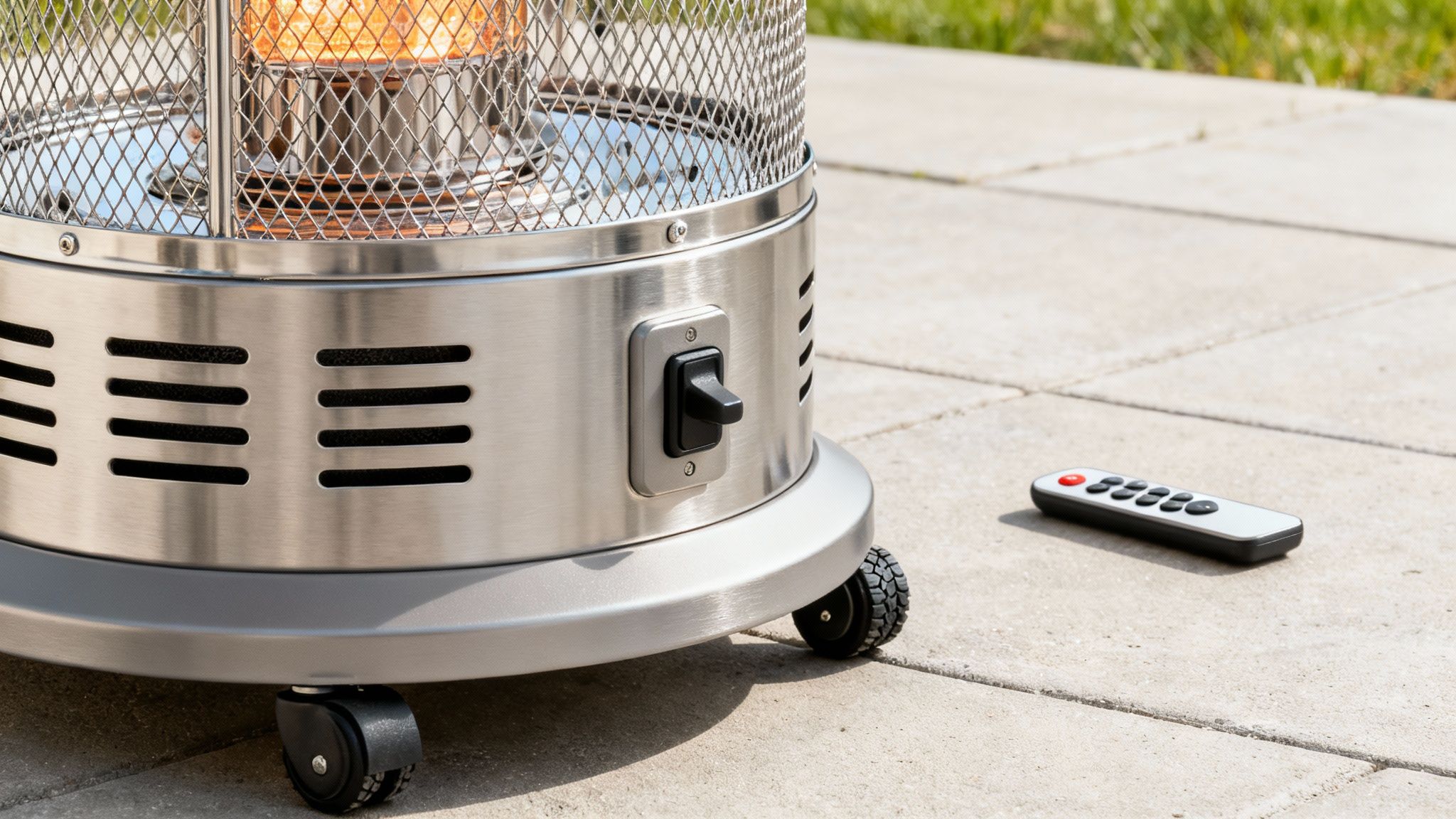
Getting these details right ensures your investment is not only effective but also safe for everyone—especially in a busy backyard with active kids or curious pets. Let’s break down the essential safety mechanisms and practical features that define a high-quality outdoor heater.
Non-Negotiable Safety Mechanisms
Safety should always be your top priority. Any reputable manufacturer will build key protections into their designs to prevent common accidents. If a heater is missing these two critical features, walk away.
- Automatic Tip-Over Switch: This is the single most important safety feature, especially for those tall, freestanding propane models. It’s a simple internal mechanism that instantly cuts the fuel supply (or electricity) if the heater gets knocked or tilted past a certain angle.
- Overheat Protection: This sensor automatically shuts the unit down if its internal temperature climbs to an unsafe level, preventing potential damage or fire hazards. It’s a standard and essential feature on any quality electric heater.
These systems work in the background to give you peace of mind, letting you focus on your guests instead of constantly monitoring the equipment. For propane models, proper setup is just as crucial as built-in features; you can learn more about the best practices to install a propane heater safely to make sure you’re following all the guidelines.
Practical Features for Better Usability
Beyond safety, certain convenience features can dramatically improve your experience. These are the little details that make a heater easy and enjoyable to use on a regular basis, transforming it from a hassle into a seamless part of your outdoor living.
Consider these enhancements when making your choice:
- Adjustable Heat Settings: Not every chilly evening is the same. The ability to dial the heat up or down lets you create the perfect level of comfort while also conserving fuel or electricity on milder nights.
- Remote Control: A common perk on modern electric heaters, a remote lets you adjust the temperature or turn the unit on and off without ever leaving your seat. It’s a small luxury you’ll quickly come to appreciate.
- Built-in Wheels: For portable propane heaters, integrated wheels are a total back-saver. They make it effortless to move a heavy unit around your patio as your gathering shifts from the dinner table to the lounge area.
Expert Insight: While high-tech features are appealing, don’t overlook the basics. A simple and reliable electronic ignition on a propane heater is far more valuable than a flimsy remote that stops working after one season.
Assessing Material Quality and Durability
An outdoor heater lives a tough life, constantly exposed to rain, humidity, and fluctuating temperatures. The materials it’s made from will determine whether it lasts for one season or ten.
Look for 304-grade stainless steel construction. This material offers excellent resistance to rust and corrosion. Yes, it costs more than the powder-coated steel you’ll find on most budget models, but it won’t start showing ugly rust spots after the first heavy rain. Choosing a superior material ensures your heater not only performs well but also keeps looking good for years to come.
Frequently Asked Questions About Outdoor Heaters
Picking the right outdoor heater usually boils down to a handful of practical questions. To help you feel confident in your final choice, I’ve pulled together the most common things people ask right before they buy. This quick guide covers everything from running costs to upkeep, giving you the clarity you need.
How much does it cost to run a propane patio heater?
Your standard 40,000 BTU patio heater will burn through a 20 lb propane tank in about 10 hours if you’re running it on a medium-to-high setting. With a tank refill costing around $20, you’re looking at roughly $2.00 per hour. Electric models, for comparison, often cost less than $0.30 per hour to run.
How far away from walls and ceilings should I place my heater?
Safety clearances are critical. For a typical freestanding propane heater, you should maintain at least 2-3 feet of clearance on all sides and above the unit. Always check the manufacturer’s manual for the specific clearance requirements for your model, as this is essential for preventing fire hazards.
How long does a 20 lb propane tank last in a patio heater?
On average, a 20 lb propane tank will provide approximately 10 hours of heat on a medium-to-high setting in a 40,000 BTU heater. On a lower setting, you can extend this time, but for consistent warmth, plan for about 10 hours of use per tank.
What maintenance does a propane heater require?
A little upkeep is key to safety and longevity. Before each use, visually inspect the hose for any cracks. Annually, clean the burner and reflector shield to remove dust and debris. Finally, wiping down the exterior, especially if it’s stainless steel, will keep it looking great and prevent buildup.
Conclusion: Making the Right Choice for Your Space
Choosing one of the top-rated outdoor heaters comes down to matching its features to your specific needs. For those seeking a powerful, portable, and reliable solution for an open patio, the RADtec Real Flame Propane Heater is a fantastic all-around choice. Its durable construction, user-friendly design, and substantial heat output provide genuine value and will significantly extend the time you can spend enjoying your outdoor living area. By considering your space, budget, and desired features, you can make an informed decision and invest in a heater that will bring warmth and comfort to your home for many seasons to come.
