



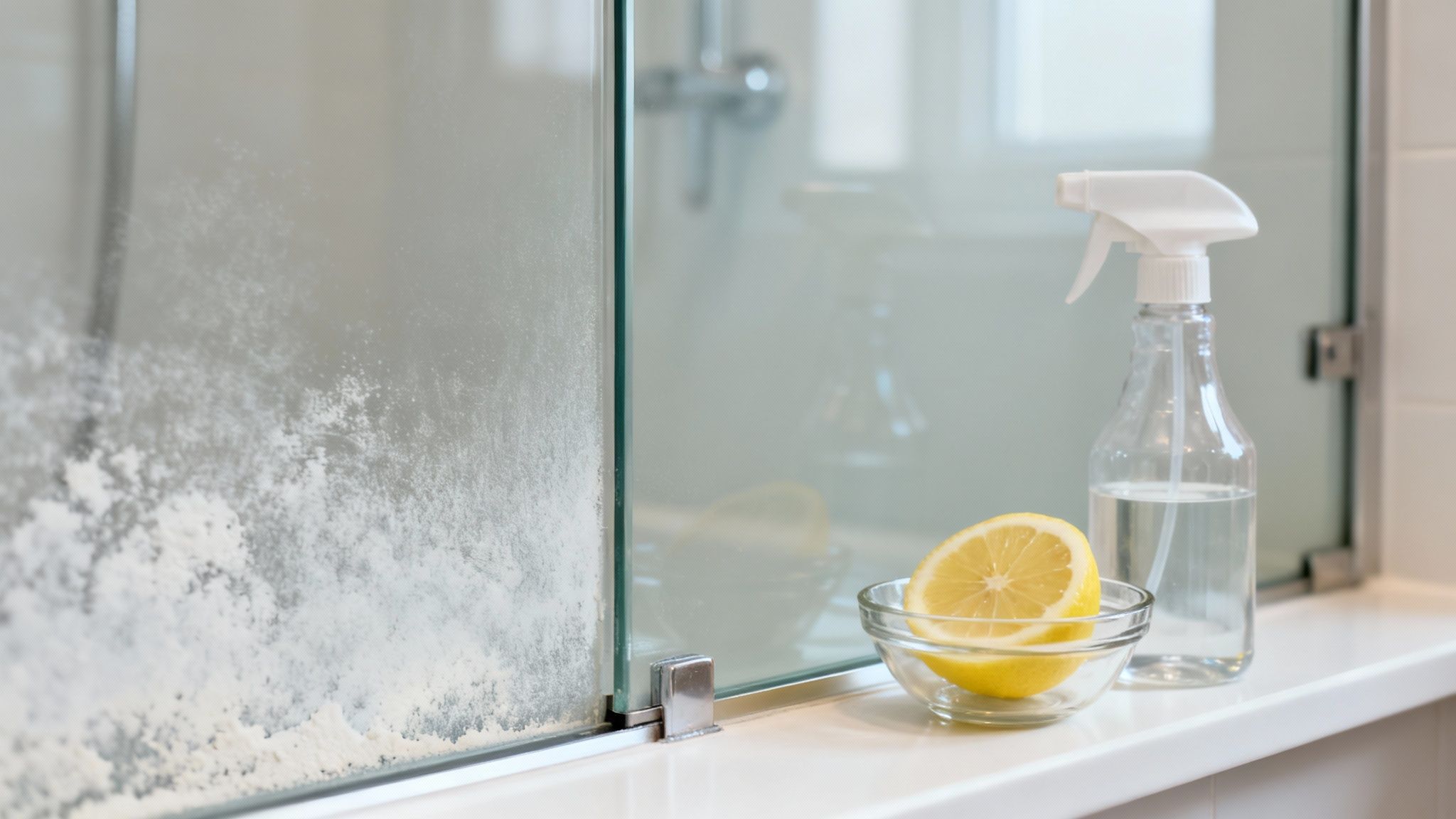
To get rid of those chalky, stubborn hard water stains, you need to fight chemistry with chemistry. The secret weapon is already in your pantry: a simple acid like distilled white vinegar or lemon juice. These natural cleaners are brilliant at dissolving the mineral deposits—mostly calcium and magnesium—that get left behind when hard water evaporates. Just apply the liquid, give it 10-15 minutes to work its magic, then scrub and rinse.
Understanding Hard Water Stains
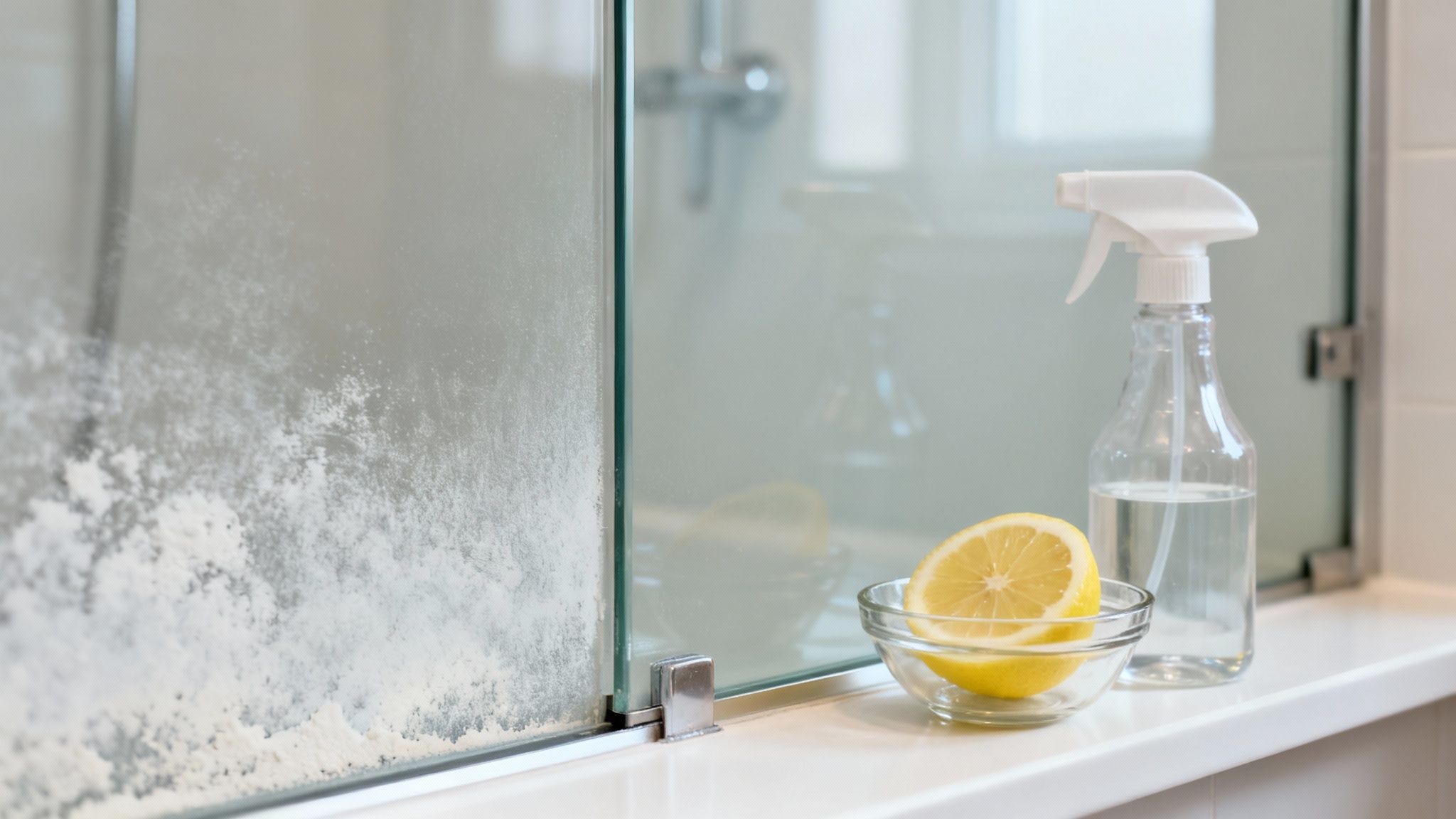
If you’ve ever spotted cloudy film on your shower door or white, crusty buildup on your faucets, you know the frustration of hard water stains. These marks are the leftovers of a simple process: your home’s water contains dissolved minerals, and in “hard” water areas, the concentration of calcium and magnesium is especially high.
When water dries on a surface, the H₂O evaporates, but the minerals stay put. Over time, they build up into a chalky deposit known as limescale.
This isn’t just a small-scale nuisance; it’s a massive issue. The market for hard water stain removers has ballooned to USD 1.82 billion, which tells you just how many of us are scrubbing away at this problem. In North America alone, a staggering 85% of homes have hard water. States like Arizona, for instance, deal with such high mineral content that the constant battle against limescale can seriously dull a home’s shine. You can find more details on the market’s growth in this report from Growth Market Reports.
Your First Line of Defense
Thankfully, you don’t need a cabinet full of harsh chemicals to win this fight. The most powerful tools against these alkaline mineral deposits are actually common household acids. The acetic acid in vinegar and the citric acid in lemon juice create a chemical reaction that breaks down the tough crystalline structure of limescale, making it simple to wipe away.
Think of it less like scrubbing and more like a chemical reset for your surfaces. The acid does the heavy lifting for you.
- White Vinegar: Its acetic acid is a powerhouse solvent that effortlessly cuts through the buildup on faucets, showerheads, and glass.
- Lemon Juice: The citric acid not only dissolves mineral deposits but also leaves behind a fresh, clean scent as a bonus.
To make it easier to choose the right tool for the job, here’s a quick comparison of these two natural heroes.
Quick Guide to Natural Hard Water Stain Removers
| Ingredient | Active Component | Best For | Mixing Ratio (with water) | Application Time |
|---|---|---|---|---|
| White Vinegar | Acetic Acid | Tough, set-in stains on faucets, shower heads, toilets, and glass. | 1:1 for general use; undiluted for heavy buildup. | 15-30 minutes |
| Lemon Juice | Citric Acid | Lighter stains, removing soap scum, and shining chrome. Great for a fresh scent. | 1:1 for spray cleaners; undiluted for direct application. | 10-20 minutes |
Both are fantastic, but vinegar generally packs a bigger punch for older, tougher stains. Lemon juice is perfect for routine cleaning and leaving things smelling great.
Key Takeaway: The secret to defeating hard water stains isn’t brute force—it’s using acidic cleaners to dissolve the alkaline mineral deposits. Your kitchen already has everything you need.
By harnessing the power of these simple ingredients, you can start restoring the sparkle to your home’s surfaces right away. This guide will walk you through exactly how to apply these solutions for the best results in every room.
Your Pantry Holds the Secret to Beating Hard Water
Forget wandering down the chemical aisle at the store. The best tools you have for fighting hard water stains are probably sitting in your kitchen pantry right now, just waiting for you to put them to work. With a couple of simple, eco-friendly ingredients, you can mix up some seriously powerful cleaning solutions that dissolve mineral buildup without the harsh fumes or high price tag.
The secret weapon in these DIY cleaners is their natural acidity. Things like white vinegar and lemon juice contain acetic and citric acids, which create a chemical reaction with the alkaline mineral deposits (calcium and magnesium). This reaction breaks down the crusty buildup, making it simple to just wipe away.
Turn Up the Heat with the Heated Vinegar Method
For those stains that have really dug in and made themselves at home, adding a little heat can seriously amplify vinegar’s cleaning power. Gently warming up your vinegar solution speeds up the chemical reaction that dissolves limescale, making it a game-changer for stubborn spots.
Here’s how to do it right:
- Mix It Up: Get a microwave-safe bowl or a small saucepan and mix equal parts distilled white vinegar and water.
- Get It Warm: Heat the mix until it’s warm to the touch, but definitely not boiling. Hot vinegar is more effective, but boiling liquid can damage surfaces or burn you.
- Spray and Wait: Pour the warm solution into a spray bottle. Give the stained area—shower doors, faucets, tile—a really generous spray and let it sit for 15-20 minutes. You should actually be able to see the minerals starting to dissolve.
- Scrub and Rinse: Grab a non-abrasive sponge or a soft brush and give the area a gentle scrub. Rinse it all off with cool water and dry everything with a microfiber cloth for a streak-free shine.
Pro Tip: For that caked-on mineral ring around the base of a faucet, soak a few paper towels in the warm vinegar. Wrap them tightly around the faucet base, maybe even using a rubber band to hold them in place. Let them sit for at least an hour before scrubbing and rinsing. It’s a fantastic hands-free deep clean.
The Fizzing Paste for Really Stubborn Spots
Sometimes a spray just isn’t enough. You need something with a bit more grit, but you don’t want to use an abrasive powder that could scratch up your nice fixtures. This is where the classic combo of baking soda and an acid comes in—the fizzing action literally helps lift stains off the surface.
Lemon juice is a real hero here. Its citric acid is incredibly effective; some cleaning lab tests have even shown it can break down limescale 35% more effectively than just water.
When you take the juice from two lemons and mix it with about a quarter cup of baking soda, you get a fizzing paste that tackles stains without scratching. It’s been shown to restore clarity to surfaces in less than 10 minutes. While commercial cleaners dominate the market, a homemade batch like this costs just pennies compared to the typical $5 you’d spend at the store. You can see how big this market is in this analysis from Fortune Business Insights.
To make your own paste:
- Combine Ingredients: In a small bowl, mix baking soda with just enough lemon juice (or vinegar) to create a thick paste that’s easy to spread.
- Apply to the Spot: Dab the paste right onto the tough stains, like the ring in your toilet bowl or the buildup around a sink drain.
- Let It Fizz: Leave the paste alone and let it work its magic for about 15 minutes.
- Scrub and Rinse Away: Use a stiff brush (an old toothbrush is perfect for tight spots) to work the paste into the stain, then rinse it all away.
This paste is especially great for vertical surfaces where a liquid spray would just run right off. It’s also a fantastic, safe way to clean stainless steel fixtures. For more tips on that, check out our guide on how to clean stainless steel to keep all your appliances looking brand new.
Descaling Small Appliances and Vases
Hard water doesn’t just leave ugly stains; it gets inside your appliances, making them less efficient and shortening their lifespan. The good news is you can easily descale your coffee maker, kettle, or even a cloudy glass vase using the same DIY tricks.
- For Coffee Makers: Fill the water reservoir with a 50/50 solution of white vinegar and water. Run a full brew cycle (no coffee grounds, of course!). Afterwards, run two or three more cycles with just plain water to flush out any lingering vinegar taste.
- For Glass Vases: Fill the vase with the warm vinegar solution and let it soak for an hour. If the film is extra tough, add a tablespoon of uncooked rice and swirl it around. The rice acts as a gentle abrasive to scrub the inside clean. Rinse well when you’re done.
By getting comfortable with these simple, cheap recipes, you can handle pretty much any hard water problem that comes your way. It just goes to show you don’t need a cabinet full of harsh chemicals to get a brilliant, lasting shine.
Your Room-By-Room Guide to Tackling Stubborn Stains
Hard water stains don’t play fair. They show up differently on every surface they touch, which means the method that works wonders on your glass shower door could be way too harsh for your delicate faucet finish. A one-size-fits-all approach just doesn’t cut it here. To really win the war on mineral buildup, you need a custom battle plan for every room in your house.
This guide breaks down exactly how to lift those chalky, crusty stains from the most common trouble spots. We’ll get into the specific techniques and solutions you need to bring back the shine without accidentally causing more damage.
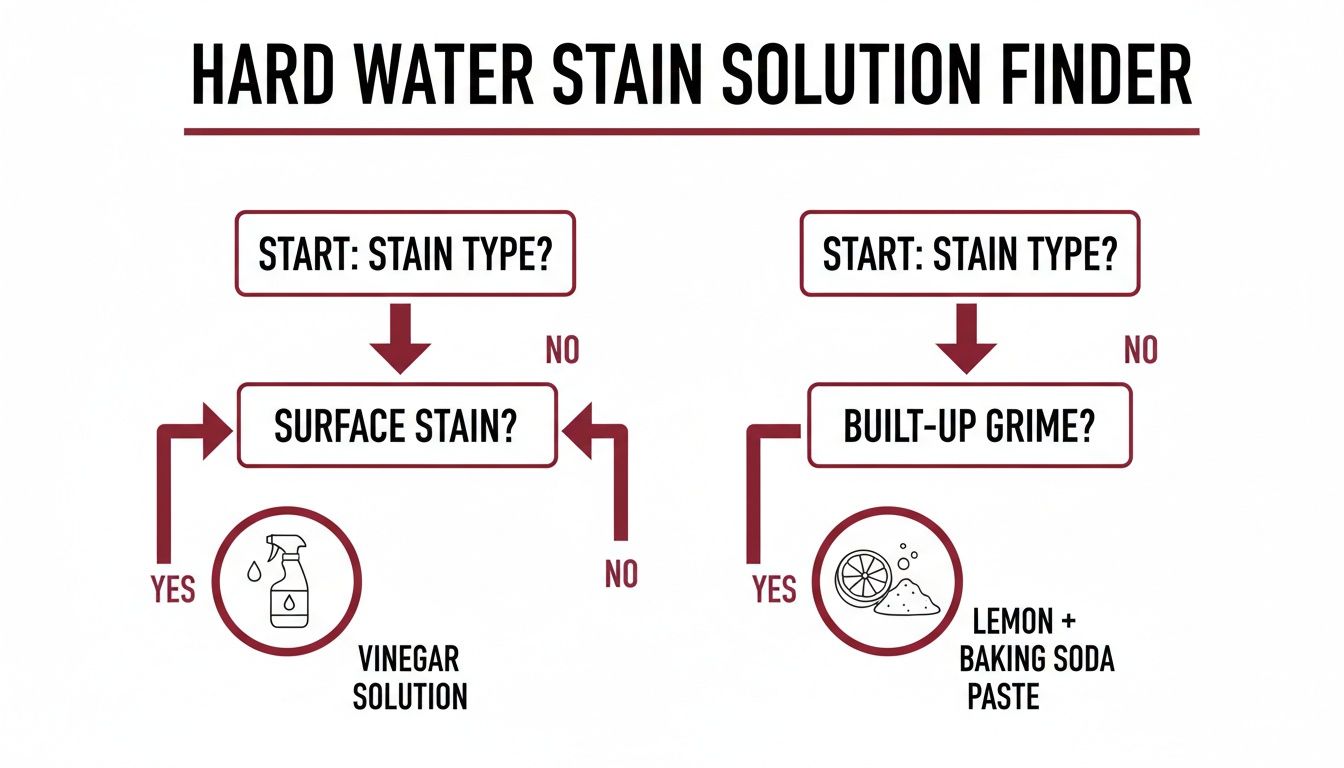
Think of it this way: for fresh, light surface stains, a simple acidic spray is usually enough. For the tough, layered grime that’s been sitting for a while, you’ll need to bring out the big guns—usually a more powerful paste. This little flowchart gives you a quick visual.
Let’s get into the specifics for each surface.
Restoring Gleam to Glass Shower Doors
Glass has to be one of the most frustrating surfaces for hard water spots. That constant cycle of water and heat creates a cloudy film that can feel absolutely impossible to scrub off. Let it go for too long, and those mineral deposits can actually etch the glass, causing permanent damage.
The trick is using an acidic solution that can hang around on a vertical surface long enough to work. Your go-to starting point is a 50/50 mix of white vinegar and water in a spray bottle.
But for really stubborn cloudiness, you need the soaked paper towel method. It’s a game-changer.
- Saturate and Stick: Get several paper towels and soak them completely in straight, undiluted white vinegar.
- Apply to the Glass: Press the wet towels directly onto the stained areas. They should stick all on their own.
- Let It Dwell: Leave them clinging to the glass for at least an hour. For really bad cases, you can even leave them overnight. This keeps the acid in constant contact with the minerals, breaking them down.
- Scrub and Rinse: Pull off the towels and give the glass a good scrub with a non-scratch sponge. Rinse it all down with water and, for a perfect finish, squeegee it dry.
Making Faucets and Fixtures Shine Again
Chrome, stainless steel, and brushed nickel faucets are magnets for that crusty white buildup, especially right around the base and on the spout. The challenge is dissolving the minerals without scratching the metal finish. Harsh abrasives are your enemy.
Once again, vinegar is the hero. For a quick cleanup, just spray your 50/50 vinegar solution, let it sit for 10 minutes, and wipe it clean. For that thick, crusty ring at the base of the faucet, wrap a vinegar-soaked paper towel or cloth around it and let it sit for a good hour. Grab an old toothbrush to gently scrub the dissolved gunk out of the crevices before you rinse.
Expert Tip: After cleaning chrome fixtures, apply a super thin layer of car wax or even baby oil. This creates a barrier that makes water bead up and roll right off, which helps stop new stains from forming so quickly.
Eliminating the Dreaded Toilet Bowl Ring
That stubborn brown or off-white ring in the toilet bowl is a classic sign of hard water. It’s limescale, often mixed with other minerals and bacteria, which makes it particularly tough. Most regular toilet cleaners barely make a dent.
The solution is giving an acidic cleaner time to work without being diluted by all the water in the bowl. One of the best and safest ingredients for this is citric acid—it’s basically the concentrated cleaning power of lemons.
- First, you need to lower the water level. Turn off the water supply valve behind the toilet and flush. This will empty most of the water from the bowl.
- Now, add the acid. Sprinkle about three tablespoons of citric acid powder directly into the remaining water and swish it around with the toilet brush.
- Then you just have to wait. Let the solution sit undisturbed for several hours, or even better, overnight. The citric acid will slowly break down the mineral ions, loosening their grip on the porcelain.
- In the morning, give the ring a thorough scrub with your toilet brush. You should see the stains lift away pretty easily. Turn the water back on and flush to rinse everything away.
Reviving Grimy Tile and Grout
Hard water can leave a chalky film all over your beautiful tile and really discolor the grout between them. The approach here has to work on both the smooth tile surface and the porous grout lines without causing damage.
Try making a paste with baking soda and white vinegar. You want it thick enough to spread without just running down the wall. Apply this paste over the stained tile and grout, really working it into the grout lines. Let it sit there and fizz for about 20-30 minutes.
Next, use a stiff-bristled grout brush (an old toothbrush works in a pinch) to scrub the grout lines vigorously. For the tile itself, a non-scratch scour pad is perfect. Rinse the whole area with clean water and dry it with a towel to keep new water spots from immediately forming.
Descaling Your Hard-Working Appliances
The buildup you see on the outside of your fixtures is also happening on the inside of your appliances. Limescale can clog the spray arms in your dishwasher and slow down your coffee maker, hurting their performance and shortening their lifespan.
- Dishwashers: Pop a cup of white vinegar into a dishwasher-safe bowl and place it on the top rack of your empty dishwasher. Run a full hot water cycle. The steam and heat will circulate the acidic vinegar, dissolving mineral gunk from the interior walls, racks, and spray arms.
- Coffee Makers: Fill the water reservoir with a solution of half white vinegar and half water. Run a full brew cycle to clean out the internal components. Afterward, run two or three more cycles with just plain water to flush out any lingering vinegar taste.
By tackling each area with the right tools and a little patience, you can systematically erase hard water stains from every corner of your home. And while you’re at it, it’s always a good idea to think about the safety of all your kitchen gear. You can learn more by checking out our detailed article on if ceramic cookware is safe, making sure every part of your kitchen routine is healthy and effective.
Choosing the Right Commercial Hard Water Remover
Sometimes, your trusty vinegar-and-water spray just doesn’t have the muscle to cut through years of layered mineral buildup. When you’re facing tough, set-in stains, stepping up to a commercial hard water remover can save you a ton of time and scrubbing. But the cleaning aisle is packed with options, and grabbing the wrong one can be ineffective at best and damaging at worst.
Knowing what’s in the bottle is the key to making a smart, safe choice. Most products fall into one of three main camps, and each one tackles hard water stains in a completely different way.
Decoding the Labels: Acid vs. Chelating Agents
Your first choice is usually between an acid-based cleaner and a formula that uses something called chelating agents. Both get the job done, but they work on entirely different chemical principles.
- Acid-Based Cleaners: These are the heavy hitters and the most common type you’ll find. They use acids like sulfamic or phosphoric acid to rapidly dissolve the alkaline mineral deposits—what we see as limescale. They’re fantastic for quickly blasting through heavy buildup on durable surfaces like porcelain toilets and ceramic tile. The catch? Their strength is also their weakness; they can be way too harsh for delicate materials.
- Chelating Agents: These are a bit more sophisticated. Ingredients like EDTA work by latching onto the mineral ions (calcium and magnesium) in the stain, essentially plucking them from the surface and holding them in the water so they can be rinsed away. Cleaners with chelating agents are often gentler and a safer bet for a wider range of surfaces, including sensitive metals and natural stone.
For homes with chronic hard water issues, products with chelating agents are a fantastic long-term solution. They’re exceptionally good at binding with minerals. But for a one-off tough stain on a durable surface, a simple acid-based cleaner will probably deliver faster results.
When to Use Gentle Abrasives
A third category involves mild abrasives. These products use a fine, gritty substance (like silica) suspended in a gel or paste to physically scrub the stains away without causing deep scratches.
Think of them as a targeted polisher. They are perfect for buffing away stains from sturdy surfaces like glass shower doors or ceramic cooktops where you need a little extra friction but don’t want to risk the damage of a scouring pad. Just be sure to test them on a small, hidden spot first.
The market for these products is massive, which tells you just how common this problem is. The global stain remover market, which includes these hard water fighters, hit USD 22,272.7 million in 2023 and is only expected to grow. This demand is largely driven by households, where 65% of consumers report battling water spots every single week. For those really persistent problems, products with chelating agents can be 80% more effective at binding minerals, though starting with a simpler formula is often more budget-friendly. You can dig into more data on this trend in a comprehensive market outlook.
Matching the Product to the Surface
Choosing the right cleaner isn’t just about power—it’s about protecting your stuff. Using the wrong formula can permanently damage your fixtures.
Here’s a quick guide to making a safe choice:
| Surface Type | Best Cleaner Type | Ingredients to Avoid |
|---|---|---|
| Porcelain & Ceramic | Acid-Based or Abrasive | Overly harsh acids if grout is unsealed. |
| Chrome & Stainless Steel | Chelating Agents, Mild Acids | Strong acids (can cause pitting), abrasive powders. |
| Glass | Mild Acid, Gentle Abrasive | Coarse abrasives that can etch the surface. |
| Natural Stone (Marble, Granite) | pH-Neutral, Chelating Agents | ANY acid (vinegar, lemon, or commercial acids). |
| Brushed Nickel & Brass | pH-Neutral, Chelating Agents | Harsh acids and strong abrasives (can strip the finish). |
Always, always read the product label carefully to confirm it’s safe for your specific material. When in doubt, start with the gentlest option you have and only escalate if needed. This careful approach ensures you remove the stain without removing the finish right along with it.
Simple Habits to Prevent Hard Water Stains for Good
Winning the battle against existing hard water stains is incredibly satisfying, but let’s be honest—the real win is stopping them from ever showing up. Prevention is so much easier than scrubbing, and it really just boils down to a few simple, consistent habits.
By making a couple of tiny tweaks to your daily routine, you can spend way less time dealing with chalky buildup and more time enjoying your sparkling clean home. The core idea is simple: don’t let water sit and evaporate. Those mineral deposits only get left behind when the water disappears. If you get rid of the water first, you get rid of the problem.
Daily Habits That Make a Huge Difference
You don’t need to dedicate hours to cleaning just to keep stains at bay. In fact, some of the most effective prevention habits take less than two minutes. The trick is just doing them consistently.
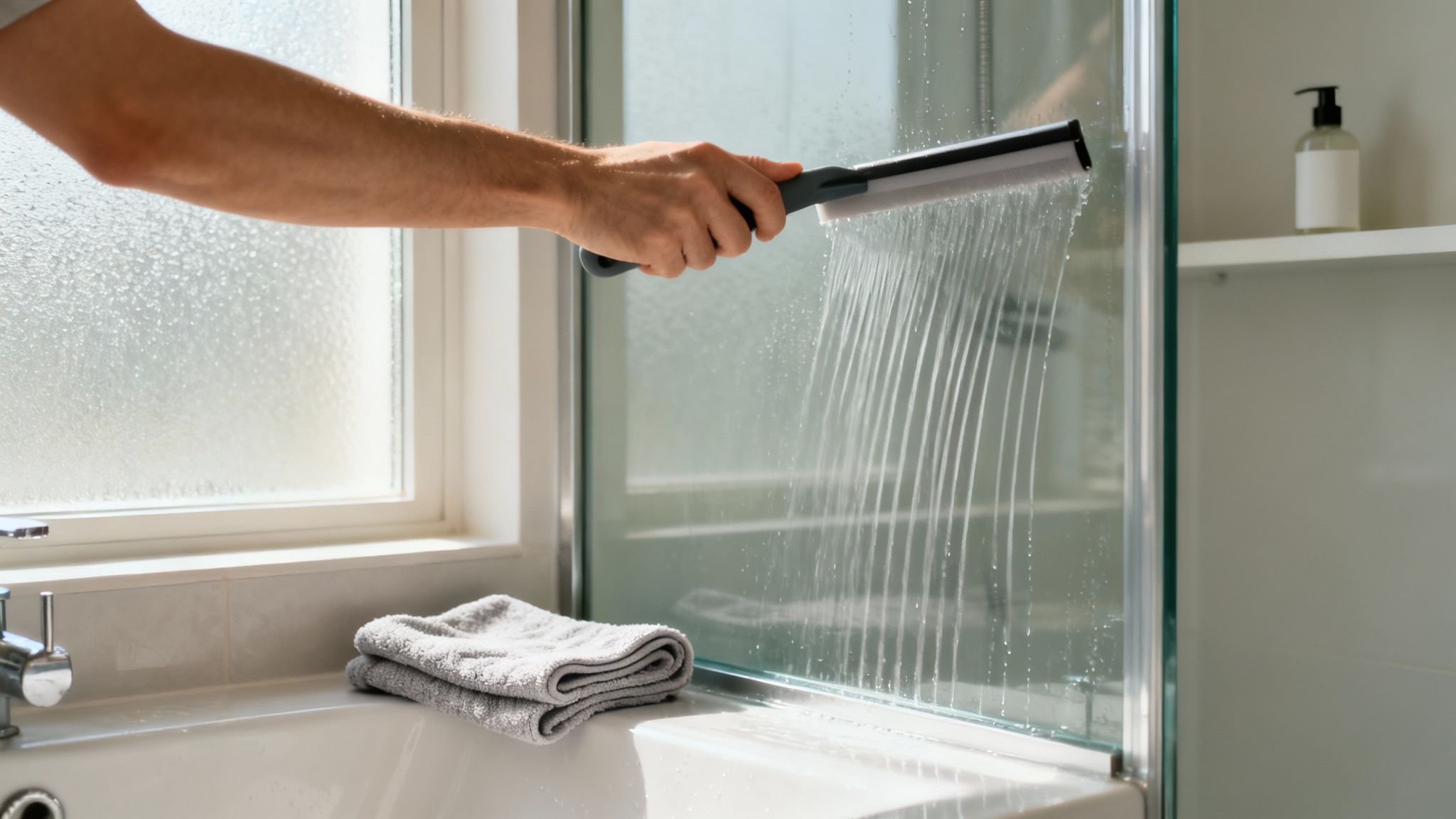
- Squeegee After Every Shower: This is the single biggest game-changer for preventing that cloudy film on glass shower doors. Keep a squeegee hanging in your shower and give the glass a quick wipe-down before you step out. It takes all of 30 seconds and removes almost all the water droplets.
- Wipe Down Sinks and Faucets: After you brush your teeth or wash your hands, grab a microfiber cloth and give the sink basin and faucet a quick wipe. It’s a tiny habit that completely stops spots from forming on chrome, stainless steel, and porcelain.
- Use a Dishwasher Rinse Aid: If you’re frustrated with spotty glassware, rinse aid is your best friend. It works by breaking the water’s surface tension, causing it to sheet off dishes instead of forming droplets that leave mineral spots behind. This small step makes a massive difference.
By stopping mineral deposits from ever taking hold, you’re also protecting the surfaces themselves. Over time, heavy limescale buildup can permanently etch glass and damage delicate finishes, making prevention a crucial part of long-term home maintenance.
Proactive Solutions for Lasting Protection
Beyond the daily wipe-downs, a few strategic moves can create a stronger, more lasting defense against mineral buildup. Think of these as creating a barrier that makes it harder for water to even cling to surfaces in the first place.
Water-Repellent Sprays
Try applying a hydrophobic (water-repellent) spray to your glass shower doors. Products like Rain-X create an invisible coating that causes water to bead up and roll right off, taking the minerals with it. You’ll probably need to reapply it every few weeks, but it dramatically cuts down on how much you need to squeegee. This same principle of surface properties simplifying maintenance applies all over the home, much like how choosing the right cookware finish impacts cleaning. For example, our guide on stainless steel vs. nonstick cookware shows just how much a surface’s properties can make your life easier.
Protective Waxes
For chrome faucets and fixtures, a thin layer of carnauba wax (yes, the kind used for cars) works wonders. After cleaning and drying your faucet, buff on a tiny amount of wax. It creates a barrier that repels water and makes future cleanups as simple as a quick wipe with a dry cloth.
The Ultimate Solution: A Water Softener
If you live in an area with seriously hard water, you might feel like you’re fighting a losing battle. For anyone who wants a permanent fix, installing a whole-house water softener is the ultimate solution.
A water softener works by removing the stain-causing minerals—calcium and magnesium—from your water supply before they ever even reach your faucets and appliances. It’s an upfront investment, for sure, but the benefits are huge:
- Virtually Eliminates Stains: Say goodbye to scrubbing shower doors, faucets, and toilets.
- Protects Appliances: It prevents limescale from building up inside your dishwasher, washing machine, and water heater, which improves their efficiency and helps them last longer.
- Softer Skin and Hair: You’ll notice a big difference. Soft water reduces the soap scum film that hard water leaves on your body.
- Uses Less Soap: Soft water lathers up much more effectively, meaning you’ll use less soap, shampoo, and detergent to get the job done.
While it’s a bigger step, a water softener is the most effective way to solve the root cause of hard water stains for good.
Common Questions About Hard Water Stain Removal
Even after you’ve got the basics down, a few tricky questions always seem to pop up in the middle of a deep clean. Battling hard water can be a frustrating process, so let’s clear up some of the most common issues to save you time and prevent any accidental damage.
Can Hard Water Stains Become Permanent?
Unfortunately, yes, they absolutely can. When mineral deposits sit on a surface for too long—especially glass—they can begin to physically etch into it. This creates a permanent, cloudy haze that no amount of scrubbing or cleaning will ever buff out.
This is exactly why staying on top of it is so important. By cleaning away mineral spots regularly, you never give them the chance to cause lasting damage. Think of it as prevention, not just cleaning.
Is It Safe to Mix Vinegar with Other Cleaners?
This is a critical safety question, and the answer is a firm, unwavering no. You should never, ever mix vinegar with other household cleaners.
- Vinegar + Bleach: This is an especially dangerous combination. It creates toxic chlorine gas, which can cause severe, immediate respiratory damage.
- Vinegar + Hydrogen Peroxide: Mixing these two common household items creates peracetic acid. It’s a highly corrosive substance that can seriously irritate your skin, eyes, and lungs.
For both safety and effectiveness, stick to using vinegar on its own or just diluted with plain water.
Key Takeaway: Cleaning chemistry is no joke. Never play scientist by mixing different cleaning products. The chemical reactions can be unpredictable and downright dangerous.
How Do I Know If My Home Has Hard Water?
The stains are usually the dead giveaway, but there are other clues around your house that all but confirm you’re dealing with hard water.
You probably have hard water if you notice:
- That familiar white, chalky residue on faucets, showerheads, and dishes.
- Soap and shampoo just don’t lather up the way they should.
- A stubborn film of soap scum constantly builds up on your shower walls and tub.
- Your laundry feels stiff or looks dull, even right out of the wash.
- Water pressure seems to be gradually getting weaker from mineral buildup inside your pipes.
If you really want to know for sure, you can grab a simple hard water test kit online or at any home improvement store. They’re easy to use and will give you a precise reading of your water’s mineral content.
Will a Water Softener Eliminate All Cleaning?
A water softener will make a massive difference in your cleaning routine, but it’s not quite a “set it and forget it” solution. By removing the main culprits—calcium and magnesium—it stops that thick, crusty limescale from ever forming in the first place.
But even the best systems might let some trace minerals slip through. This just means that while you can say goodbye to those tough, acidic scrubbing sessions, you’ll still want to give surfaces a quick wipe-down now and then to keep everything sparkling. The big win is that you’ll shift from constant, heavy-duty cleaning to effortless, infrequent maintenance.
At Reva Housing, we believe that a beautiful home starts with smart choices. Our in-depth guides and product reviews are designed to give you the confidence to tackle any project, from cleaning and maintenance to finding the perfect new addition for your living space. Explore our expert advice today.
