



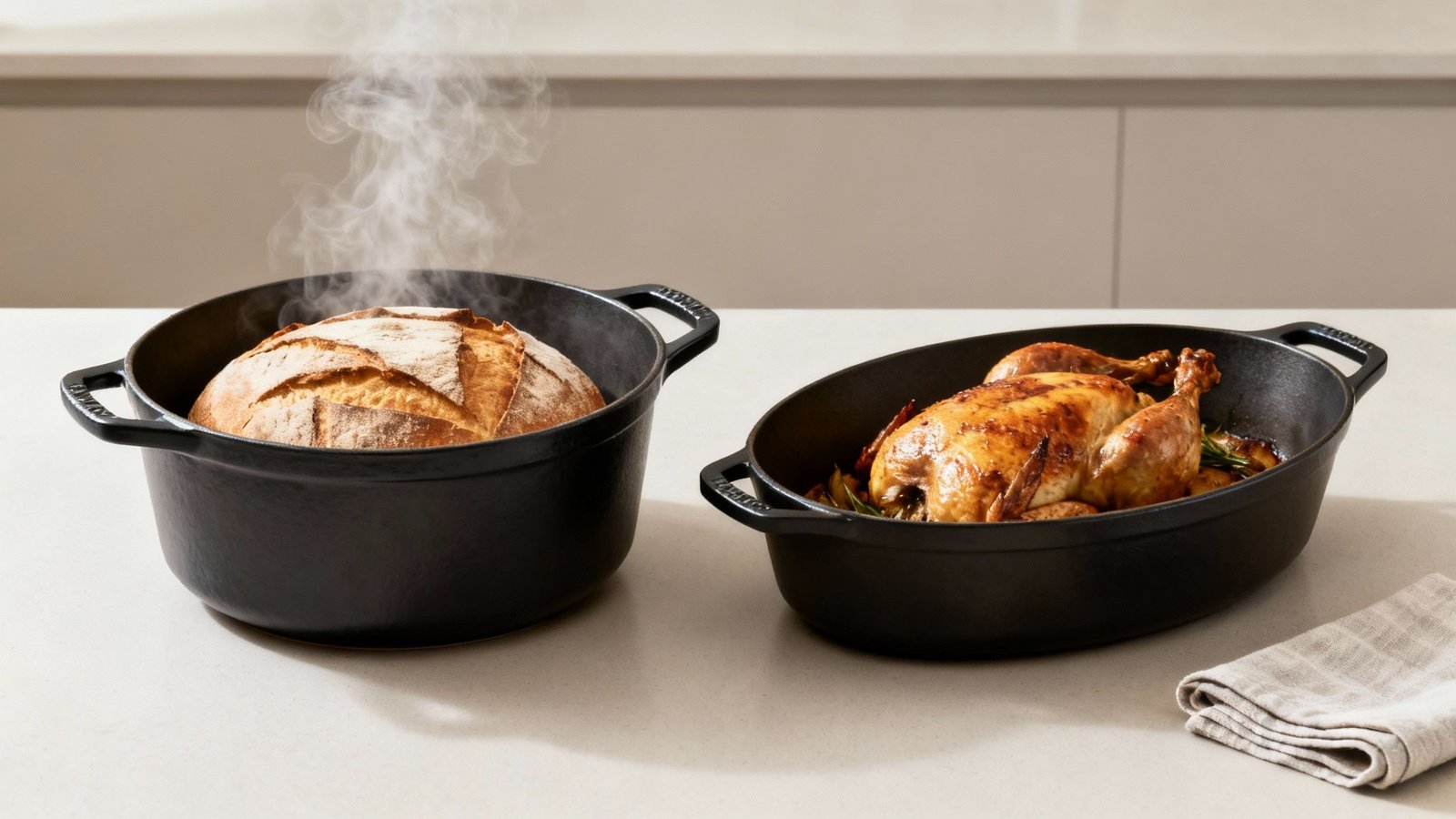
Choosing the right Dutch oven size is probably the single most important decision you’ll make when buying one. It’s the difference between a pot that becomes a kitchen MVP and one that just collects dust.
The simplest rule of thumb I’ve always followed is to plan for one quart of capacity per person you typically cook for. This is why a 5 to 6-quart Dutch oven is the undisputed champion for most people—it’s the sweet spot for an average household of four, handling everything from weeknight stews to weekend roasts without breaking a sweat.
How to Pick Your Perfect Dutch oven Size
Think of choosing a Dutch oven like picking a suitcase for a trip. You need something that comfortably fits everything you plan to pack, but you don’t want it to be so bulky you can’t even carry it. The goal is to find that perfect balance between everyday usability and the capacity for bigger meals when you need it.
Getting the size right is crucial. If you overcrowd a small pot, your ingredients will steam instead of getting that beautiful, deep sear. On the flip side, if you use a pot that’s way too big, your sauces can spread out, scorch, and cook unevenly. Your ideal size really comes down to how you cook and who you’re cooking for. Before we get into specific measurements and shapes, the best place to start is matching the pot’s capacity (measured in quarts) to your household size.
Matching Capacity to Servings
The most straightforward way to narrow down your options is to think about how many mouths you usually feed. This one factor will immediately filter out a ton of choices and stop you from buying a pot that’s either too cramped for your family dinner or comically oversized for a Tuesday night meal for two.
This decision tree breaks it down visually, mapping household size to the most practical Dutch oven capacities to give you a quick starting point.
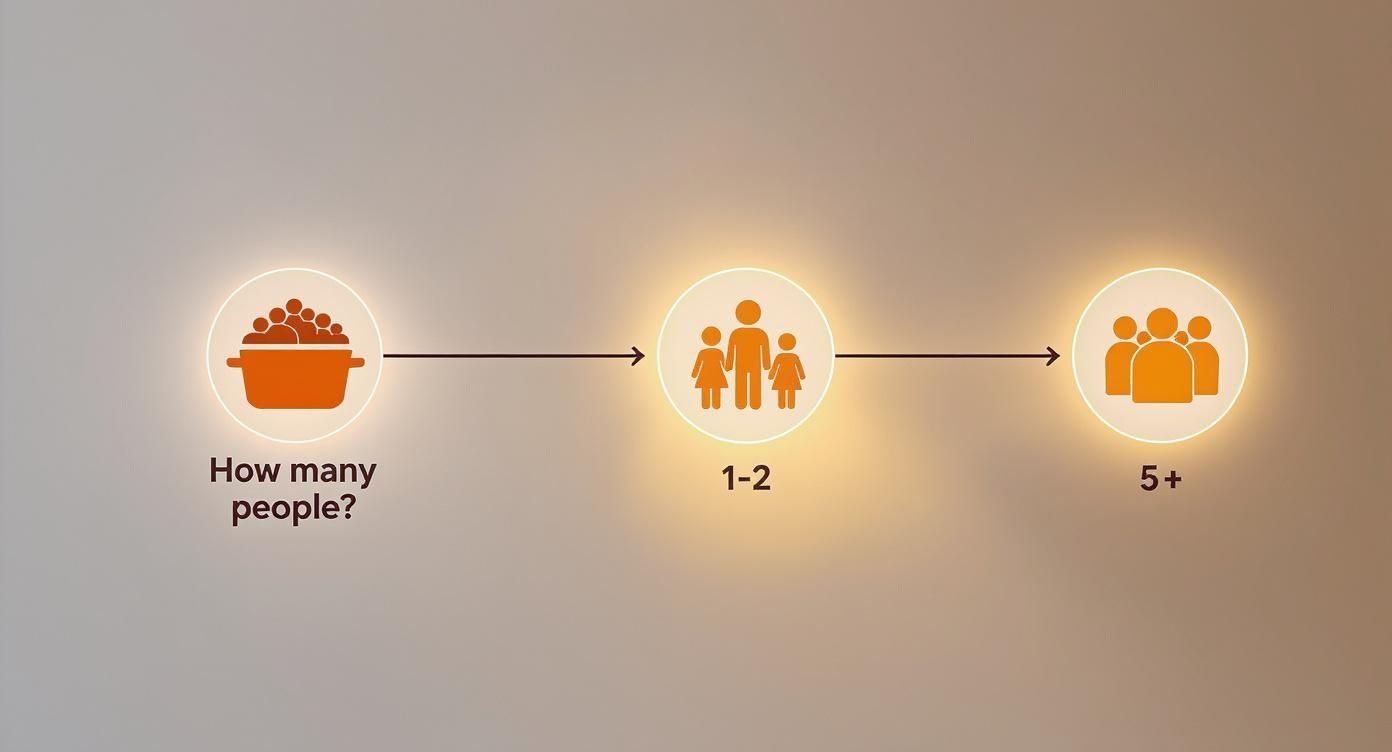
As the guide shows, what you cook day-to-day is the best indicator of the size you’ll get the most mileage out of. It’s tempting to buy a massive pot for that one holiday feast you host each year, but you’ll get a much better return on your investment by prioritizing your weekly needs.
To make it even simpler, here’s a quick chart that connects quart capacity directly to serving sizes and what you’ll likely be cooking.
Quick Guide to Dutch Oven Capacity
Find your ideal Dutch oven size at a glance by matching its quart capacity to the number of people you typically cook for.
| Capacity (Quarts) | Typical Servings | Ideal For |
|---|---|---|
| 2–3.5 Quarts | 1–2 people | Small meals, side dishes, sauces, reheating leftovers, or baking a small bread loaf. |
| 4–6 Quarts | 3–5 people | The “go-to” size for families, perfect for soups, stews, braises, and whole chickens. |
| 7+ Quarts | 6+ people | Large families, batch cooking, entertaining guests, and oversized roasts or briskets. |
This table should give you a solid foundation. In my experience, a 5.5-quart model really hits that versatile sweet spot, easily handling dinner for a family of four while still being manageable enough for smaller meals.
Now that you’ve got a general idea of the capacity you need, let’s dig into what those numbers actually mean for the food you cook in your kitchen.
So, What Do Dutch Oven Quarts and Dimensions Really Mean?
When you see a Dutch oven labeled 5.5 quarts, it’s tempting to think of it like a carton of milk—just a straightforward measure of how much it can hold. And while you’re not wrong, that number barely scratches the surface. To really get what a Dutch oven can do, you need to look past the volume and get into its physical dimensions: its diameter and its height.
Think about it like this: a tall, skinny vase and a wide, shallow bowl might hold the same amount of water, but you’d never use them for the same flowers. It’s the exact same deal with Dutch ovens. The shape of the pot completely changes how it behaves on your stove and in your oven.
From Quarts to Actual Cooking Space
A quart is just a unit of volume, equal to four cups (or about 0.95 liters). It’s a useful starting point, but it tells you nothing about the one thing that matters most for so many recipes: surface area. The diameter of the pot dictates how much cooking surface you have to play with, which is everything when you’re browning meat.
A wide base is your absolute best friend for building deep, incredible flavor. It lets you sear ingredients in a single, uncrowded layer, creating that gorgeous crust you’re after. Without it, you’re just steaming your food, and nobody wants that.
For example, a classic 5.5-quart round Dutch oven usually has a diameter around 10.25 inches. That gives you enough room to comfortably sear four big chicken thighs or a 3-pound chuck roast without everything bumping elbows. Try to do that in a smaller 3.5-quart pot (closer to 9 inches wide), and you’ll be browning in batches, which adds time and hassle to your cook.
Why Pot Depth Is a Bigger Deal Than You Think
Just like diameter is king for searing, the height of a Dutch oven seriously impacts how it performs for other jobs. The depth changes how the pot handles splatters, contains bubbling liquids, and circulates heat.
A taller, deeper pot is a champ for things like:
- Deep-Frying: Those high sides are a built-in splatter shield, keeping hot oil where it belongs—in the pot and off your stovetop.
- Big Batches of Soup and Stock: The extra height is your insurance against messy boilovers when you’re simmering a huge volume of liquid for hours.
- Baking No-Knead Bread: This is a big one. A deeper pot is way better at trapping steam, which is the secret ingredient for getting that bakery-level crust and an amazing rise. A 5.5-quart pot is pretty much the gold standard for a standard loaf of artisan bread for this very reason.
On the flip side, a shallower pot has its own strengths. A wider, more open shape encourages evaporation, which is exactly what you want when you’re reducing a sauce or making a thick, hearty stew where you want the liquid to concentrate. It’s no coincidence that dedicated braising pans are almost always wider and shorter than a classic Dutch oven.
A Practical Look at Popular Sizes
Let’s break down the dimensions of three of the most common Dutch oven sizes to see how their shapes really translate to the kitchen. Once you can visualize this, you’ll know exactly how a pot will feel and perform before you even buy it.
| Capacity | Typical Diameter | Typical Height (without lid) | Best For & Why |
|---|---|---|---|
| 3.5-Quart | ~9 inches | ~4.5 inches | Side Dishes & Small Meals: Perfect for cooking grains, simmering a sauce, or whipping up a small batch of soup for one or two. Its smaller base heats up fast. |
| 5.5-Quart | ~10.25 inches | ~4.5 inches | The All-Rounder: This is the sweet spot. It offers a generous surface for searing and is deep enough for soups, braises, and bread. The most versatile size for a family of four. |
| 7.25-Quart | ~11 inches | ~5 inches | Batch Cooking & Roasting: The extra width and depth can handle big roasts, whole chickens, and massive batches of chili or stew for a crowd. |
As you can see, jumping up just two quarts adds a serious amount of cooking real estate. That extra inch of diameter you get with a 7.25-quart pot makes all the difference in the world when you’re trying to brown a big brisket or squeeze in another pound of veggies. In the end, finding the right Dutch oven is about looking past the quart number and matching the pot’s dimensions to the way you actually cook.
Matching Your Dutch Oven to Your Household
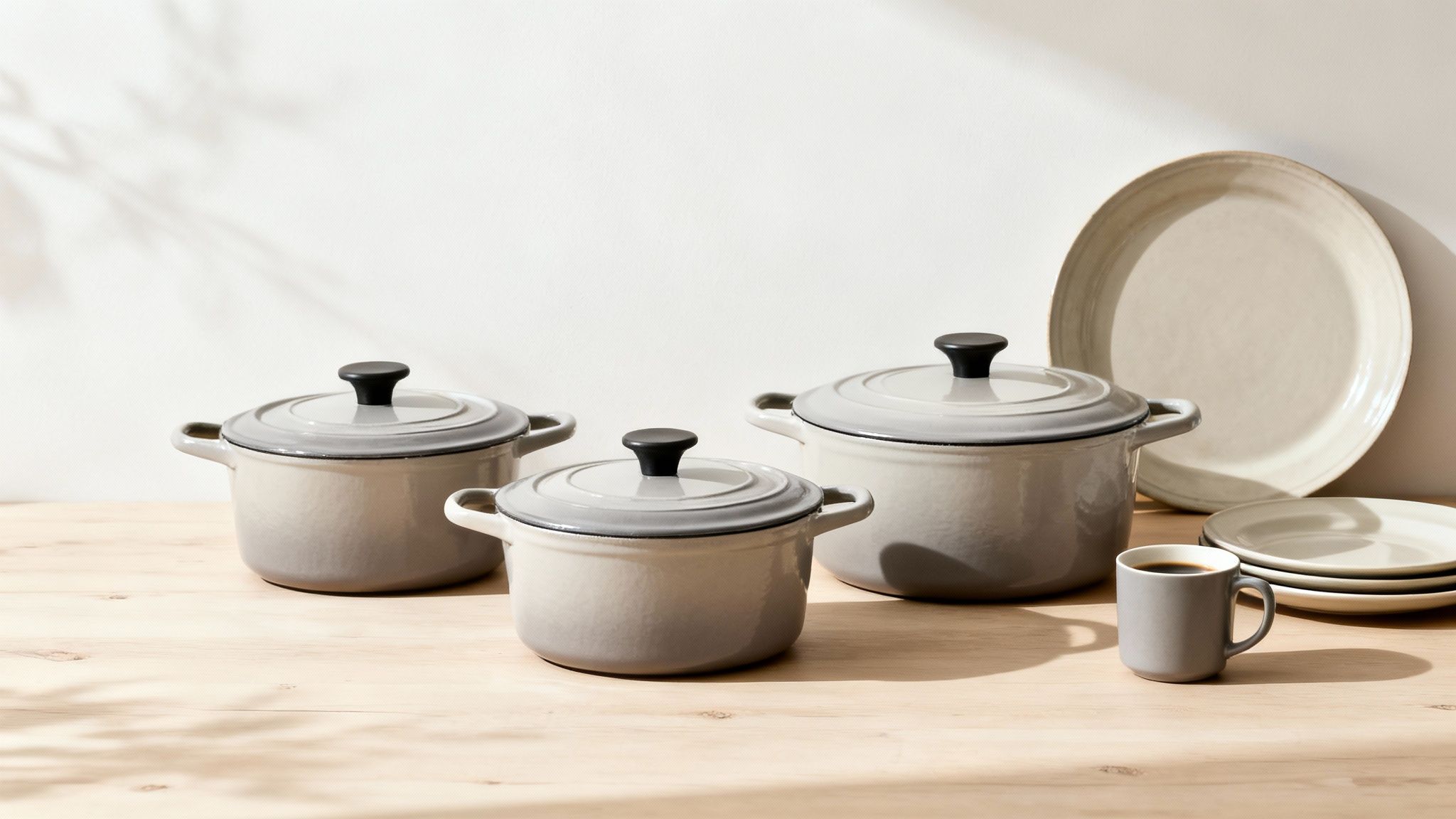
Alright, this is where the rubber meets the road. We’re moving past the abstract world of quarts and dimensions and getting down to the practical reality of your kitchen counter. Choosing a Dutch oven isn’t about finding the “best” size—it’s about finding the best size for you. Think of it as us finding the perfect pot for your lifestyle, one that will become a cherished workhorse, not just a hefty paperweight.
The goal is to hit that sweet spot. You want a pot that feels just right for the meals you cook most often. It should handle your signature chili recipe with room to spare but not feel comically oversized when you’re just whipping up a small batch of oatmeal. Let’s break down the most common household sizes to figure out which Dutch oven you’ll be reaching for day after day.
For Individuals and Couples: The Compact Powerhouse (2 to 3.5 Quarts)
If you’re cooking for one or two, a smaller Dutch oven in the 2 to 3.5-quart range is an absolute unsung hero. It might seem a little modest, but its compact size is its greatest strength. It’s perfect for whipping up weeknight dinners, reheating leftovers so they taste brand new, or creating flawless side dishes like creamy risotto or perfectly cooked quinoa.
This is the size that excels at tasks where a bigger pot would feel wasteful. Sauces reduce beautifully without scorching the bottom, and small roasts or a couple of chicken breasts fit snugly inside. It’s also the ideal companion for baking a small, crusty boule of no-knead bread. Plus, its lighter weight and smaller footprint make it a dream to handle, clean, and store—a major win for smaller kitchens.
For a Family of Four: The Iconic All-Rounder (5 to 6 Quarts)
There’s a reason this is the undisputed champion of the Dutch oven world. For a typical family of three to five, a pot in the 5 to 6-quart range (with 5.5 quarts being the fan favorite) offers versatility that’s tough to beat. It’s the Goldilocks of cookware—not too big, not too small, but just right for almost everything.
This is the size that can truly do it all. It has enough surface area to properly brown a 4-pound roast and enough depth to hold a generous batch of soup, a whole roasted chicken, or a family-sized portion of pulled pork. It’s the size you see in cookbooks and on cooking shows because it’s built for real-life family meals.
The popularity of this size isn’t just a hunch; it reflects how people really cook at home. The global Dutch oven market has seen steady growth, and market research shows that 5-quart and 7-quart models are the most popular with consumers because they’re so adaptable. The 5-quart, in particular, hits that perfect balance for small families, handling both weeknight meals and weekend cooking projects. You can dig into more of these market trends and consumer preferences over on Business Research Insights.
Honestly, if you can only own one Dutch oven, this is the size to get. It’s large enough that you won’t be wishing for more space, yet it’s still manageable enough for everyday use.
For Large Families and Batch Cookers: The Generous Entertainer (7+ Quarts)
If you have a big family, love to host dinner parties, or live by the meal-prep gospel, a 7-quart or larger Dutch oven is a total game-changer. This is the pot you pull out for holiday feasts, big-batch cooking, and feeding a crowd without breaking a sweat.
A 7-quart model gives you that cavernous space you need for more ambitious projects. We’re talking a whole brisket, a massive pot of gumbo, or enough chili to feed a dozen hungry guests on game day. The extra-wide base means you can brown large quantities of meat in a single layer, which builds way deeper flavor without you having to spend extra time hovering over the stove. While it’s undeniably heavy and needs more storage space, the payoff is immense for anyone who regularly cooks in large volumes.
How to Choose the Right Size for Your Favorite Recipes
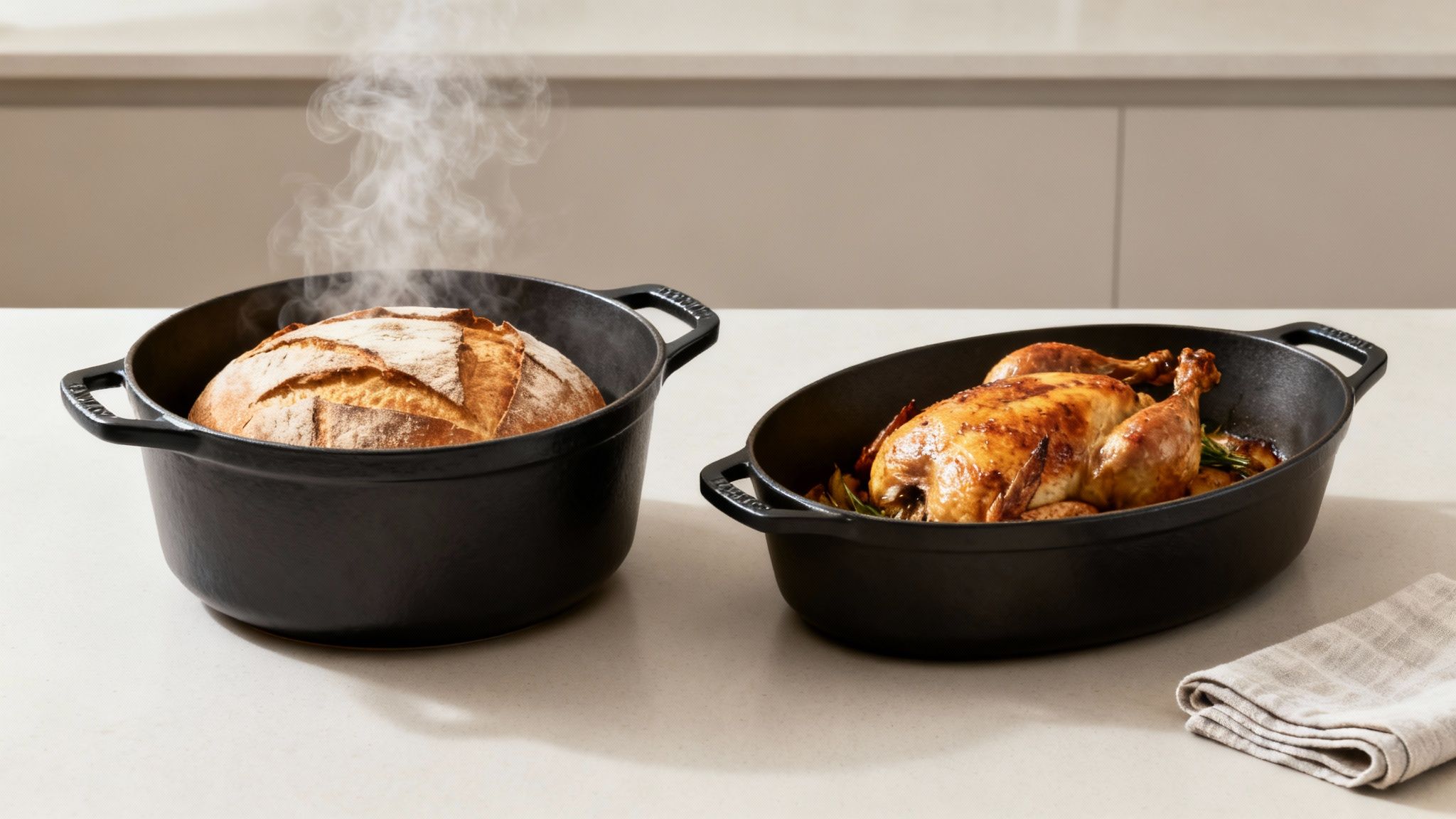
Alright, we’ve matched Dutch oven sizes to different households, but now for the fun part: connecting the pot to the food you actually love to cook. This is where a good piece of cookware becomes an indispensable partner in the kitchen.
A Dutch oven isn’t just a pot; it’s a specialized tool. The size that’s perfect for simmering a chili might not be the best choice for getting that perfect, crackly crust on a loaf of artisan bread. By thinking about your go-to recipes first, you can pick a size with total confidence.
Let’s dig into which sizes work best for the most popular Dutch oven jobs.
For the Home Baker Baking Artisan Bread
If you’ve ever stared in awe at a bakery loaf with a deep brown crust and an airy, open inside, the secret is almost always steam. A Dutch oven is the home baker’s secret weapon for getting that professional-quality result. It traps the moisture released from the dough, creating a steamy environment that mimics a fancy steam-injected oven.
For this specific task, a 4 to 5.5-quart round Dutch oven is the undisputed champion. This size is just right for a standard loaf made with about 500g of flour. It’s big enough to let the dough expand (what bakers call “oven spring”) but small enough to keep that crucial steam concentrated right around the loaf.
Pro Tip: The steamy, enclosed space inside a mid-sized Dutch oven keeps the crust soft at the beginning of the bake. This allows the bread to rise to its full potential before the crust sets, giving you a taller, more impressive loaf every time.
Sure, you could use a larger pot like a 7-quart model, but the extra space lets the steam dissipate. That can lead to a less dramatic rise and a paler crust. Stick to the mid-range sizes for consistently amazing bread. And if you’re looking for more ways to get stellar results from your oven, you might want to explore an alternative to baking sheets that could shake up your workflow.
For Hearty Braises and Flavorful Stews
This is where the Dutch oven truly shines, slowly turning tough cuts of meat into tender, fall-apart-with-a-fork masterpieces. The key to an unforgettable braise is building layers of flavor, and that all starts with getting a fantastic sear on your meat. To do that, you need one thing: surface area.
For braises and stews, a 5 to 7-quart Dutch oven is your best friend. This size gives you a wide enough base to brown your meat in a single layer without overcrowding the pan. When you overcrowd, the meat just steams instead of searing, and you miss out on the Maillard reaction—that magical chemical process that creates hundreds of delicious flavor compounds.
A few reasons why bigger is better for braising:
- Better Browning: A 7-quart pot has a much wider base than a 4-quart, letting you sear a whole 4-pound chuck roast or eight chicken thighs at once.
- Room for Veggies: After searing, you’ll have plenty of space to sauté your mirepoix (onions, carrots, celery) in all those flavorful drippings.
- No Spillovers: It can comfortably hold the meat, vegetables, and all your braising liquid (like stock or wine) without threatening to boil over in the oven.
For Roasting a Whole Chicken or Turkey Breast
When you want to roast a whole chicken to juicy perfection, a Dutch oven is a fantastic alternative to a roasting pan. The even, radiant heat of the cast iron cooks the bird gently, while the high sides create a convection-like effect that helps crisp the skin beautifully.
An oval shape is often the winner here. A 5.5-quart or larger oval Dutch oven is perfectly built for the oblong shape of a whole chicken (up to 5 pounds) or a large pork loin. The oval design cradles the roast, leaving just enough room for hot air to circulate. A large round pot will still get the job done, but the oval is just a more natural fit. For bigger birds, like a small turkey or a serious brisket, you’ll definitely want to look at 7-quart or larger oval models.
For Soups From Weeknight to Big-Batch
Dutch ovens are brilliant for soups. Their heavy bottoms prevent scorching, and their incredible heat retention keeps everything at a gentle, even simmer. The size you need really just depends on how many people you’re feeding.
- Weeknight Soups (2-4 Servings): A smaller 3.5 to 4-quart pot is perfect. It’s great for a quick lentil soup or a creamy tomato bisque without leaving you with a week’s worth of leftovers.
- Big-Batch Cooking (6+ Servings): If you’re a meal prepper or love making freezable batches of chili, minestrone, or bone broth, a 7 to 9-quart Dutch oven is a smart investment. The extra space gives you plenty of room for all your ingredients and prevents messy boilovers on the stove.
To make it even clearer, here’s a quick cheat sheet for matching the pot to the purpose.
Best Dutch Oven Size for Common Cooking Tasks
| Cooking Task | Recommended Size (Quarts) | Best Shape | Why It Works |
|---|---|---|---|
| Baking Artisan Bread | 4 to 5.5 Quarts | Round | Concentrates steam for a perfect crust and great oven spring on a standard loaf. |
| Braising & Stewing | 5 to 7 Quarts | Round or Oval | Provides a wide base for searing meat without overcrowding, with plenty of room for liquid. |
| Roasting a Chicken | 5.5 to 7.5 Quarts | Oval | The oblong shape is a natural fit for a whole bird, promoting even cooking and crispy skin. |
| Big-Batch Soups/Chili | 7 to 9 Quarts | Round | Offers ample capacity to prevent boilovers and is ideal for meal prep and freezer meals. |
Ultimately, choosing the right size is all about aligning the tool with how you cook. Thinking through these common uses should give you a much clearer idea of which Dutch oven will earn a permanent spot on your stovetop.
Thinking Beyond Quarts: Shape and Weight Actually Matter
Picking your Dutch oven’s quart capacity is a huge first step, but it’s really only half the story. To make sure you end up with a pot you genuinely love using, we need to talk about a few other critical factors. The shape, the weight, and even how it fits in your kitchen can be the difference between a daily workhorse and a beautiful, but impractical, decoration.
Let’s dive into these details. They might seem small, but trust me, they have a massive impact on how your Dutch oven performs and fits into your real-life cooking routine.
The Great Debate: Round vs. Oval
One of the first decisions you’ll face after picking a size is whether to go with a round or an oval shape. While you can cook just about anything in either, each one has distinct advantages designed for specific jobs.
Round Dutch Ovens:
- Superior Stovetop Performance: A round pot fits perfectly over a standard circular burner. This means it heats up quickly and evenly, which is a huge plus for anything that starts on the stovetop—think sautéing vegetables for a soup or browning ground meat for chili.
- Excellent for Soups and Sauces: That even heating prevents hot spots, so simmering liquids is a worry-free process. No more scorched bottoms.
- Better for Baking Bread: Most artisan bread recipes are designed for a round pot. It promotes a uniform rise and gives you that perfectly shaped, crusty boule.
Oval Dutch Ovens:
- Designed for Roasting: The oblong shape is tailor-made to fit longer cuts of meat like a pork loin, a beef brisket, or a whole chicken. There’s no awkward cramming—the food just fits.
- More Surface Area (Sometimes): While it doesn’t sit as neatly on a burner, an oval pot can offer more linear space for browning long items like sausages or searing multiple pieces of meat side-by-side.
For most people, a round Dutch oven is the more versatile choice, especially for a first purchase. Its efficiency on the stovetop makes it a true all-rounder for everyday cooking.
An Honest Conversation About Weight
Let’s be direct: cast iron Dutch ovens are heavy. An empty 5.5-quart model can weigh around 13-15 pounds. Now, imagine that pot filled with a bubbling stew or a hefty roast—that number climbs fast.
This weight is a feature, not a bug. It’s what gives the pot its incredible, steady heat retention. However, it’s a practical consideration you just can’t ignore. Lifting a large, hot, and heavy Dutch oven from the stovetop and maneuvering it into a 450°F oven requires some real strength and confidence.
If you have mobility issues or struggle with heavy lifting, a larger 7-quart or 9-quart model might become a genuine challenge to use safely and comfortably. When weighing material options, you might find our comparison of stainless steel vs. nonstick cookware helpful for understanding different weight and maintenance profiles.
The Practicality Check: Measure Your Space
This might be the most overlooked tip in any Dutch oven guide, but it’s one of the most important. Before you click “buy,” grab a measuring tape and check two key spots in your kitchen.
- Your Oven: Will the Dutch oven you’re eyeing actually fit inside your oven with the lid on, leaving enough room for air to circulate? A big 9 or 13-quart pot can be surprisingly tall and wide.
- Your Cabinets: Where are you going to store this beast? Make sure you have a sturdy, accessible shelf or cabinet that can handle both the weight and the dimensions.
Dutch oven sizes have certainly evolved. In the 18th and 19th centuries, they commonly ranged from 4 to 12 quarts for hearth cooking. Today, the most popular sizes are 5, 7, and 9 quarts, reflecting a shift toward modern kitchen convenience and storage. You can discover more about the historical evolution of these pots over at Savoring the Past.
Considering these practical constraints from the start ensures your new Dutch oven fits not just your cooking style, but your actual kitchen space, too.
Still Have Questions? Let’s Clear Things Up
Even after looking at all the charts and comparisons, picking the right Dutch oven can feel like a big commitment. It’s a real investment in your kitchen, so let’s tackle those last few lingering questions head-on.
Think of this as the final chat before you make your choice, clearing up the practical stuff that pops into your head right before you decide.
If I’m Stuck Between Two Sizes, Should I Go Bigger or Smaller?
When you’re caught between two sizes, my advice is almost always to size up. I know it seems counterintuitive, especially if you’re picturing that bigger pot taking up precious cabinet space, but a larger Dutch oven offers so much more flexibility down the road.
Here’s the thing: you can always cook a small meal in a big pot, but you can never cram a large meal into a small one. A larger pot gives you the freedom to double a recipe for leftovers, handle unexpected dinner guests, or try your hand at a big, beautiful roast without feeling hemmed in. The only real reasons to size down are if you have serious storage limitations or find heavier cookware a struggle to lift.
What’s the Best, Most Versatile Size for a Beginner?
For anyone just starting their cast iron journey, the 5.5-quart round Dutch oven is the undisputed champion. It’s the perfect entry point and, frankly, the size that most recipes are written for.
This size just hits the sweet spot for almost everything you’d want to do. It’s big enough to handle a whole chicken, a generous batch of chili for the week, or a gorgeous loaf of no-knead bread. At the same time, it never feels ridiculously oversized for a simple weeknight meal for two. If you’re going to own just one Dutch oven, this is the one that will serve you best time and time again.
Its popularity is no secret in the cookware world. The Dutch oven market was valued at a whopping US$ 265.9 million and is expected to grow to US$ 417.6 million, with 5-quart and 7-quart models consistently leading the charge because of how adaptable they are. You can dig into more of these trends over at Transparency Market Research.
How Much Empty Space Should I Leave at the Top?
This is a fantastic and often overlooked question that makes a huge difference in both safety and your final results. A good rule of thumb is to fill your Dutch oven no more than two-thirds of the way to the top.
Leaving that final third of the pot empty is crucial for a few reasons:
- It Prevents Boilovers: That extra space gives simmering liquids like soups and stews room to bubble up without spilling all over your stovetop or the bottom of your oven. Trust me, it’s a mess you don’t want to clean.
- It Ensures Even Cooking: The gap allows hot air to circulate properly around your food, which is especially important for getting that perfect, tender result in braises and roasts.
- It Allows for Expansion: Ingredients like grains, beans, and rice swell up as they cook. This buffer zone gives them the space they need to do their thing without overflowing.
Sticking to the two-thirds rule will save you a ton of cleaning headaches and lead to much better, more consistent cooking.
Final Takeaway: Your Dutch oven should feel like a natural extension of how you love to cook. Pick the size that fits your life right now, but don’t be afraid to give yourself a little room to grow.
Ready to find the cookware that will transform your kitchen? At Reva Housing, we provide in-depth guides and honest reviews to help you make confident decisions for your home. Explore our latest articles and recommendations at https://revahousing.com.
