



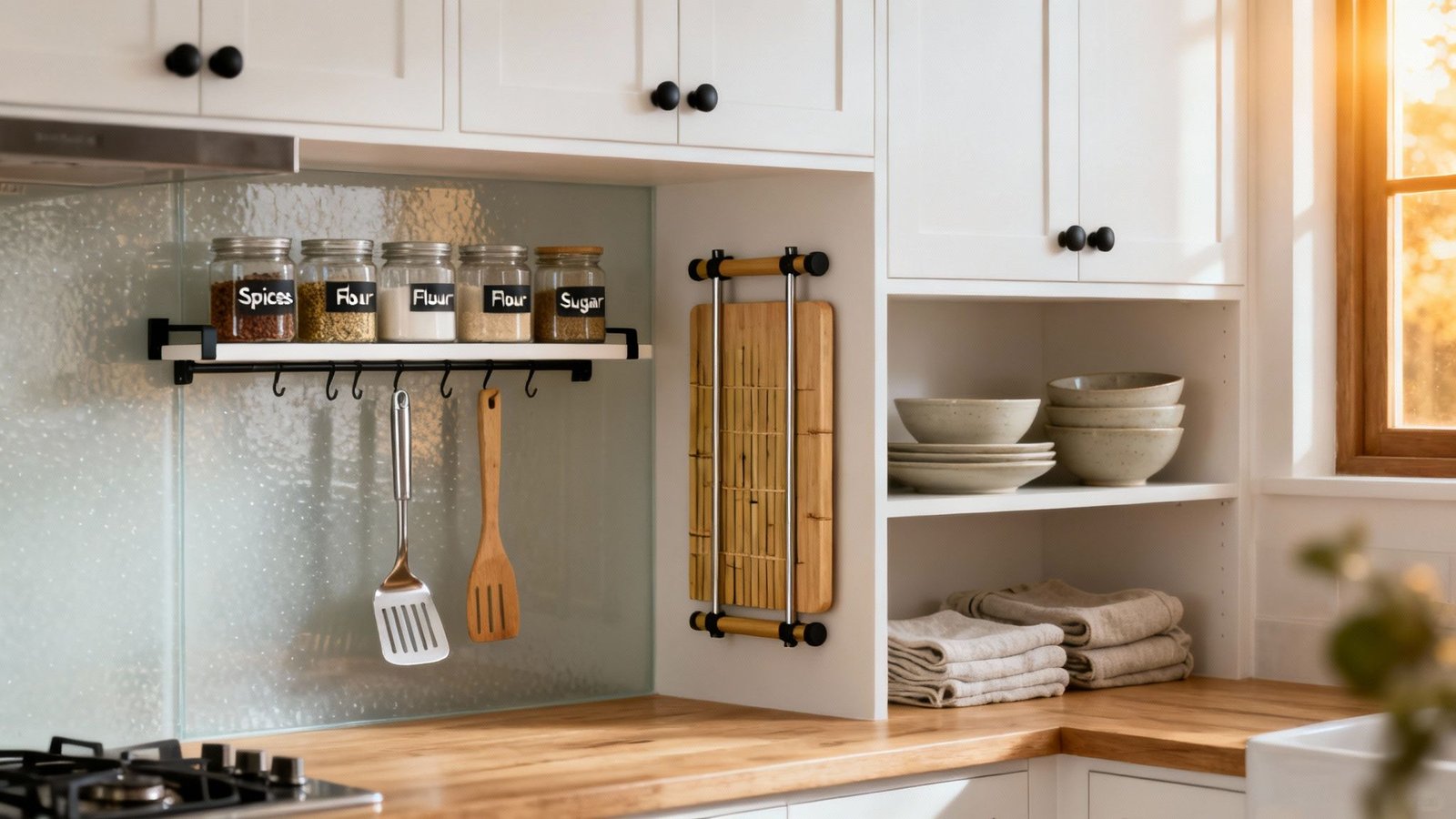
Moving into your first apartment is a huge milestone, but staring at an empty kitchen can feel like a mountain to climb. The essentials boil down to three core areas: cookware for actually making food, dinnerware for eating it, and the basic tools you need for prep. If you focus on getting just these fundamentals covered, you’ll be able to cook your first real meal without any stress.
Setting Up Your First Kitchen Without The Stress
That first step into your own apartment is pure magic. Then you walk into the kitchen, see nothing but empty counters and cabinets, and that excitement can quickly turn into a wave of “…now what?” The secret? Don’t try to buy everything at once. Nobody builds their perfect kitchen in a single shopping trip—it’s something you curate over time.
Your initial mission isn’t to create a five-star chef’s paradise. It’s much simpler: build a functional, welcoming space where you can comfortably make a bowl of pasta or a decent breakfast. This guide is here to cut through the noise and turn that chaos into confidence. A well-stocked kitchen isn’t just for cooking; it’s the heart of your new home.
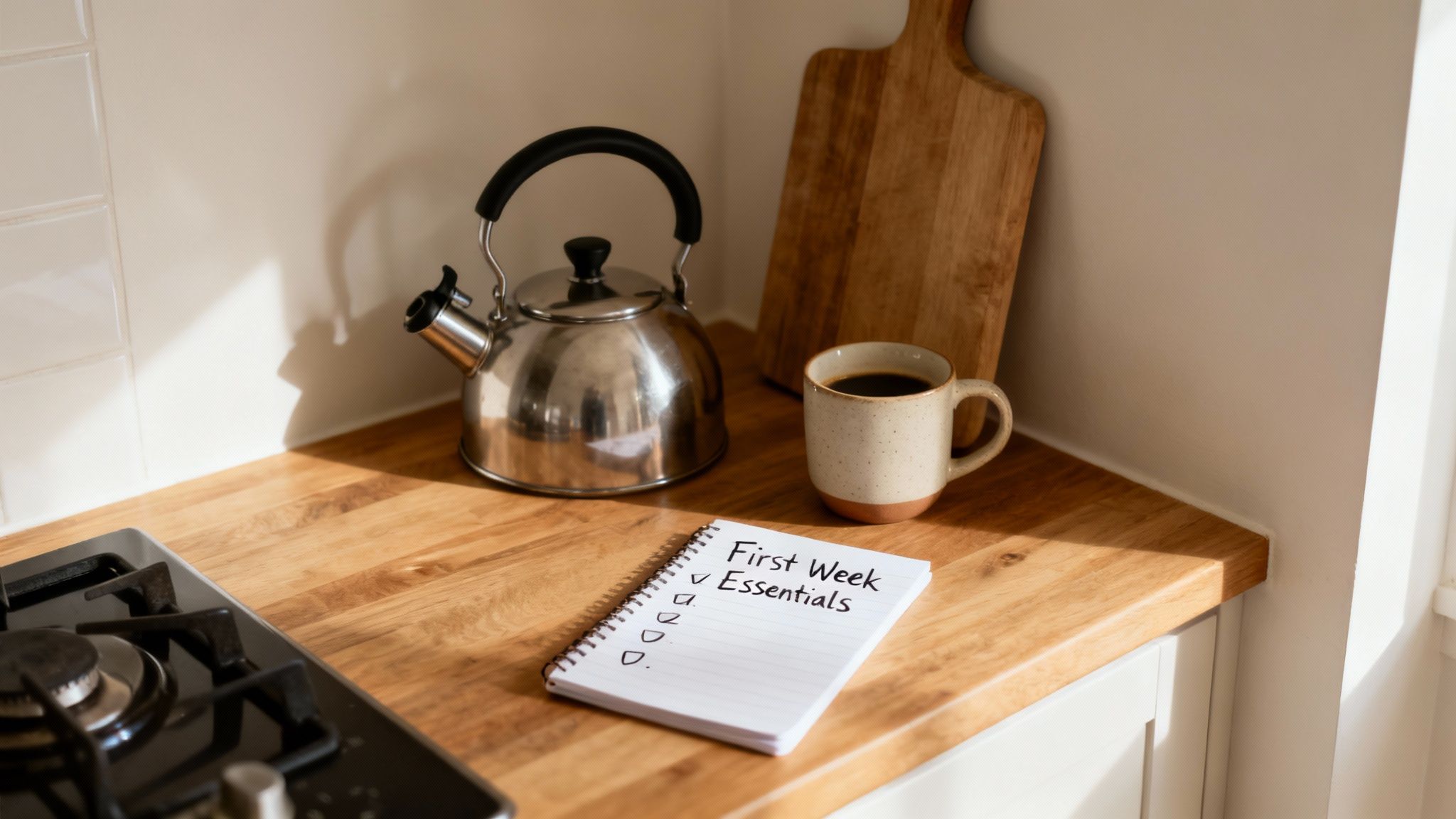
Prioritizing Your First Week Needs
Think of your first shopping list as a “first week survival kit.” These are the absolute non-negotiables that will get you through the marathon of unpacking boxes and figuring out where everything goes. Let’s be real, cooking at home is one of the fastest ways to save money, so getting the kitchen up and running should be priority number one.
We’re going to start with a simple checklist of these must-haves. It’s a roadmap to help you focus on what’s critical right now versus what can wait, ensuring you feel prepared instead of just surrounded by clutter. A little strategy here makes the whole process way more enjoyable (and budget-friendly).
One of the most common mistakes is splurging on specialty gadgets before you even have the basics. A high-quality chef’s knife and a versatile skillet will see more action in your first year than a panini press or a spiralizer ever will.
To make this even easier, here’s a quick look at the absolute bare-bones items you’ll want to have on hand to cook, eat, and clean up during that first chaotic week.
First Week Kitchen Survival Checklist
| Category | Essential Items | Why You Need It First |
|---|---|---|
| Cookware | A non-stick skillet, a small saucepan | You can make almost anything with these two: eggs, pasta, stir-fry, soup. |
| Dinnerware | 2 plates, 2 bowls, 2 mugs | Enough for yourself and a guest without creating a mountain of dishes. |
| Utensils | A fork, knife, spoon; a spatula, a large spoon | The bare minimum for both eating your food and cooking it. |
| Prep Tools | 1 good chef’s knife, 1 cutting board | Essential for safely chopping vegetables, meat, and anything else. |
| Cleaning | Dish soap, a sponge, kitchen towels | Because no one wants to wake up to a sink full of dirty dishes. |
This isn’t your forever kitchen, but it’s enough to make you feel at home right away.
Building a Foundation for Your New Home
Getting a comfortable, functional kitchen sorted is the first real step in making an apartment feel like your own. The right tools don’t just make cooking easier—they actually inspire you to try new things and have people over. As you furnish your space, keep an eye out for starter sets and bundles, which can be a great value. If you need more inspiration for decorating on a dime, you can find some great tips on finding affordable home decor online.
In the sections that follow, we’ll dive deeper into each of these categories, with recommendations for every budget and lifestyle. We’ll cover everything from picking your first set of pots and pans to figuring out which small appliances will actually make a difference in your day-to-day routine.
So, How Much Is This Kitchen Going to Cost?
Let’s talk money. I know, it’s not the fun part, but figuring out a budget is the first real step to building a kitchen that works for you. A little financial planning upfront saves you from that “oops, I spent my grocery money on a fancy can opener” moment and turns a stressful task into something you actually control.
Setting up a kitchen from zero is easily one of the biggest expenses you’ll face when moving in. Think about it: a single person’s grocery bill can run anywhere from $75 to $100 a week. That adds up fast. But before you can even think about buying that first carton of eggs, you need the gear to cook them. The initial hit for dishware, tools, and cookware can easily land between $400 and $800. A clear budget isn’t just a good idea; it’s essential.
If you want to dig deeper into the numbers, Apartment List has some great data and checklists on first-apartment costs that are worth a look.
A Budget Framework That Actually Works
Instead of getting hung up on one magic number, think in tiers. This approach lets you match your spending to what you can actually afford and what you truly need right now.
- The “Bare-Bones” Budget ($200 – $400): This is all about survival mode—in a good way! You’re hunting for starter sets, hitting up thrift stores, and becoming best friends with budget retailers. The goal here is pure function. Brand names can wait.
- The “Mid-Range” Budget ($400 – $800): Now we’re talking. You have a little more room to invest in better quality for the things you’ll use every single day. This might mean getting a non-stick skillet that will actually last, a decent knife set, or a small appliance you’ll genuinely use, like a solid coffee maker.
- The “Invest-for-the-Future” Budget ($800+): This is where you can start thinking long-term. In this tier, you can pick a few key pieces that will stay with you for years to come. We’re talking about a high-performance blender, a quality stainless steel cookware set, or maybe even that stand mixer you’ve been dreaming about.
Your budget isn’t just a limit; it’s your game plan. It tells you where to save your cash and where it’s smart to splurge, making sure every dollar helps build a kitchen you’ll be happy to cook in.
Smart Ways to Stretch Your Dollars
Managing your money is more than just setting a spending cap; it’s about making clever choices. A few strategic moves can make your kitchen essentials for first apartment budget go way further than you’d think.
Prioritize Tools That Do Double (or Triple) Duty
Why buy three different pots when one can do the job? A good Dutch oven can handle soups, stews, braising meat, and even baking bread. A deep, wide skillet can be your go-to for frying, sautéing, and simmering sauces. Choosing items that pull their weight saves you both money and precious cabinet real estate.
The Great Debate: Starter Sets vs. Individual Pieces
Bundles can be a fantastic deal, especially for things like dinnerware, flatware, and basic pots and pans. You get a cohesive look for a lower price per item. But when it comes to kitchen tools and knives, buying à la carte is almost always the smarter move. It’s better to hand-pick one high-quality chef’s knife and a sturdy spatula than to get a set full of flimsy gadgets you’ll never touch.
Know Where to Save and Where to Splurge
This is the golden rule of outfitting a kitchen on a budget. Seriously.
- Save on: Things like basic mixing bowls, simple wooden spoons, dish towels, and everyday dinnerware. These items are workhorses, and you don’t need to spend a lot for them to do their job well.
- Splurge on: A high-quality chef’s knife, a durable cutting board, and the one skillet you’ll use most often. These are the items that directly impact your cooking experience. Investing in quality here will make cooking safer, faster, and a whole lot more fun.
By breaking it down like this, you can tackle your kitchen shopping with a clear plan and avoid that overwhelming feeling of financial dread.
Choosing Your Core Cookware And Bakeware
Okay, you’ve got a budget. Now for the fun part: picking the tools that will turn your groceries into actual meals. We’re talking about the pots, pans, and baking dishes that form the foundation of any functional kitchen. This isn’t about cramming your cabinets with every gadget under the sun. It’s about starting with a small, versatile set of kitchen essentials for your first apartment that can handle just about anything you decide to cook.
Having the right cookware makes a world of difference—it can be the line between cooking feeling like a chore and feeling like a creative outlet. But when you walk down that store aisle, the options can be overwhelming. Let’s break down the main types so you can pick the perfect starting lineup for how you want to cook.
Decoding Cookware Materials
You’ll mainly run into three materials: non-stick, stainless steel, and cast iron. Each has its own personality and purpose, and knowing the difference is key to making a smart buy.
- Non-Stick: This is the undisputed champion for beginners. Its coated surface is incredibly forgiving, which is a lifesaver when you’re cooking delicate things like eggs, pancakes, or fish. Cleanup is also a total breeze. The catch? The coating wears down over time and needs a little TLC—no metal utensils, please!
- Stainless Steel: Think of this as the durable workhorse of the kitchen. It heats evenly, can get screaming hot for a perfect sear on meat, and is almost always oven-safe. It’s also non-reactive, so you can simmer acidic things like tomato sauce for hours without it picking up a metallic taste. There’s a small learning curve to keep food from sticking, but it’s a skill worth picking up. Our guide on stainless steel versus nonstick cookware gets into all the details if you’re curious.
- Cast Iron: The heritage piece. A well-seasoned cast iron skillet is nearly indestructible and just gets better with age, developing a natural non-stick surface. Nothing holds heat quite like it, making it the go-to for searing steaks, frying chicken, or even baking cornbread. The trade-offs are that it’s heavy and requires specific care to keep it from rusting.
This decision tree can help you figure out how to match your budget with the right cookware strategy.
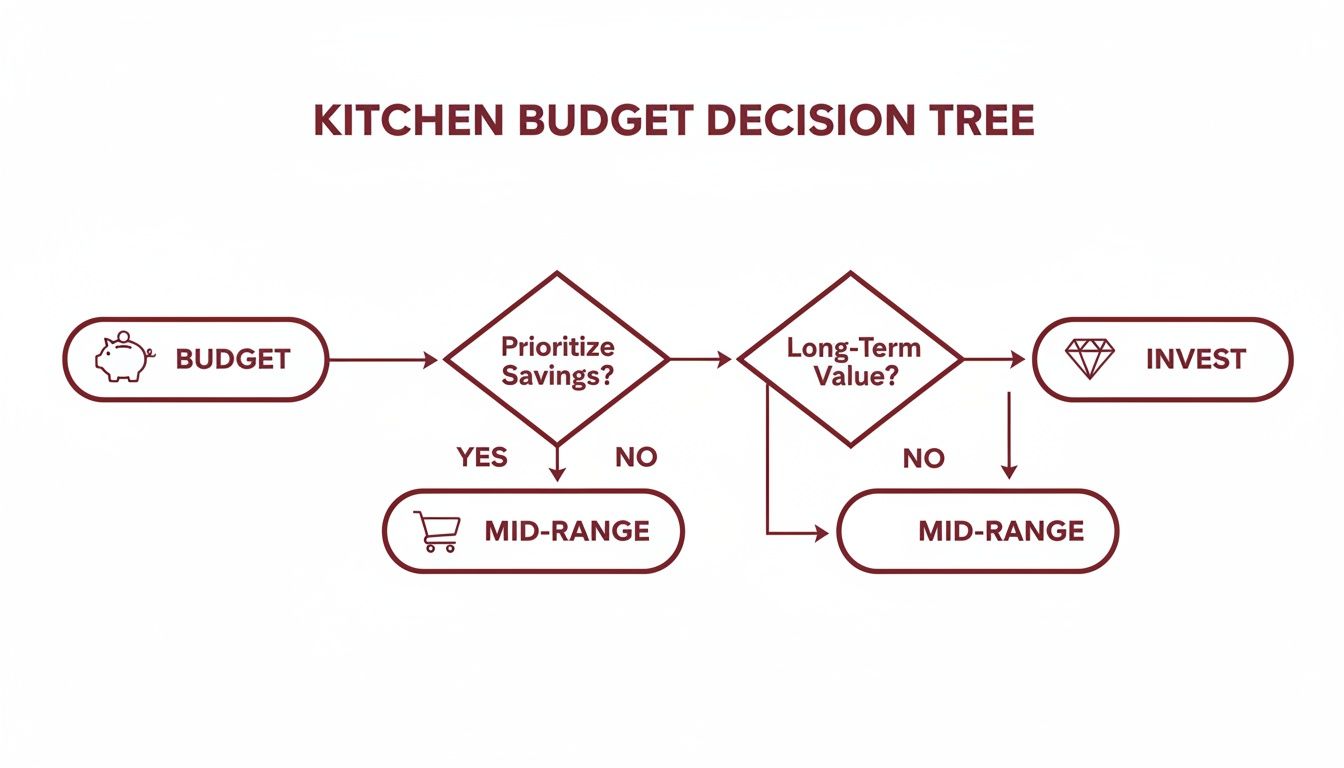
The main takeaway here is pretty simple: a great kitchen can be built at any price point. It’s all about prioritizing the items that will give you the most bang for your buck.
The Holy Trinity Of Cookware
Forget those massive 12-piece sets for now. Seriously. You can cook roughly 90% of recipes with just three core pieces. This minimalist approach saves you money and, just as importantly, precious cabinet space.
- A 10-Inch Skillet: This will be your everyday hero. A non-stick version is a fantastic place to start because it’s so easy to use for sautéing vegetables, scrambling eggs, or pan-frying a chicken breast.
- A 3-Quart Saucepan: This is your go-to for boiling pasta, simmering sauces, making oatmeal, or just heating up a can of soup. Try to find one with a heavier bottom for more even heat and a lid that fits snugly.
- A Large Stockpot (6-8 Quarts): It might seem huge, but a stockpot is a multitasking monster. It’s what you’ll need for big batches of pasta, chili, or soup, and you can even use it to steam vegetables with the right insert.
By starting with these three pieces, you cover all your bases without the clutter. You can always add specialty items later as you discover what you love to cook.
Don’t Forget The Bakeware Basics
Your oven is a powerful tool, but it’s pretty useless without the right gear to go in it. Just like with cookware, a couple of key pieces will handle the vast majority of your baking and roasting needs.
- A Rimmed Baking Sheet: Also known as a sheet pan, this is probably the most versatile piece of bakeware you can own. Use it to roast vegetables, bake cookies, create entire sheet-pan dinners, or just to catch drips from a pie. A sturdy aluminum one is a fantastic, affordable choice.
- A 9×13 Inch Baking Dish: This is the classic casserole dish for a reason. It’s essential for things like lasagna, baked ziti, casseroles, brownies, and simple cakes. You can get them in glass, ceramic, or metal, but a glass one is a perfect, inexpensive starting point.
Investing wisely in these five core items—a skillet, saucepan, stockpot, baking sheet, and baking dish—is the secret to setting yourself up for success from day one.
The Essential Kitchen Tools And Utensils
If your pots and pans are the stage, the tools and utensils are the backstage crew that makes the show run smoothly. This is all the “drawer stuff”—that jumble of small but mighty gadgets that handles all the chopping, flipping, stirring, and serving. Forget just forks and spoons; we’re talking about the unsung heroes that make cooking feel less like a chore and more like a creative outlet.
Honestly, having the right tools is the difference between wrestling with an onion using a flimsy knife and gliding through it safely. They’re the support system for every single meal you’ll make.
The Absolute Bare Minimum
Before you even think about anything else, get these. These are the non-negotiables, the items you’ll reach for constantly to make just about any simple meal. Think of it as your kitchen survival kit.
- A High-Quality Chef’s Knife (8-inch): If you’re going to splurge on one thing, make it this. A sharp, well-balanced knife makes every cutting task faster, safer, and way more enjoyable. It will seriously handle 90% of your prep work.
- A Durable Cutting Board: A good board protects your countertops and, just as importantly, the blade of your fancy new knife. Go for a large one (wood or plastic is fine) so you have plenty of room to work without veggies flying everywhere.
- Measuring Cups and Spoons: Baking is basically science, and even everyday cooking often needs some precision. A standard set is crucial for following recipes without guessing.
- A Can Opener: It’s one of those things you completely forget about until you’re staring at a can of tomatoes with no way in. Don’t learn this the hard way. Get a sturdy one that turns without a fight.
- A Sturdy Colander: Perfect for draining pasta, washing vegetables, or rinsing a can of beans. A solid metal or durable plastic one will stick with you for years.
Smart Additions For Easier Cooking
Got the basics covered? Great. These next few items will immediately upgrade your cooking game, smoothing out the common pain points and making your workflow feel much more natural. You don’t need them on day one, but they should be next on your list.
- Spatulas: You’ll want at least two. A flexible silicone or rubber spatula is a champ for scraping every last bit out of a bowl or a non-stick pan. A firmer metal or plastic one (a turner) is what you need for flipping pancakes or burgers.
- Whisk: So much better than a fork for mixing batters, dressings, or scrambling eggs. It just works.
- Vegetable Peeler: A simple Y-peeler makes peeling potatoes, carrots, and apples a breeze instead of a tedious chore.
- Tongs: Think of these as your heat-proof fingertips. They’re indispensable for flipping chicken, tossing a salad, or grabbing hot food safely from a pan.
- Mixing Bowls: A set of three nesting bowls is perfect. Use them for prepping ingredients, mixing a cake batter, or even serving a big salad.
An organized drawer is an efficient drawer. The best tools in the world won’t help you if you can’t find them. Simple solutions like utensil holders and drawer dividers keep everything tidy and within easy reach.
Nice-To-Haves For When You Settle In
These tools aren’t strictly necessary when you’re just starting, but they add a ton of convenience and open up new culinary doors once you get comfortable. Add these to your birthday or holiday wish list.
- Grater: A box grater is a classic for a reason. It’s great for shredding cheese, grating zucchini for baking, and zesting a lemon.
- Kitchen Shears: You’ll be surprised how often you reach for these—snipping fresh herbs, cutting up bacon, or even breaking down a whole chicken.
- Garlic Press: Sure, you can mince garlic with your knife, but a press makes it quick, easy, and keeps your hands from smelling for days.
- Ladle: An absolute must-have for serving soups, stews, and chili without spilling it all over the counter.
By building your tool collection in these tiers, you can stock your utensil drawer without getting overwhelmed. Start with the bare minimum to get cooking, then layer in the smart additions and nice-to-haves as your budget allows and your skills grow. It’s a simple strategy to make sure you have what you need, right when you need it.
Selecting Your First Small Appliances
Small appliances are the true workhorses of a modern kitchen, the specialized gadgets that make life so much easier. But in a first apartment, where both your budget and your counter space are probably stretched thin, every single appliance has to earn its spot. This is all about making smart, honest choices based on your actual life, not the fantasy life where you suddenly start baking bread every Sunday.
Instead of getting sucked into buying every trendy new gadget, let’s zero in on the “big three” that deliver the most bang for your buck: a microwave, a coffee maker, and a toaster or toaster oven. The key to choosing the right kitchen essentials for your first apartment—and avoiding a graveyard of dusty, unused appliances—is to get brutally honest about your daily habits.
The Big Three Small Appliances
When you’re just starting, a few key appliances will do most of the heavy lifting. Think about your daily routine. Are you constantly reheating leftovers after a long day? Do you need that first cup of coffee just to feel human? Is a quick piece of toast your go-to breakfast? Your answers point you directly to your priorities.
- Microwave: For most people, this is completely non-negotiable. It’s the undisputed champion of reheating meals, defrosting frozen chicken in a pinch, and making quick snacks like popcorn. Its sheer convenience makes it an absolute must-have for any busy person.
- Coffee Maker: If you’re a daily coffee drinker, buying even a basic coffee maker will pay for itself in a matter of weeks. The real choice is between a classic drip machine, a simple French press, or a single-serve pod system—and that decision comes down to your taste, your budget, and how much effort you’re willing to put in before you’ve had your caffeine.
- Toaster or Toaster Oven: A simple two-slot toaster is perfect for, well, toast and bagels. A toaster oven, on the other hand, is a multi-tasking superstar. It can toast, bake, broil, and reheat small meals, often making your big oven totally unnecessary for a solo dinner. It’s a massive space and energy saver.
Choosing your small appliances is like hiring a small team for your kitchen. You don’t need a huge staff; you just need a few reliable specialists who show up for work every single day.
Questions to Ask Before You Buy
To keep your limited counter space from becoming an appliance graveyard, run every potential purchase through this simple filter. Be honest with yourself.
- How Often Will I Really Use This? This is the most important question. That fancy high-powered blender seems like a great idea, but if you only make a smoothie once a month, is it really worth $100+ and the prime real estate on your counter?
- Does It Do More Than One Thing? In a small kitchen, multi-functionality is your best friend. A toaster oven beats a regular toaster because it does more. An immersion blender can blend soups right in the pot, make smoothies, and whip cream, all while taking up way less space than three different gadgets.
- Do I Have The Space For It? This is the dealbreaker. Measure your counter and cabinet space before you click “buy.” An appliance is completely useless if it doesn’t fit where you need it to, or if you have to excavate it from a packed closet every time you want to use it.
By thinking through these points, you can put together a collection of small appliances that actually makes your life easier. For a deeper dive into specific models and features, check out our complete kitchen appliance buying guide to help you shop smarter. The goal here is to invest in convenience you’ll genuinely use, making sure every item in your new kitchen is a valuable player, not just a benchwarmer.
Smart Storage For Small Apartment Kitchens
Moving into your first place is a huge milestone. But let’s be real, that freedom often comes with a trade-off: what you gain in independence, you might lose in square footage. This is never truer than in the kitchen, where countertops seem to vanish under a few appliances and cabinets fill up in the blink of an eye.
A small kitchen doesn’t have to feel like a culinary closet, though. With a little strategy, you can create a functional, organized space that feels open and is actually a joy to use. The goal is to make every single inch work for you, turning those overlooked nooks and crannies into valuable real estate. It’s all about thinking vertically, organizing intelligently, and picking storage solutions that add efficiency, not just more stuff.
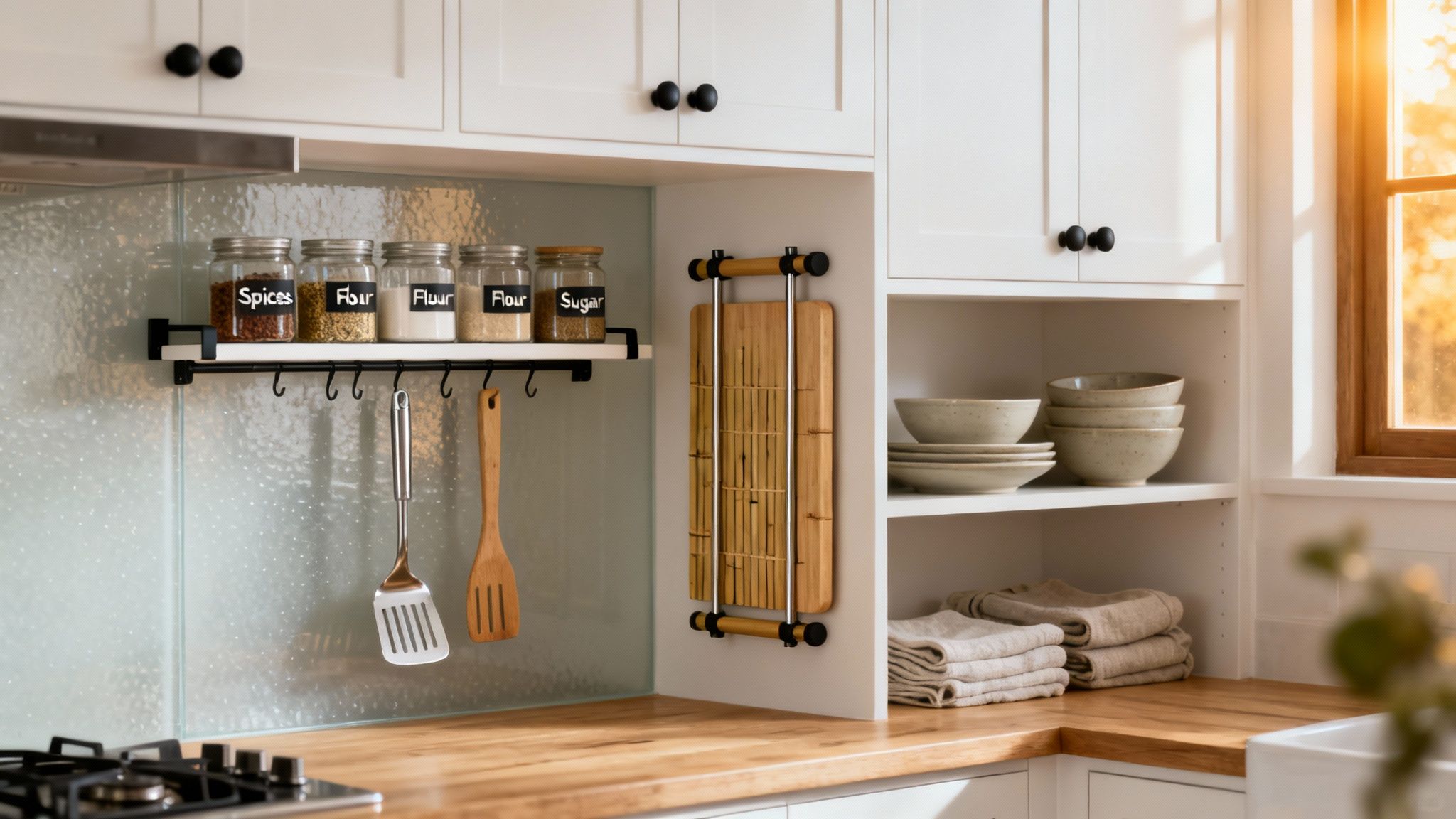
Go Vertical And Get Creative
In almost every small kitchen, the most underutilized space is the walls. When you can’t build out, you have to build up. Using your vertical space not only gets bulky items off your precious countertops but also draws the eye upward, making the whole room feel bigger.
- Magnetic Knife Strips: Ditch that clunky knife block that eats up half your prep area. A wall-mounted magnetic strip keeps your knives safely within reach and instantly frees up a significant patch of counter space.
- Wall-Mounted Shelving: A few simple floating shelves can hold your everyday dishes, glassware, or canisters of flour and sugar. This makes them easy to grab and turns your practical items into part of the kitchen’s decor.
- Hanging Pot Racks: If you’ve got the ceiling or wall space for it, a hanging pot rack is a classic space-saver for a reason. It means you won’t have to dig through a noisy, jumbled cabinet every time you need to find a single skillet.
Master Your Cabinets And Drawers
Inside your cabinets and drawers is where the real chaos can take hold. A few simple, inexpensive tools can bring order to the madness and practically double your usable space. The secret is to create designated zones so that everything has a home.
Storage is a huge priority for homeowners these days, with a whopping 76% adding specialty built-in features during kitchen renovations. For renters, this just highlights how important it is to find clever, non-permanent ways to maximize the storage you already have. You can see more on kitchen trends and the focus on storage and how it’s become a central focus.
Think of your cabinets like a filing system. You wouldn’t just toss random papers into a drawer and hope to find what you need later. Apply that same logic to your food and tools for a kitchen that practically organizes itself.
Here are a few game-changing organizers that won’t break the bank:
- Shelf Risers: These simple wire shelves are a lifesaver. They instantly create a second level inside your cabinets, perfect for stacking plates, bowls, or mugs without the risk of an avalanche.
- Tension Rods: This is one of the best budget hacks out there. Stand a few small tension rods vertically in a deep cabinet to create perfect, tidy slots for organizing cutting boards, baking sheets, and pot lids. No more clatter.
- Drawer Dividers: Adjustable dividers are non-negotiable if you want to prevent your utensil drawer from becoming the dreaded “junk drawer.” They create neat compartments for spatulas, whisks, and everything in between.
Even the tiniest kitchens can be surprisingly efficient. We’ve put together a table to help you tackle the most common storage headaches with solutions for every budget.
Space-Saving Solutions For Your Kitchen
| Common Problem | Budget-Friendly Solution | Investment Solution |
|---|---|---|
| No pantry space | Over-the-door pantry organizer | Freestanding pantry cabinet or rolling cart |
| Cluttered countertops | Magnetic knife strips, utensil crocks, wall-mounted spice rack | Under-cabinet shelving or a dedicated appliance garage |
| Jumbled pots and pans | Tension rods for lid storage, stackable pan organizers | Pull-out cabinet organizers or a hanging pot rack |
| Messy drawers | DIY cardboard dividers or adjustable plastic trays | Custom wood drawer inserts or tiered organizers |
| Wasted corner cabinet space | Grouping lesser-used items in bins for easy access | Installing a Lazy Susan or pull-out corner shelving |
By combining a few of these strategies, you can take back control of your small kitchen. A well-organized space not only looks a hundred times better, but it also makes cooking faster and way more enjoyable. You’ll turn what could have been a point of frustration into one of the most functional rooms in your new home.
Your Kitchen Essentials: Pros, Cons, and Common Questions
Setting up a kitchen involves a lot of choices. To make things clearer, here’s a balanced look at the advantages and potential downsides of investing in a basic kitchen starter set, which many first-time renters consider.
Pros & Cons of a Kitchen Starter Set
- Pros:
- Cost-Effective: Buying items bundled together is almost always cheaper than purchasing them individually.
- Convenience: A single purchase covers most of your bases, saving you time and decision-making energy.
- Cohesive Style: Sets ensure your plates, bowls, and cookware have a matching look right from the start.
- Cons:
- Variable Quality: In many sets, some items are great while others are lower quality “fillers” you’ll soon replace.
- Unnecessary Items: You might end up with gadgets or pot sizes you’ll never use, which just take up precious space.
- Less Personalization: You don’t get to hand-pick each tool to suit your specific cooking style or preferences.
Real-World Feedback: What First-Time Renters Say
To give you a clearer picture, here are a few common experiences people share after outfitting their first kitchen:
- “I bought a huge 15-piece cookware set, and honestly, I only ever use the skillet and one small pot. I wish I’d saved the money and just bought two high-quality pans instead.” – Jessie P.
- “My friends told me to splurge on a good knife, and I’m so glad I listened. Prepping ingredients is so much easier and feels safer than when I used the cheap knives at my parents’ house.” – Mark T.
- “Don’t forget about storage! My first kitchen had tiny cabinets. Buying some cheap shelf risers and a magnetic knife strip was a total game-changer for making the space usable.” – Alia K.
Frequently Asked Questions
1. What is the one kitchen item I should splurge on?
If you can only invest in one really good piece, make it a high-quality 8-inch chef’s knife. A great knife makes all your chopping and dicing faster, safer, and honestly, a lot more enjoyable. It will outlive nearly every other tool in your kitchen and makes a massive difference in your day-to-day cooking.
2. Should I buy kitchen items in a set or individually?
This is a great question, and the answer is: it depends. Go for sets with dinnerware and basic cookware for value and a cohesive look. Buy individually for knives, utensils, and specialty pans so you can focus on quality and get exactly what you need without the filler.
3. How do I care for my new non-stick pans so they last?
The golden rules for non-stick are: use only wooden or silicone utensils to avoid scratches, wash by hand with a soft sponge (the dishwasher is too harsh), and avoid extreme temperature changes like running a hot pan under cold water, which can cause it to warp.
The Takeaway
Building your first kitchen is a marathon, not a sprint. Start with the essentials that allow you to cook, eat, and clean comfortably. Focus your budget on the items you’ll use every day, like a great knife and a versatile skillet. By making smart, informed decisions now, you’ll create a functional and welcoming space that will serve you well as you turn your first apartment into a real home.
At Reva Housing, we’re here to help you make smarter decisions for your home. Our in-depth guides and reviews are designed to turn your research into purchases you feel good about. Find more expert advice and product comparisons at https://revahousing.com.
