



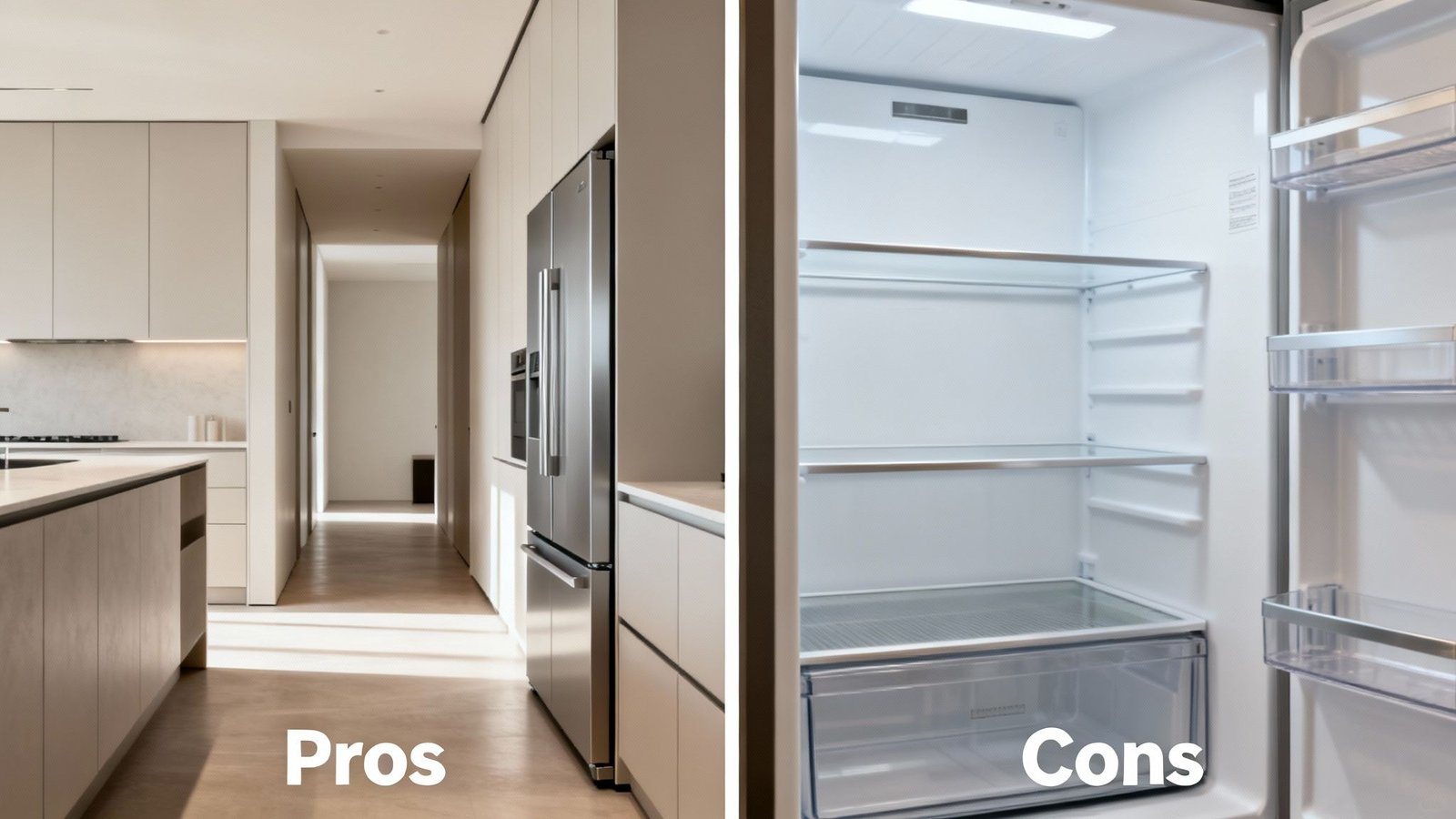
Have you ever walked into a kitchen that just felt… right? Polished, cohesive, and thoughtfully designed? A big part of that feeling often comes down to how the appliances fit with the cabinetry. This is where the counter-depth refrigerator comes in, a design choice that creates that seamless, built-in look without the eye-watering price tag of a custom unit.
So, What Exactly Is a Counter-Depth Refrigerator?
Think of it like the difference between a custom-tailored suit and one you buy off the rack. Both get the job done, but the tailored one fits perfectly, creating a clean, sharp silhouette. A counter-depth refrigerator does the same thing for your kitchen. It’s designed to sit nearly flush with your cabinets, which are typically about 24 inches deep.
This clever design gets rid of the bulky, protruding look of a standard refrigerator, which can stick out 6 inches or more into the walkway. By closing that gap, a counter-depth model gives your kitchen a much more integrated and intentional feel.
Features & Benefits: The Magic of a Seamless Look
The primary feature of a counter-depth refrigerator is its shallower design, but this single detail delivers several practical benefits that can completely transform your kitchen’s vibe.
- Elevated, Custom Look: You get a high-end, nearly built-in appearance without the sky-high cost of a truly integrated unit. The refrigerator aligns with your cabinets, creating a clean, uninterrupted line that makes the whole kitchen feel more polished.
- Improved Traffic Flow: By not jutting out, it frees up precious floor space. This is a game-changer in smaller kitchens or in layouts where a central island can create a tight squeeze.
- A More Open Environment: In modern open-concept homes, a bulky appliance can disrupt the visual transition from the kitchen to the living area. A flush-fitting refrigerator helps the kitchen blend seamlessly into your home.
- Easier Access to Food: Because the shelves are shallower, food is less likely to get lost and forgotten in the back. This makes it easier to see what you have, which can help reduce food waste.
When people ask “what is counter depth?” they’re almost always focused on how the fridge aligns with their cabinets. In most American kitchens, standard base cabinets are 24 inches deep. A true counter-depth refrigerator is built so the main box (not counting the doors and handles) is about 24–25 inches deep. This allows the front of the doors to sit right at the edge of the counter, rather than sticking way out like a standard 30–34 inch deep model.
This design has exploded in popularity, especially with open-concept layouts. As a result, nearly every major appliance brand has jumped on board, offering extensive counter-depth lines. You can learn more about the growth of this appliance market segment here.
Standard Vs. Counter-Depth: A Visual Comparison
Seeing the two styles in action is really the only way to get it. Picture this: you’re weaving through your kitchen during a hectic morning. A standard-depth fridge juts out several inches from the surrounding cabinets, creating a bottleneck right where you don’t need one—usually next to an island or a main walkway. It can really throw off the flow of the room, making a tight space feel even more cramped.
Now, imagine that same kitchen with a counter-depth model. It’s designed to sit nearly flush with your cabinetry, maintaining that clean, unbroken line. The whole kitchen instantly feels more open and intentional. It’s a subtle change, but one that makes a huge difference in how your space looks and feels.
This diagram nails the core concept, showing how a standard fridge protrudes while a counter-depth model tucks in nicely.
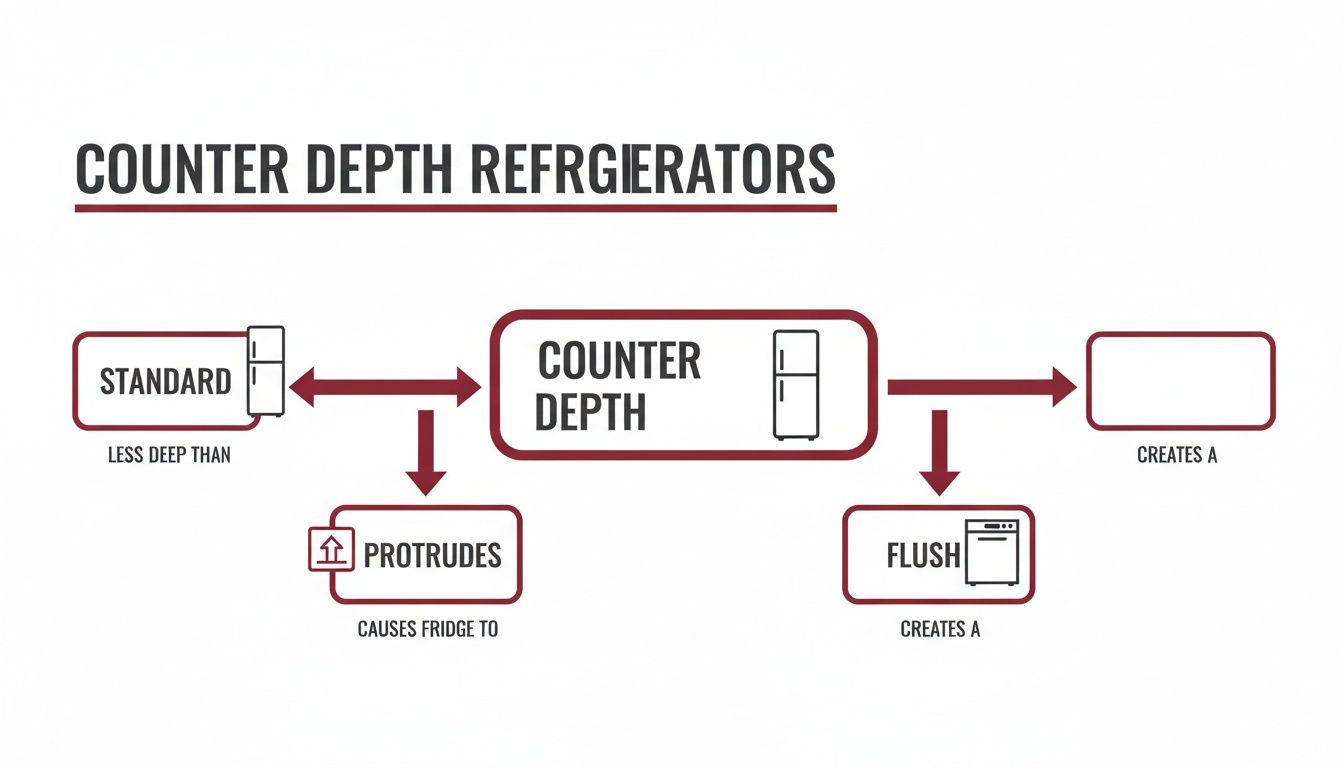
As you can see, the main draw of a counter-depth refrigerator is that seamless, integrated look. You’re minimizing how far the appliance sticks out, and in return, you get a much cleaner design.
A Side-by-Side Breakdown
While the visual difference is pretty clear, the practical trade-offs are just as important. Choosing between these two really comes down to balancing aesthetics with your actual storage needs and budget. What works perfectly for one person might be a total dealbreaker for another, especially when you start talking about interior space.
For instance, a big family that buys groceries in bulk is going to feel the pinch of a counter-depth model’s reduced capacity far more than a couple who just shops for a few days at a time. The shallower shelves mean less room for oversized items like pizza boxes or bulky containers—a crucial detail to consider for day-to-day use.
The core trade-off is simple: you give up a few cubic feet of storage on the inside for a streamlined look and better traffic flow on the outside. Knowing what your household prioritizes will make the decision a whole lot easier.
So, let’s get into the specifics. The table below lays out the key differences you’ll find when shopping, from the actual dimensions to what you can expect to pay.
Counter Depth vs. Standard Depth Refrigerators at a Glance
This quick comparison breaks down what you gain and what you give up with each option, helping you decide if that seamless look is worth the trade-off for your kitchen and lifestyle.
| Feature | Counter-Depth Refrigerator | Standard-Depth Refrigerator |
|---|---|---|
| Typical Depth (Box Only) | 24–25 inches to align with standard kitchen cabinets. | 30–34 inches, causing it to stick out quite a bit. |
| Total Depth (incl. Doors) | Generally around 28–31 inches, which allows the doors to swing open without hitting anything. | Often measures 35–37 inches deep, including the doors and handles. |
| Storage Capacity | Typically ranges from 17–25 cubic feet, with an average around 22 cu. ft. | Offers much more room, usually between 20–30+ cubic feet. |
| Average Price Point | Generally 10–20% more expensive than standard models with similar features. | More budget-friendly with a ton of options across different price points. |
| Best For | Kitchens where a clean, built-in look and clear walkways are the top priority. | Households that need maximum storage capacity and aren’t as concerned with a flush fit. |
Ultimately, this side-by-side view should give you a clear picture of the real-world implications each style would have in your home, making it easier to choose the right fit for your needs.
How To Measure Your Space For The Perfect Fit
Getting the measurements right is the most critical step if you want that flawless, built-in look with a counter-depth refrigerator. Think of it like getting a custom suit made for your appliance—every single inch counts. I’ll walk you through measuring your space like a pro, making sure your new fridge fits perfectly from day one.
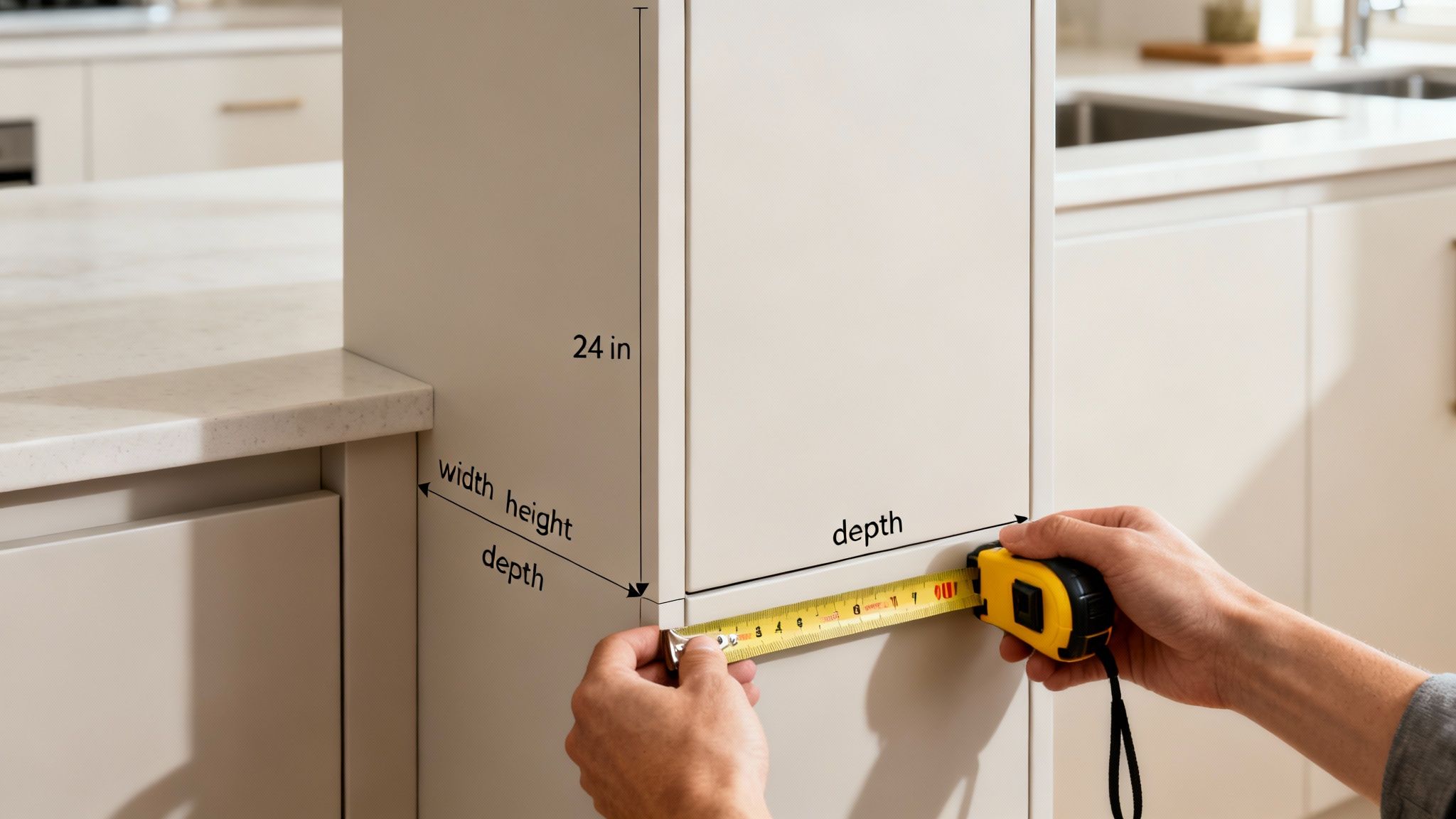
So, before you fall in love with a specific model, grab a tape measure and get the real dimensions of your cabinet cutout. Don’t just eyeball it. Precision is your best friend here.
Step 1: Measure The Cutout Dimensions
Let’s start with the basics. You’ll need three key measurements from the space where the refrigerator will live. It’s always a good idea to measure at two or three different points for each dimension, just in case your floors or cabinets aren’t perfectly level. Trust me, it happens more than you think.
- Height: Measure from the floor to the bottom of the cabinet above. Check this on the left and right sides and use the smallest number you get.
- Width: Measure from one side of the cabinet opening to the other. Again, take this measurement at the top, middle, and bottom, and stick with the smallest figure.
- Depth: This one is crucial for a counter-depth model. Measure from the back wall all the way to the front edge of your countertops. This number is what tells you how flush your new appliance can actually be.
Step 2: Account For Breathing Room
This is the step everyone forgets. A refrigerator isn’t just a static box; it’s a hard-working machine that needs to breathe to work efficiently. Proper ventilation prevents it from overheating, helps you save on energy, and can seriously extend the appliance’s lifespan.
Most manufacturers recommend a specific amount of clearance space for proper airflow. Failing to leave this “breathing room” can not only lead to poor performance but could also void your warranty.
Always check the manufacturer’s specs for the exact model you’re considering, but here are some general guidelines for that extra space:
- Top: Leave at least 1 inch of clearance above the refrigerator.
- Sides: You’ll want about 1/8 to 1/2 inch on each side.
- Back: Plan for at least 1 to 2 inches between the back of the fridge and the wall.
Step 3: Plan The Entire Delivery Path
Finally, think beyond the kitchen itself. Your perfectly sized refrigerator won’t do you any good if the delivery team can’t get it into your home. Measure the width of every doorway, hallway, and tight corner on the delivery route, starting from your front door.
Don’t forget to account for any pesky obstacles like stair railings or entryway furniture. A little planning here will save you a massive headache on installation day. This same advice applies to all large appliances; you can learn more about what to consider when planning for new installations in our guide on how to choose a dishwasher. With these measurements in hand, you can shop with total confidence.
Pros and Cons of Going Counter-Depth
Deciding if a counter-depth refrigerator is right for your home means weighing its sleek, integrated look against some very real practical considerations. Is the aesthetic upgrade worth the potential trade-offs? Let’s break down the honest pros and cons to help you figure out what matters most for your kitchen and your life.
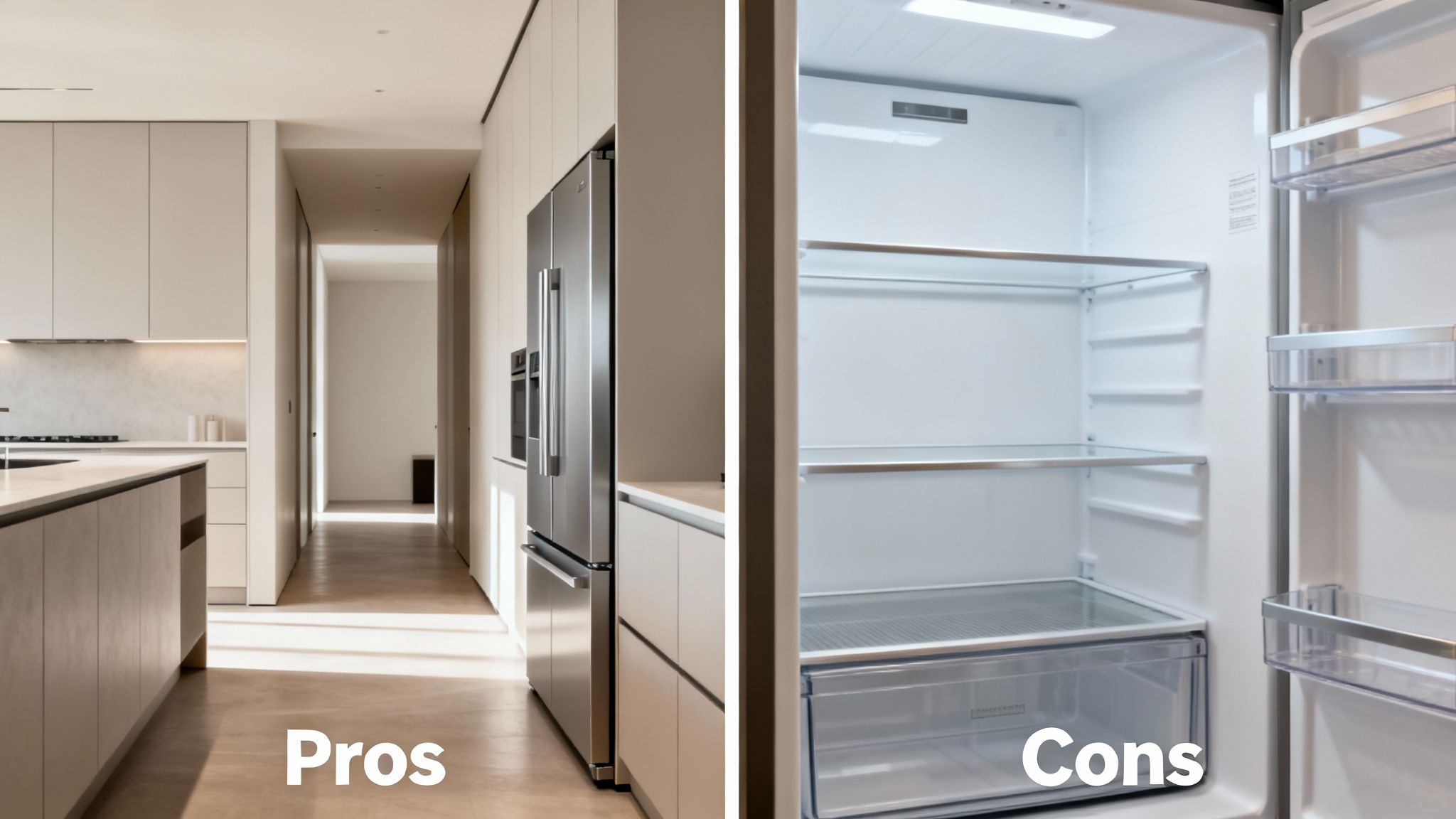
This balanced view will help you move past the showroom appeal and get a feel for the day-to-day reality of living with one.
Pros: Why Homeowners Love the Look
- Clean, Integrated Aesthetic: This is the top reason people choose them. You get a high-end, nearly built-in appearance without the custom price tag, creating a seamless line with your cabinets.
- Better Kitchen Flow: By not sticking out six or more inches, it improves traffic flow and opens up walkways, which is essential in smaller kitchens or spaces with a center island.
- Makes Spaces Feel Larger: A flush-fitting refrigerator helps the kitchen blend into the rest of an open-concept home, making the entire area feel more spacious and cohesive.
- Improved Food Visibility: The shallower depth means food is less likely to get lost in the back, helping to reduce waste and making it easier to find what you need quickly.
Cons: The Practical Trade-Offs
- Less Storage Capacity: This is the biggest drawback. You’ll typically lose 10-20% of the internal cubic feet compared to a standard model, which can be a deal-breaker for large families.
- Higher Price Point: Expect to pay a 10-20% premium for the specialized design and engineering required to fit components into a shallower frame.
- Fewer Model Options: While growing in popularity, the selection of counter-depth models is still smaller than for standard refrigerators, which might limit your choices for features or brands.
- Can Still Protrude Slightly: Remember, only the refrigerator box is counter-depth. The doors and handles must stick out past the counters to open properly, so it’s not a truly flush, built-in look.
Customer Reviews: What Do Owners Really Think?
To give you a real-world perspective, here are some paraphrased impressions from actual owners:
- Positive Feedback: “I was hesitant about losing storage space, but I don’t regret it for a second. My kitchen feels so much bigger and more organized. The best part is that I can actually see everything in the fridge now—no more science experiments hiding in the back!”
- Constructive Feedback: “I love the sleek look, but I do miss the extra space for bulk items. We had to get better at organizing the freezer, as it fills up quickly. It’s a fantastic choice for aesthetics, but families who buy in bulk should definitely consider their storage habits first.”
Is The Higher Price For Counter Depth Worth It?
Let’s get straight to it: counter-depth refrigerators cost more. It’s often the first thing people notice, and it leaves many wondering if that sleek, built-in look is really worth the extra cash. What are you actually paying for? The premium isn’t just for style points; it’s an investment in clever engineering, a more functional kitchen layout, and potentially, your home’s future resale value.
The higher price tag comes down to the complex design work needed to cram modern, efficient refrigeration tech into a much shallower frame. Think about it—manufacturers have to completely re-engineer core components like compressors and condensers to work just as well in a tighter space, all without sacrificing too much precious interior volume. That specialized manufacturing process just costs more than churning out their standard-depth cousins.
The global counter-depth refrigerator market is already valued at around $12 billion and continues to grow, proving homeowners are willing to invest in the look and function. You can discover more insights from this global market analysis if you’re curious about the numbers.
By choosing a counter-depth model, you’re not just buying an appliance; you’re investing in a feature that is highly desirable in modern homes. This can be a key selling point that adds tangible value if you decide to sell your home down the road.
To make the right call for your own home, it helps to weigh all your options. A comprehensive resource like our kitchen appliance buying guide can help you sort through the pros and cons. Ultimately, the real value of a counter-depth refrigerator is found in the daily satisfaction of living in a well-designed, functional, and beautiful kitchen.
Frequently Asked Questions (FAQs)
Here are answers to a few common questions that buyers have when considering a switch to a counter-depth refrigerator.
Do Counter-Depth Refrigerators Need Special Cabinets?
No, and that’s one of their biggest advantages. They are specifically designed to fit into standard 24-inch deep cabinet openings. However, you must leave the manufacturer-recommended clearance space (usually 1-2 inches in the back and smaller gaps on the top and sides) for proper ventilation.
How Much Storage Space Do You Really Lose?
You can expect to lose about 10-20% of your total storage capacity compared to a standard-depth model of the same width. In practical terms, this is often 4 to 6 cubic feet of space. For large families, this can be significant, but for smaller households, the loss is often manageable and worth the aesthetic gain.
Are Popular Styles Available in Counter-Depth Designs?
Yes, absolutely. As they’ve grown in popularity, most major brands now offer counter-depth versions of their most popular styles, including French Door, Side-by-Side, and Bottom-Freezer models. You don’t have to sacrifice features for a flush fit.
How Do You Clean the Exterior Finish?
Most counter-depth models feature a stainless steel finish. To keep it looking its best, use a microfiber cloth with a simple solution of mild dish soap and warm water, always wiping in the direction of the grain. For tougher smudges, our guide on how to clean stainless steel offers several effective methods.
Conclusion: Making the Right Choice for Your Kitchen
Ultimately, the decision to choose a counter-depth refrigerator comes down to your personal priorities. If you value a streamlined, high-end look and improved kitchen flow over maximum storage capacity, it can be a fantastic investment. The seamless integration creates a more open and polished space that feels professionally designed. However, if your household requires every possible cubic foot of storage or you’re on a tighter budget, a traditional standard-depth model remains a practical and cost-effective choice. By carefully measuring your space and honestly assessing your family’s needs, you can confidently decide if this sleek appliance is the perfect final touch for your kitchen.
At Reva Housing, we believe an informed decision is the best decision. A counter-depth refrigerator can be a fantastic investment in your kitchen’s style and function, provided it aligns with your household’s needs. Explore more of our expert guides to find the perfect fit for your home at https://revahousing.com.
