



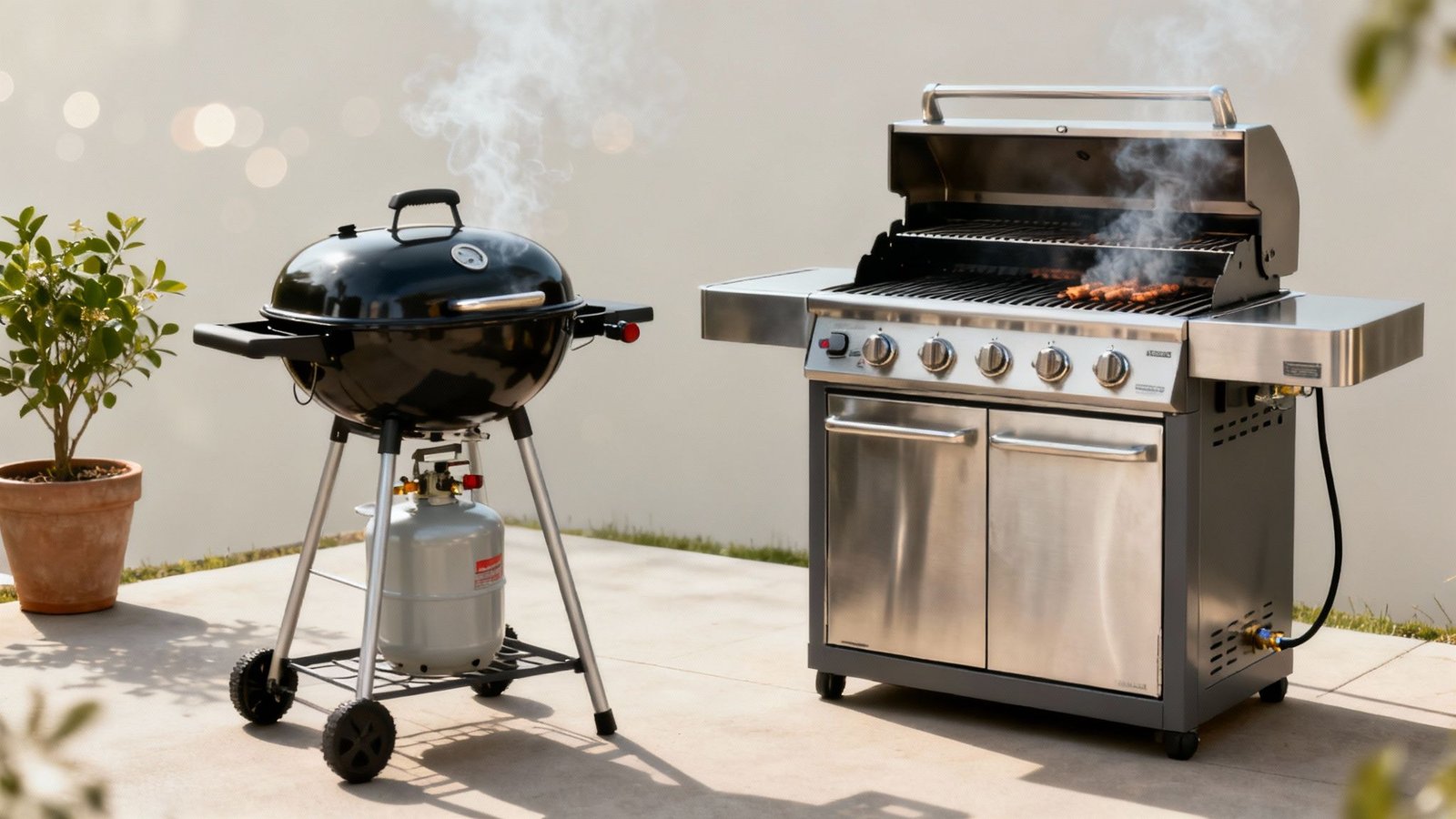
When it comes down to it, the choice between a propane and a natural gas grill boils down to a simple trade-off: do you want the portability and quick setup of propane, or the long-term savings and never-ending fuel supply of natural gas? Your grilling habits, where you live, and what you’re willing to spend will point you to the right answer for your backyard. This guide is here to help you make an informed decision based on your needs.
Understanding the Grill Showdown
So, you’re ready to level up your outdoor cooking game. Fantastic. Picking the right grill is the first big step, and the age-old debate between propane and natural gas is right at the center of that decision. Both promise the convenience and pinpoint temperature control that have made gas grilling the go-to choice for most Americans. In fact, gas grills own a massive 48.3% of the U.S. barbeque grill market, which tells you just how much people value their ease of use. You can find more insights about the US barbeque grill market and its trends if you want to dig deeper.
This guide is here to get you past the surface-level stuff. We’re going to dive into what these choices actually mean for you—the real-world impact on installation, fuel costs, how the grill actually cooks, and what it takes to maintain it. These grills are ideal for anyone from the occasional weekend barbecuer to the dedicated grill master looking for a reliable, everyday outdoor cooking solution.
Key Features & Benefits
Before we get into the weeds, it helps to zoom out and look at the main features that will really shape your decision. While both fuel types cook food beautifully, the way they get to your grill, how much they cost, and the setup involved couldn’t be more different. The key functions and design details of each offer distinct practical value.
Think about these key questions:
- Convenience and Portability: Do you need a grill you can easily wheel around the patio, pack up for a tailgate, or tuck away in the garage for the winter? Propane’s self-contained tank design makes it highly portable.
- Upfront vs. Long-Term Costs: Is your focus on a lower initial price tag, or are you more concerned with what you’ll spend on fuel over the next five or ten years? Natural gas offers significant long-term savings.
- Installation Requirements: Are you a homeowner ready to invest in a permanent setup, or a renter who needs something that isn’t bolted to the property? A natural gas grill requires professional installation.
- Fuel Availability: Do you prefer the grab-and-go simplicity of propane tanks, or the “never run out mid-burger” reliability of a dedicated gas line? Each fuel source provides a different user experience.
The best grill for you isn’t always the fanciest or most expensive one. It’s the one that fits seamlessly into your lifestyle, your budget, and your outdoor space.
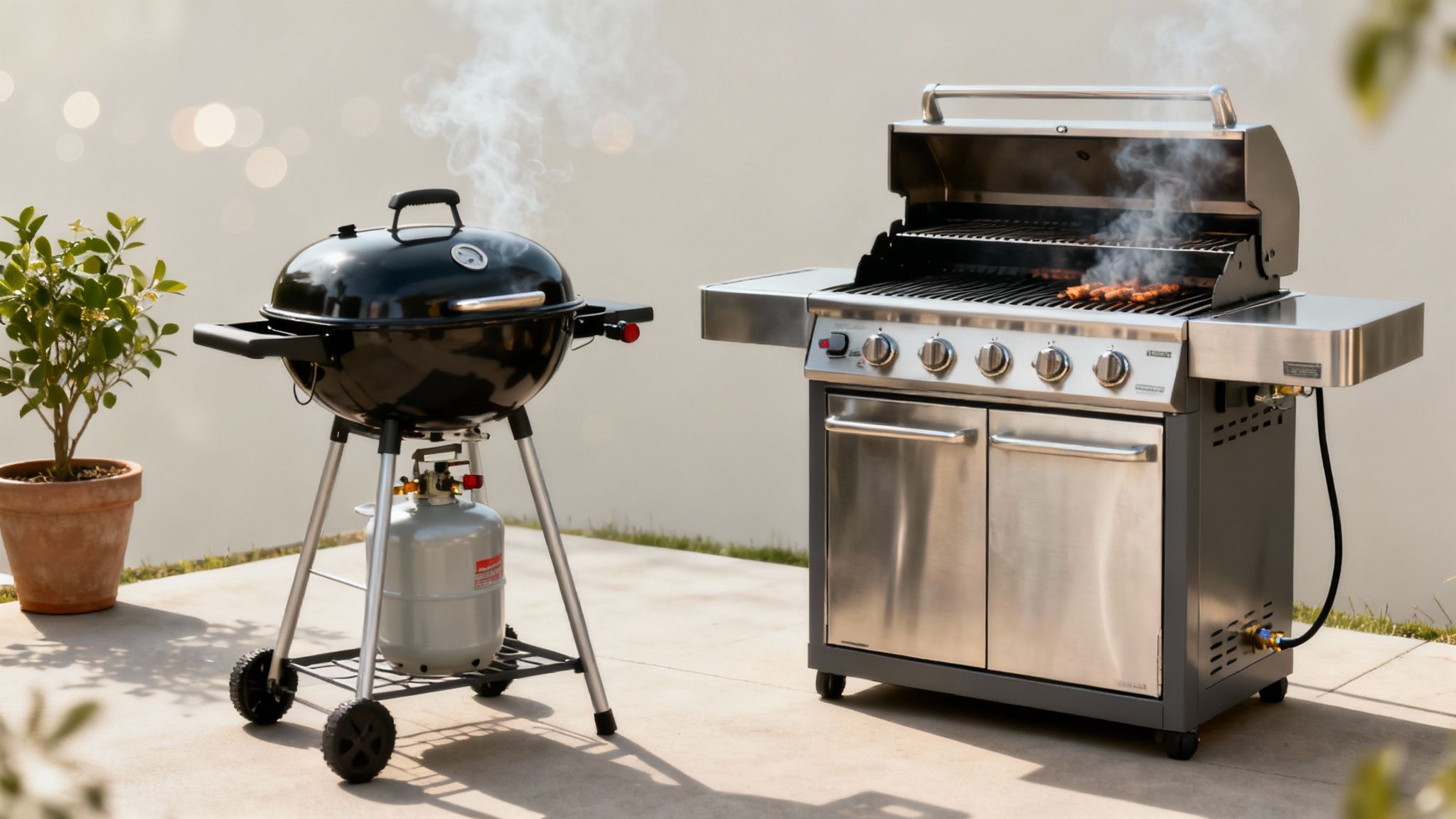
Propane vs Natural Gas Grill At a Glance
To kick things off, let’s simplify the choice with a quick-reference table. This gives you a high-level look at the fundamental trade-offs you’ll be making right from the start.
| Feature | Propane Grill | Natural Gas Grill |
|---|---|---|
| Portability | Highly portable; can be moved anywhere. | Stationary; fixed to a permanent gas line. |
| Installation | Simple setup; just attach a propane tank. | Requires professional installation of a gas line. |
| Upfront Cost | Lower initial cost for both the grill and setup. | Higher initial cost due to professional installation. |
| Fuel Cost | More expensive per unit of energy. | Significantly cheaper per unit of energy. |
| Convenience | Tanks need to be refilled or exchanged. | Continuous, uninterrupted fuel supply. |
| Best For | Renters, small spaces, and occasional grillers. | Homeowners, frequent grillers, and outdoor kitchens. |
Think of this table as your starting point. Now, let’s explore what each of these differences really means when you’re flipping burgers on a Tuesday night.
Comparing Installation and Portability
When you’re weighing a propane vs. natural gas grill, this is where the two options really go their separate ways. It’s often the single factor that makes the decision for you, defining what’s not just better, but what’s actually possible for your home. One gives you total freedom; the other requires a permanent commitment.
The beauty of a propane grill is its sheer simplicity. It’s the classic “plug-and-play” solution for your backyard. You can bring one home from the store, twist on a standard 20-pound propane tank in a few minutes, and be grilling before the burgers are even seasoned.
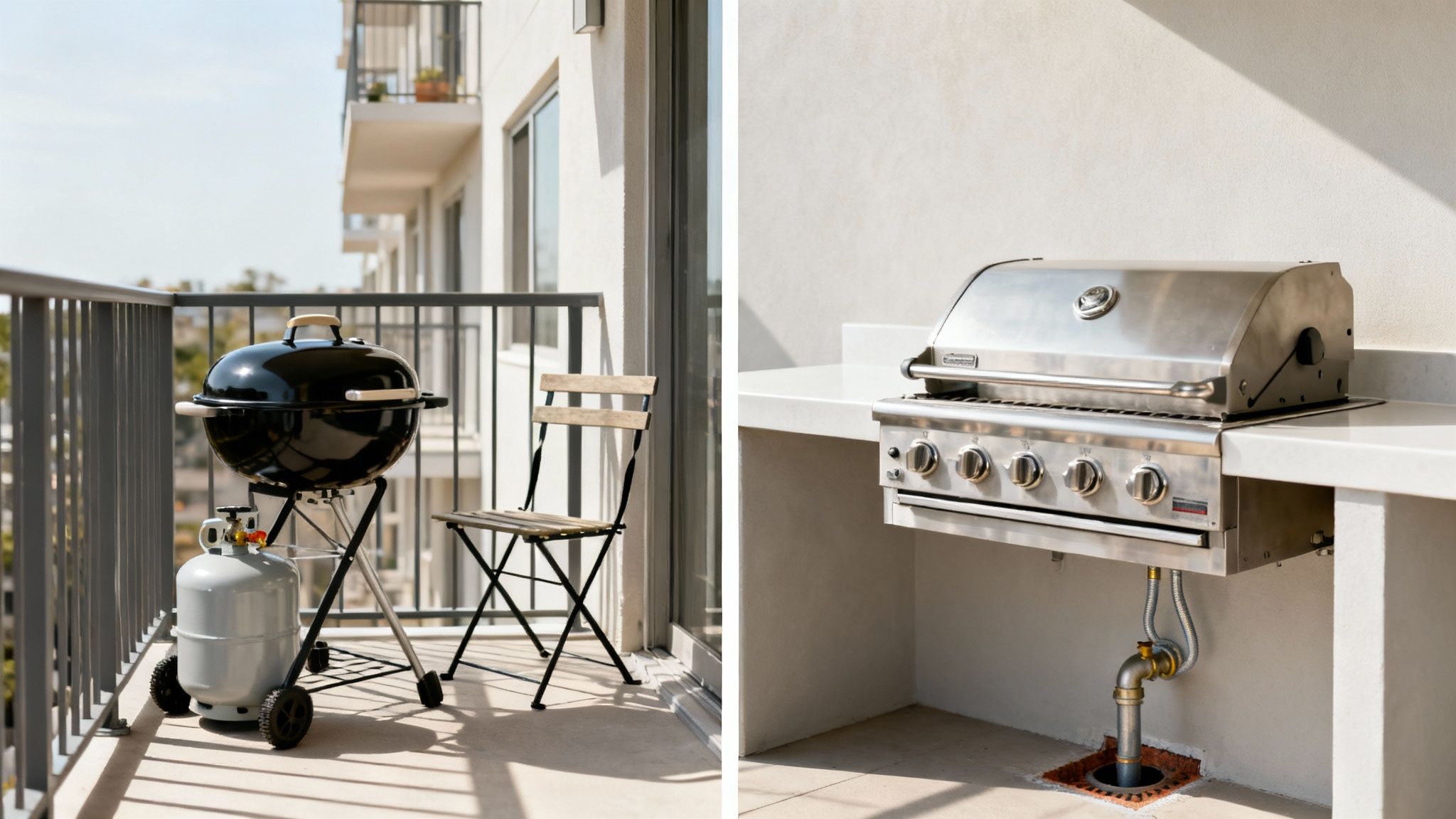
This unmatched flexibility is why propane is the default choice for so many people. Renters on apartment balconies, families who want to wheel their grill around the yard, and tailgaters all depend on this design. There are no strings—or more accurately, no pipes—attached.
The Freedom of Propane Grills
The grab-and-go nature of propane grills is the biggest reason for their popularity. The fuel system is completely self-contained in that portable tank, giving you the freedom to set up your grill wherever it makes the most sense.
Think about these common situations where propane just wins:
- Urban Living: A city dweller can easily fire up a propane grill on a small patio where a permanent gas line is out of the question.
- Seasonal Storage: If you live somewhere with brutal winters, you can roll your propane grill into the garage or shed to protect it from the elements.
- Outdoor Events: Planning a cookout at the park or a tailgate party before the big game? A propane grill can be tossed in your vehicle and set up anywhere.
This freedom from a fixed spot is a massive advantage if you don’t have a dedicated outdoor kitchen or just like to rearrange your backyard setup on a whim.
The Commitment of Natural Gas Grills
In sharp contrast, a natural gas grill is a permanent fixture—a planned, intentional addition to your home. Getting one up and running is a much bigger deal, requiring professional help and a significant upfront cost.
A natural gas grill isn’t just an appliance; it’s a home improvement project. It ties directly into your house’s plumbing, turning a piece of your patio into a dedicated, permanent cooking station.
The installation process means hiring a licensed plumber or gas fitter to run a dedicated gas line from your home’s main supply straight to the grill. This is absolutely not a DIY job. It involves pulling permits, following local building codes, and doing meticulous safety checks to prevent dangerous leaks. The cost for a pro install can run from a few hundred to well over a thousand dollars, depending on how complex the job is.
On top of that, your homeowners association (HOA) might have its own set of rules about installing permanent fixtures like gas lines, adding another layer of red tape to the process.
This installation hurdle is a key reason why the propane side of the natural gas and propane BBQ grill market is so dominant, especially as the broader outdoor cooking industry continues to grow. Propane’s portability is perfect for recreational use, while natural gas appeals to homeowners looking for long-term efficiency. You can dig into more trends on this growing market over at Data Insights Market.
The decision here is pretty clear. If you’re a homeowner building out your dream patio and you grill multiple times a week, investing in a natural gas line is a logical step that pays off in convenience. But if you value flexibility, are renting, or aren’t in your “forever home,” the permanence and upfront cost of a natural gas setup make propane the far more practical choice.
Pros & Cons: A Balanced View
To help you decide, here’s a clear breakdown of the advantages and potential drawbacks for each grill type.
Propane Grills
- Pros:
- Excellent Portability: Easy to move around the yard or take on the go.
- Lower Upfront Cost: Propane grills are generally less expensive to purchase.
- Simple Setup: No professional installation needed; just connect a tank and start grilling.
- Widely Available: Propane tanks are sold at most grocery stores, gas stations, and hardware stores.
- Cons:
- Higher Fuel Cost: Propane is more expensive than natural gas per unit of energy.
- Inconvenient Refills: Tanks can run out mid-cookout, requiring a trip to the store.
- Less Environmentally Friendly: Propane is a byproduct of natural gas processing and petroleum refining.
- Tank Maintenance: Tanks need to be stored safely and checked for leaks regularly.
Natural Gas Grills
- Pros:
- Lower Fuel Cost: Natural gas is significantly cheaper, saving money over time.
- Uninterrupted Fuel Supply: Never worry about running out of gas again.
- More Environmentally Friendly: Natural gas is the cleanest-burning fossil fuel.
- Added Home Value: A built-in gas line can be an attractive feature for future buyers.
- Cons:
- Higher Upfront Cost: The grill and professional installation are a significant investment.
- Completely Immobile: Once installed, the grill is permanently fixed in one spot.
- Installation Can Be Complex: Requires a licensed professional and may involve permits.
- Not an Option for Everyone: Only available to homes with an existing natural gas line.
What Grill Owners Are Saying
Here’s a summary of realistic impressions from grill owners, blending positive feedback with constructive points to give you a well-rounded view.
- Review 1 (Propane User): “I love the freedom of my propane grill. I live in an apartment with a small balcony, and it’s perfect. I can wheel it into a corner when I’m not using it. My only gripe is that I always seem to run out of fuel at the worst possible moment. I’ve learned to keep a backup tank, but it’s still a hassle I wish I could avoid.”
- Review 2 (Natural Gas User): “Making the switch to a natural gas grill was the best decision for our family. We grill at least three times a week, and the cost savings on fuel have been huge. Plus, the convenience is unbeatable—just turn it on and go. The initial installation was pricey, but it paid for itself in a couple of years. I’d never go back.”
- Review 3 (Propane User): “For someone who only grills on holidays and a few summer weekends, a propane grill is a no-brainer. It was affordable, and I didn’t have to deal with hiring someone to run a gas line. It does the job perfectly for my needs. The heat is consistent, and cleanup is straightforward.”
- Review 4 (Natural Gas User): “My built-in natural gas grill is the heart of my outdoor kitchen. It looks sleek and performs flawlessly. The only downside is that I can’t rearrange my patio setup. When we first installed it, I didn’t realize how much that would limit my options for outdoor furniture placement, so plan your location carefully!”
What About Cooking Performance and Flavor?
When you get deep into the propane vs. natural gas debate, the conversation always turns to one thing: taste. It’s a persistent myth that the type of gas you use will somehow change the flavor of your food. Let’s clear the air on this one and get down to what actually makes a great grilled meal.
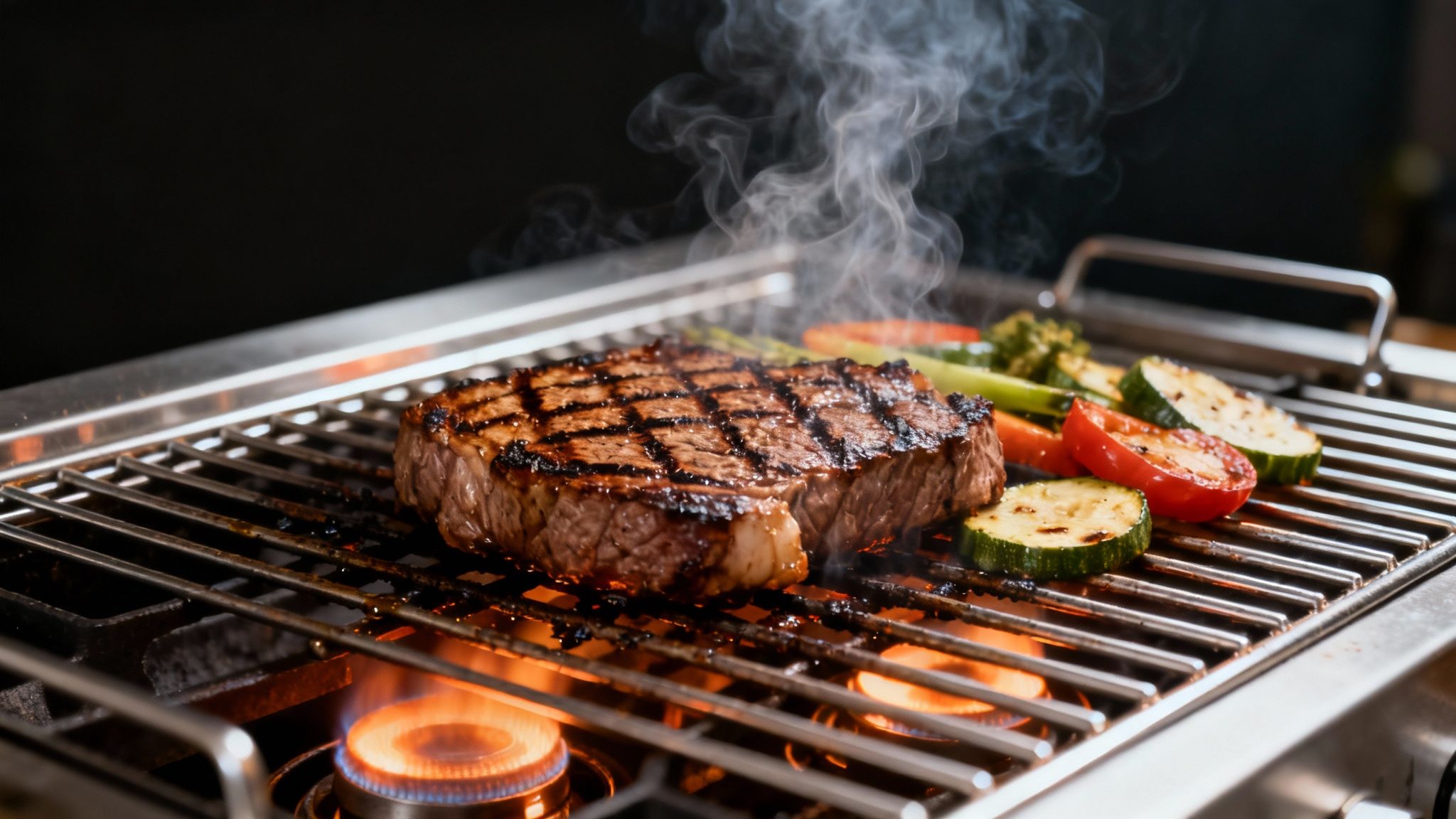
The short answer? It doesn’t. Both propane and natural gas are incredibly clean-burning fuels that produce little more than heat, water vapor, and carbon dioxide. Neither one imparts any noticeable flavor to your steak or burgers.
So, where does that classic, mouth-watering “grill” flavor come from? It’s all about the sizzle. As juices, fats, and marinades drip from your food onto the hot surfaces below the grates—like flavorizer bars or lava rocks—they instantly vaporize. That flavorful smoke then circulates back up and infuses whatever you’re cooking, creating that signature char and depth through processes like the Maillard reaction.
The Takeaway: Your fuel’s only job is to provide clean, consistent heat. All that incredible flavor is created by the food itself and the smoke from its drippings. A quality propane grill and its natural gas twin will produce identical-tasting results.
Heat Output and Temperature Control
Another common point of confusion revolves around heat output. It’s a fact that propane is more energy-dense; it packs more BTUs (British Thermal Units) into every cubic foot than natural gas does. But that doesn’t mean a propane grill automatically gets hotter.
Grill manufacturers aren’t new to this. They engineer their grills to account for this difference from the start. A natural gas grill is built with larger burner orifices, which allow a higher volume of gas to flow through. This simple design tweak ensures a natural gas model achieves the exact same BTU rating and cooking temperature as its propane counterpart.
So, if you’re looking at two otherwise identical grills, here’s what you can expect:
- Equal Heat Output: Both grills will hit the same maximum temperatures for that perfect sear.
- Identical Temperature Control: You’ll get the same responsive, precise heat adjustments with the turn of a knob, regardless of the fuel.
- Consistent Performance: Both provide steady, even heat for everything from low-and-slow ribs to high-heat grilling.
What Really Affects How Your Grill Cooks
If the fuel source doesn’t impact flavor or heat, what does? The real difference between a great grill and a mediocre one has everything to do with its construction and design—not the gas line feeding it.
The global gas grill market is booming, valued at around USD 0.83 billion and projected to hit USD 1.18 billion by 2033. This growth isn’t just about fuel type; it’s driven by consumers demanding better quality and performance in their outdoor cooking gear. You can dig into the numbers in this comprehensive gas grill market report.
Instead of worrying about the gas, here’s what you should actually focus on when choosing a grill:
- Grill Construction: Heavy-duty materials are king. Cast aluminum and high-grade stainless steel hold heat far better than flimsy sheet metal, giving you consistent temperatures.
- Burner Quality: Look for high-quality stainless steel tube burners or heavy cast iron burners. They distribute heat more evenly and last a whole lot longer.
- Heat Distribution System: A well-designed system of “flavorizer bars” or heat tents is crucial. It prevents flare-ups and makes sure you don’t have hot and cold spots across the grate.
- Grate Material: Nothing beats heavy, cast-iron grates for holding heat and creating those perfect, steakhouse-style sear marks.
Ultimately, your decision between propane and natural gas should come down to things like installation costs, convenience, and fuel availability—not some myth about cooking performance. A well-built grill will deliver fantastic results every single time, no matter which hose is hooked up to it.
For more tips on outfitting your home, check out our other guides on the best kitchenware essentials.
Making Your Final Decision: Conclusion
So, how do you actually choose? The whole propane vs. natural gas debate really boils down to your specific situation. Once you’ve looked at the installation headaches, long-term running costs, and how each grill actually performs, the right answer is the one that just fits—your home, your budget, and how often you plan on firing it up. This isn’t just about buying an appliance; it’s about picking the centerpiece for your backyard hangs for years to come.
To make it easier, I’ve broken it down into a few common griller profiles. Find the one that sounds most like you, and you’ll have your answer.
Who Are You Grilling As?
Figuring out your own needs is the quickest path to a decision you won’t regret. Each of these scenarios points to a clear winner based on different priorities.
- The Apartment Renter: Portability and avoiding permanent changes are your main concerns. You need a grill you can move around, tuck away for the winter, and definitely not one that requires a professional installation your landlord would shut down in a heartbeat. For you, the flexibility of a propane grill is really the only way to go. You can set it up instantly and grill on your balcony or patio without any strings—or gas lines—attached.
- The Suburban Homeowner: You’ve got your own place, a decent backyard, and you’re grilling a few times a week once the weather warms up. You like the idea of moving the grill around, but you’re getting really tired of those last-minute dashes to swap an empty propane tank. Your focus is shifting to convenience and what makes sense financially over the next decade. Investing in a natural gas grill is a seriously smart play here. The upfront installation cost is real, but it’s quickly balanced out by the much cheaper fuel, and that endless supply means you’re always ready for a spontaneous cookout.
- The Outdoor Kitchen Visionary: You’re not just buying a grill; you’re designing a whole outdoor living space. You’re thinking built-in counters, a dedicated cooking station, and a clean, high-end aesthetic. A natural gas grill isn’t just an option—it’s essential for this kind of project. It provides the permanent, reliable fuel source that a custom outdoor kitchen demands, integrating seamlessly into your design and ensuring you never, ever run out of gas mid-party.
Visualizing Your Choice
This decision tree helps cut through the noise and focus on the key setup and maintenance differences.
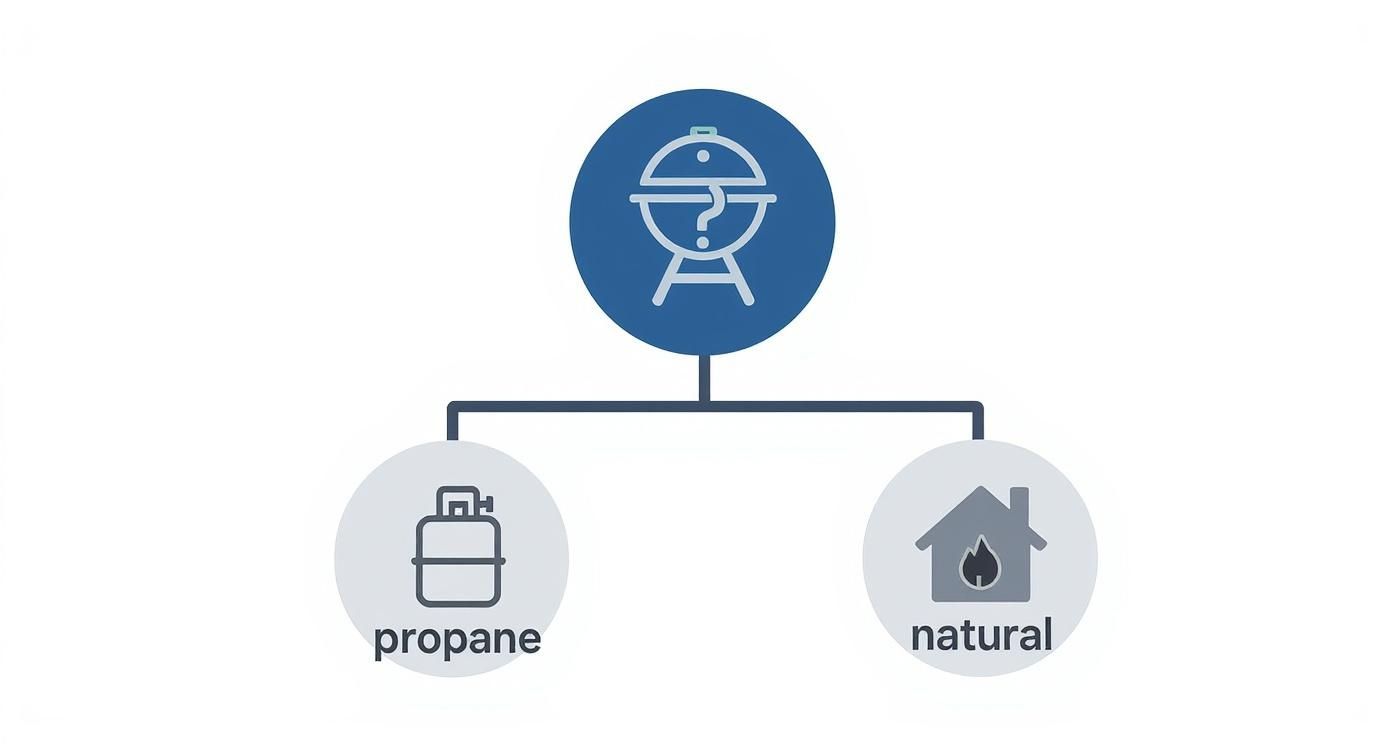
As the infographic lays out, the propane path is all about the ongoing task of managing your fuel tanks. The natural gas path, on the other hand, is a one-and-done setup for a continuous, uninterrupted supply.
Ultimately, your choice comes down to this: A propane grill buys you freedom and flexibility, while a natural gas grill buys you convenience and long-term savings.
Think about where you’ll be in five years. If you might move soon or only fire up the grill for major holidays, propane is the logical, low-commitment choice. But if you’re settled in your home and see your grill as an extension of your kitchen, the investment in natural gas will pay you back in both money and convenience for a decade or more. We encourage you to weigh these factors and make an informed decision that will lead to countless delicious meals.
Grill Questions Answered: FAQs
When you’re trying to decide between a propane and a natural gas grill, a few questions always seem to pop up. Getting straight answers to these common concerns can make the final choice a whole lot easier. Here are the big ones we hear all the time.
Can I convert a propane grill to natural gas or vice versa?
Yes, you often can, but this is absolutely not a simple weekend DIY project. Grills that are convertible require a specific conversion kit from the manufacturer, made for your exact model. This isn’t just a hose—it includes crucial parts like regulators and burner orifices sized for the different pressures of each gas. Trying to rig a conversion without the official kit is incredibly dangerous and will instantly void your warranty. When you’re hooking up to your home’s gas line, you always want to hire a licensed gas fitter to handle the job.
Does natural gas get as hot as propane?
It sure does. While it’s a fact that propane packs more energy into a smaller volume, grill manufacturers have already engineered the solution. They design natural gas grills with larger orifices in the burners. This simple design tweak allows more natural gas to flow, which perfectly compensates for its lower energy density. The end result? A natural gas grill will hit the same BTU rating and searing temperatures as its propane counterpart. You won’t feel any difference in the heat or performance.
Is the higher upfront cost of a natural gas grill worth it for me?
For anyone who grills more than a handful of times a year, the bigger initial investment for a natural gas grill almost always pays for itself. Natural gas is dramatically cheaper than swapping propane tanks, and you can easily make back the installation cost in fuel savings within a few seasons. The real win is the sheer convenience of an endless fuel supply. However, if you are an occasional griller or you value the freedom to move your grill around the patio, the lower upfront cost and portability of a propane model makes more sense.
How do I clean and maintain my gas grill?
Regardless of fuel type, regular cleaning is key for safety and durability. After every use, brush the grates to remove food debris. Periodically, do a deep clean: remove and scrub the grates, clean the burner tubes with a venturi brush to ensure even flame, and wipe down all interior and exterior surfaces to prevent grease buildup. For stainless steel models, use appropriate cleaners to prevent corrosion. You can find detailed instructions in our guide on how to clean stainless steel correctly.
What are some good alternatives to a gas grill?
While gas grills are prized for their convenience, some enthusiasts prefer other options for flavor. Charcoal grills, like the classic Weber Kettle, are a popular alternative known for imparting a distinct smoky taste. Pellet grills (or smokers) offer a modern, automated approach, using wood pellets to provide both heat and smoke for a “set it and forget it” barbecue experience. Both are great complementary items for an outdoor cooking setup, offering different cooking styles than gas. If you’re exploring cookware in general, it’s also worth researching topics like whether ceramic cookware is safe to round out your kitchen knowledge.
