



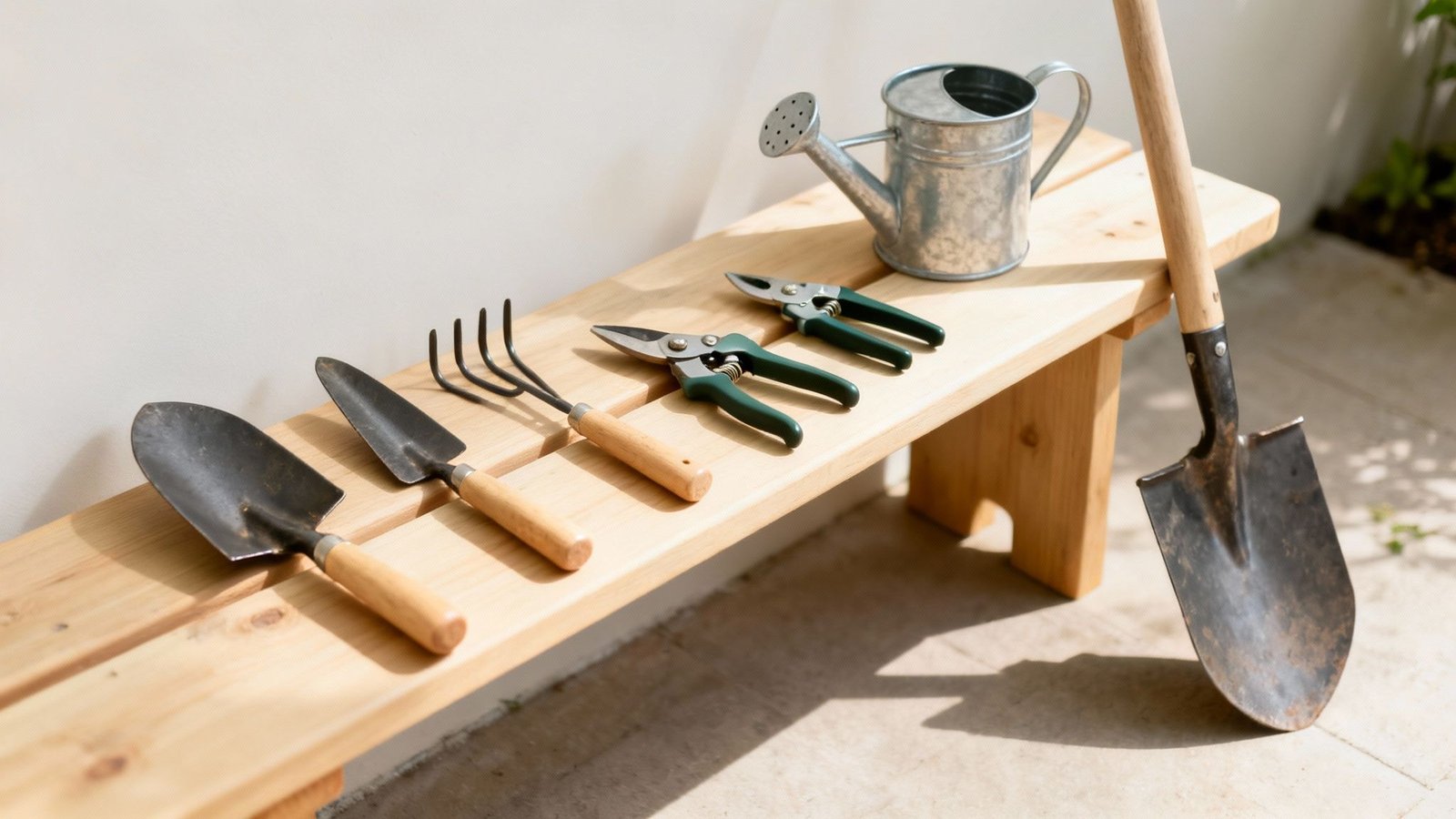
Diving into the world of gardening can feel a bit overwhelming, especially when you walk into a garden center for the first time. But building your toolkit doesn’t have to be complicated. The truth is, you only need a few must have garden tools to get started. A solid hand trowel for planting, a sharp pair of bypass pruners for trimming, and a reliable watering can or hose are the holy trinity for any new gardener. With just these three, you can handle most of what your garden throws at you.
Building Your First Gardener’s Toolkit
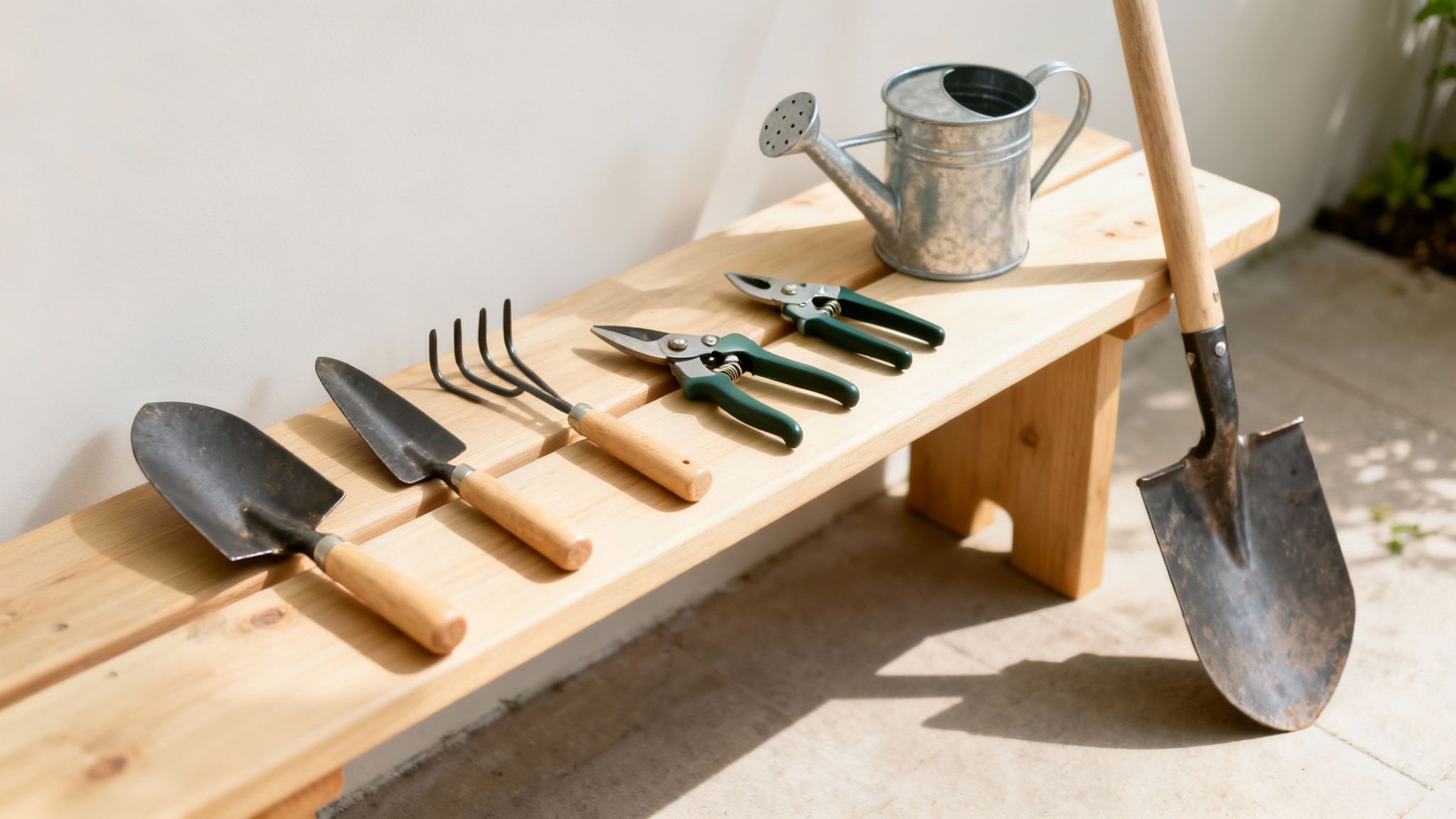
Stepping into the tool aisle can feel like wandering through a maze of shiny metal and plastic, with every gadget promising a greener thumb. But what do you actually need to get your hands dirty? The secret isn’t buying everything; it’s buying the right things.
Think of it like building a capsule wardrobe for your garden. A few high-quality, versatile pieces will serve you far better than a shed packed with cheap, single-purpose tools that will probably bend or break after one season. Your goal is to find tools that feel like a natural extension of your hands—the kind that make every task a little bit easier and a lot more enjoyable. For a deeper look at the essentials, our guide on the best garden tools for beginners is a great place to start.
The Core Tool Categories
Most garden jobs fall into three main buckets. Nailing these down simplifies your shopping list and makes sure you’re always grabbing the right tool for the task. A well-rounded beginner’s kit should have at least one hero from each of these groups:
- Digging & Planting: These are your earth movers. From hand trowels for planting seedlings to spades for turning over entire beds, these tools get you into the soil.
- Cutting & Pruning: This is all about keeping your plants healthy and looking good. Pruners, shears, and loppers make clean cuts that help plants heal fast and encourage new growth.
- Maintenance & Upkeep: This category covers the day-to-day stuff like watering, weeding, and cleaning up. A good hose, a sturdy rake, and comfortable gloves are non-negotiable for a thriving garden.
And it’s not just you—people everywhere are digging in. The global garden tools market was valued at around USD 9.22 billion and is expected to climb to an estimated USD 12.62 billion by 2032. It just goes to show that investing in quality tools is a key part of the modern gardening journey.
Your Essential Garden Tools Checklist
To make it even simpler, here’s a quick rundown of the absolute must-haves. Think of this table as your ultimate cheat sheet for building a solid, dependable toolkit that will last for years.
| Tool | Primary Use | Why It’s Essential |
|---|---|---|
| Hand Trowel | Digging small holes, planting, weeding | Your go-to for all close-up soil work in beds and containers. |
| Bypass Pruners | Cutting live stems up to ¾ inch | Makes clean, healthy cuts on plants, crucial for pruning and harvesting. |
| Garden Fork | Loosening and aerating compacted soil | Perfect for breaking up tough clay soil without destroying its structure. |
| Round-Head Shovel | Moving soil, compost, and mulch | The workhorse for digging bigger holes and transferring loose materials. |
| Bow Rake | Leveling soil, spreading mulch, clearing debris | Its rigid tines are perfect for prepping garden beds and tidying up. |
| Watering Can/Hose | Hydrating plants | Delivers water precisely where it’s needed, from tiny seedlings to shrubs. |
| Gardening Gloves | Protecting hands from dirt, thorns, blisters | A crucial piece of safety gear that makes every task more comfortable. |
With these seven tools in your shed, you’ll be well-equipped to tackle just about any project your garden dreams up.
The Essential Hand Tools for Getting Up Close and Personal
Big, long-handled tools are for the heavy lifting, but the real soul of gardening happens on your knees, with your hands in the dirt. This is where your hand tools shine. Think of them as precise extensions of your own hands, letting you perform the detailed, intimate work that brings a garden to life. These are the tools you’ll grab a hundred times a season, the ones that will get caked in mud and become your most trusted companions.
If you’re serious about your garden, a few core hand tools are simply non-negotiable. They’re the foundation of any efficient close-up work, giving you the control to plant, weed, and cultivate with real accuracy. Spending a little extra here means buying tools that will last for years, not just a single, disappointing summer.
The Holy Trinity of Hand Tools
For any garden bed, raised planter, or container, these three tools are the essential trio. Each has a very specific job, and together, they cover almost every task you’ll face at close quarters. Getting to know them is the first real step toward becoming a more confident, effective gardener.
- The Hand Trowel: This is it—the quintessential gardener’s tool. Its pointed, scoop-shaped blade is your go-to for digging small holes for seedlings and annuals, popping plants out of their nursery pots, and prying out stubborn, deep-rooted weeds. A good trowel just feels right in your hand; it has a nice balance and won’t buckle the second it hits a rock.
- The Transplanter: At first glance, a transplanter looks like a skinny trowel, and that’s pretty much what it is. Its narrower blade, often with depth markings etched right onto it, is specifically designed for moving seedlings from pots into the ground with the least possible root disturbance. It’s the surgeon’s scalpel of the garden world, perfect for those delicate operations.
- The Hand Cultivator (or Hand Fork): With its sharp, claw-like tines, this is the tool you’ll reach for to break up compacted soil in tight spots, like between established plants where a bigger tool won’t fit. It’s fantastic for aerating the soil so water and nutrients can sink in, and it’s perfect for scratching amendments like compost into the top layer of dirt.
Your hand tools are your direct connection to the soil. A well-made tool doesn’t just make the work easier; it amplifies the simple joy of gardening—from feeling the earth give way to gently firming a new plant into its home.
Choosing Materials That Actually Last
The material of your hand tool is easily the biggest factor in how it performs and how long it lives. This is where you separate a tool that bends on its first encounter with clay soil from one you’ll be passing down to the next generation of gardeners.
It really comes down to two parts: the tool’s head (the metal bit) and its handle.
Tool Head Materials:
- Forged Steel: This is the gold standard for pure strength. Forged tools are made from a single piece of steel that’s heated and hammered into shape, which makes them incredibly durable. They can handle rocky, compacted soil without even thinking about bending.
- Stainless Steel: The big advantage here is rust resistance. While not always as tough as high-carbon forged steel, a quality stainless steel tool is more than strong enough for most garden tasks and won’t need as much babysitting to keep it from corroding.
Handle Materials:
- Classic Wood: Ash and hickory are popular choices for a reason—they’re strong and they absorb shock. A wooden handle offers that timeless, traditional feel but might need a little rubdown with oil every now and then to keep it from cracking.
- Ergonomic Grips: Lots of modern tools feature handles made from plastic or rubber composites, often with soft, non-slip grips. These are built for comfort and can seriously reduce hand fatigue during a long day of planting.
The demand for durable, high-quality gear is a huge driver in the gardening market. In fact, the garden hand tools segment alone was valued at USD 19.01 billion globally and is expected to keep growing. This reflects a worldwide appreciation for reliable tools that just work better. You can dig into these market trends and their drivers in more detailed industry reports.
Long-Handled Tools for Heavy Lifting and Soil Prep
When you graduate from tending a few pots to carving out a brand-new garden bed, your trusty hand trowel just isn’t going to cut it anymore. This is where the long-handled tools come in. Think of them as extensions of your own body, giving you the leverage to move serious amounts of earth and, most importantly, saving your back from a world of hurt. These are the absolute workhorses of any garden shed, built for the big jobs that truly transform a space.
At first glance, it’s easy to get them mixed up. Don’t shovels and spades basically do the same thing? Not quite. Knowing the difference is the secret to working smarter, not harder. Each of these tools is a specialist, and matching the right one to the job makes the work feel less like a chore and more like a satisfying day spent in the dirt.
The Mover, The Cutter, and The Loosener
To keep things simple, I like to think of the three essential long-handled tools as having distinct personalities: a mover, a cutter, and a loosener. Together, they’re an unstoppable team for tackling any major garden project.
- The Shovel (The Mover): With its wide, scooped blade and a rounded or pointed tip, a shovel is built for one thing: moving loose stuff. This is your go-to for scooping compost, shifting a pile of mulch from the wheelbarrow to a bed, or digging a rough hole in soil that’s already fairly soft. That curved blade is designed to hold material, not let it spill all over your boots.
- The Spade (The Cutter): A spade, on the other hand, has a flatter, squared-off blade. This design isn’t for scooping—it’s for cutting. Use it to slice clean, sharp edges along a lawn or flower bed, cut through tough turf to start a new garden, or break into compacted soil. The flat top edge gives you a solid platform for your foot, letting you use your body weight to drive the blade deep.
- The Garden Fork (The Loosener): Often called a digging fork, this tool’s heavy-duty tines are perfect for breaking up dense, compacted, or rocky soil. Where a shovel might just compact heavy clay, a fork gets in there to lift and loosen. This aerates the soil, allowing critical air, water, and nutrients to penetrate—a total game-changer for improving soil structure.
A good long-handled tool should feel balanced, like a natural extension of your arms. When you pick it up, the weight shouldn’t feel all in the head or all in the handle. Good balance means less fatigue and more control, which makes a huge difference after an hour of digging.
This simple flowchart can help you grab the right tool without a second thought.
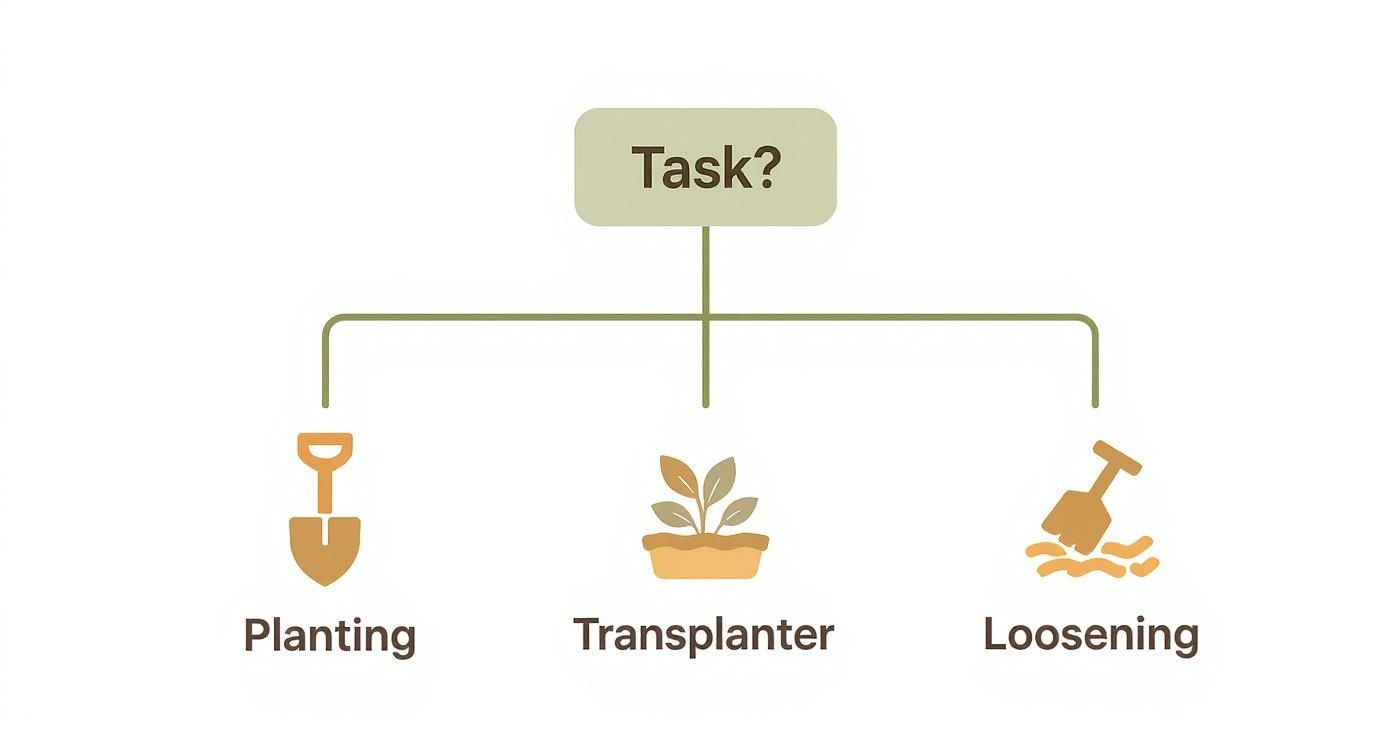
It’s a handy visual that cuts right to the chase, guiding you from the task you have in mind to the perfect tool for getting it done right.
To really break down the differences, here’s a quick comparison of these garden essentials.
Choosing Your Long-Handled Workhorse
| Tool | Best Use Case | Key Design Feature | Pro Tip |
|---|---|---|---|
| Shovel | Moving loose materials like mulch, compost, or soft soil. Digging large, rough holes. | Broad, concave (scooped) blade, often with a pointed or rounded tip. | Great for backfilling holes or turning a compost pile. The scoop holds more material with each lift. |
| Spade | Edging beds, slicing through turf, digging in compacted or clay soil, transplanting. | Flat, rectangular blade with a straight, sharp edge. | The flat top is designed to be stepped on. Use your body weight, not just your arm strength, to drive it into the ground. |
| Garden Fork | Breaking up and aerating compacted or rocky soil. Mixing in amendments. Dividing perennials. | 4-5 strong, sharp tines designed to penetrate tough ground without pulverizing soil structure. | In heavy clay, a fork is your best friend. It loosens the soil without creating dense clods like a shovel can. |
Having at least two of these—usually a shovel and a fork—will set you up for success in almost any digging situation.
Choosing The Right Handle
We tend to focus on the business end of the tool, but the handle is just as critical for comfort and durability. The material and length you choose will have a big impact on how the tool feels and performs.
Handle Length:
Longer handles give you more leverage, which is fantastic for things like shoveling mulch or digging deep. Shorter handles, especially those with a D-grip, offer much more control for precise work in tight spaces. The goal is to find a length that lets you work with a relatively straight back to minimize stooping.
Handle Material:
- Hardwood: Ash and hickory are the traditional choices for a reason. They’re strong, feel great in the hands, and do an excellent job of absorbing shock and vibration. They do need a little TLC, like a light oiling once a year, to keep from drying out and cracking.
- Fiberglass: A fantastic modern option. Fiberglass handles are lighter than wood, completely weatherproof, and won’t rot or splinter. They are incredibly durable and low-maintenance, though they can transmit a bit more vibration than wood.
- Steel: The toughest of the bunch, all-steel tools are nearly indestructible but are also the heaviest. They’re usually best for professional landscapers or extremely demanding jobs where maximum durability is the only thing that matters.
Investing in a quality long-handled tool pays you back every single time you head out to the garden. And just as you’d choose the right tool for your beds, picking the right equipment for your lawn is key. For those with less space to manage, our guide to the best lawn mowers for small yards can help you keep every corner of your property looking sharp.
Essential Cutting Tools for a Healthy Garden
Pruning is one of those garden tasks that can feel a little intimidating at first. But once you get the hang of it, armed with the right tools, it becomes one of the most satisfying parts of tending to your plants. Making sharp, clean cuts isn’t just about making things look tidy; it’s about boosting your plant’s health, sparking new growth, and keeping diseases at bay.
Think of it this way: you wouldn’t use a butter knife for surgery. The same logic applies to your plants. A clean, precise cut heals quickly, but a crushed or torn stem is an open invitation for pests and diseases to move in. The trick is simply matching the tool to the size of the branch. Investing in a few quality cutting tools gives you the confidence to shape your garden with a surgeon’s precision.
Your Go-To for Everyday Trimming: Bypass Pruners
For any live stem up to three-quarters of an inch thick, a solid pair of bypass pruners will be your best friend. Honestly, these are one of the most essential must-have garden tools you can own. You’ll find yourself reaching for them constantly for everything from deadheading flowers to snipping back unruly shrubs.
Bypass pruners work exactly like scissors. They have two curved blades that “bypass” each other to make an incredibly clean, crisp cut. This slicing motion is crucial for living wood because it does minimal damage to the plant’s vascular system, letting it heal up much faster.
You might also see something called anvil pruners, which have a single blade that crushes down onto a flat surface. While they’re fine for dead twigs, they tend to mash the soft tissues of live stems. For a healthy, thriving garden, bypass is always the way to go.
Gaining Leverage with Loppers
When you come across branches that are just too much for your pruners—we’re talking anything from three-quarters of an inch up to about two inches in diameter—it’s time to grab the loppers. Loppers are basically just long-handled pruners, and those long handles are their superpower.
The extended handles give you some serious leverage, letting you multiply your arm strength to slice through thick branches with surprising ease. Just like their smaller cousins, loppers come in both bypass and anvil styles. And just like before, bypass loppers are the clear winner for cutting live branches, ensuring that same clean, non-crushing cut.
A sharp pair of bypass loppers can make quick work of what would be an impossible struggle with hand pruners. They save your hands from strain and your plants from jagged, damaging wounds.
When you’re shopping for loppers, pay attention to the handle length. Longer handles give you more leverage and help you reach higher branches, while shorter ones offer better control when you’re working in tight spaces. Many modern loppers also use lightweight materials like aluminum or carbon fiber, which makes a huge difference in reducing fatigue.
Tackling Thick Branches with a Pruning Saw
For any branch over two inches thick, neither pruners nor loppers are going to cut it—literally. This is where a pruning saw becomes indispensable. A good pruning saw is designed specifically for cutting wood, with razor-sharp teeth that cut on the pull stroke. This design gives you way more control and makes slicing through thick limbs much safer and more efficient than trying to wrestle with a regular handsaw.
There are a couple of common styles you’ll run into:
- Folding Saws: These are fantastic because they’re compact and safe to carry around the garden. The blade folds right into the handle, protecting both the teeth and you. For most homeowners, this is the perfect option.
- Bow Saws: With a C-shaped frame that holds the blade under tension, bow saws can chew through very thick branches in no time. They’re the heavy-hitters, ideal for clearing larger limbs or even taking down small trees.
With a pruning saw in your arsenal, you can take on major shaping jobs and remove damaged or diseased wood that could threaten the long-term health of your trees. With just these three cutting tools—pruners, loppers, and a saw—you have a complete system for managing the health and growth of every single plant in your garden, from a delicate rose bush to a mature shade tree.
Keeping Things Tidy: Tools for Watering and Weeding
Consistent maintenance is the secret sauce for a garden that doesn’t just survive, but truly thrives. Digging and planting get all the attention, but it’s the day-to-day work of watering and weeding that makes the real difference. The right tools can transform these chores from a total grind into a satisfying, almost meditative, part of your routine.
This is all about working smarter, not harder. When you match your gear to your garden’s actual needs, you save water, protect your back, and stop weeds from staging a hostile takeover. Trust me, investing in quality here pays you back tenfold in time and effort saved down the road.
Mastering the Art of Watering
Getting hydration right is non-negotiable for plants, but how you deliver that water is a huge deal. A gentle shower is what delicate seedlings need, while a deep, slow soak is better for established shrubs. Having a couple of key tools on hand means every plant gets exactly the drink it needs.
- The Garden Hose with an Adjustable Nozzle: For most gardens, a durable, kink-resistant hose is your MVP. When you pair it with a good adjustable nozzle, it becomes a multi-tool that can blast grime off the patio with a powerful jet or gently mist new plantings.
- The Classic Watering Can: Don’t sleep on this humble hero. For container gardens, hanging baskets, or newly sown seeds, a watering can gives you a level of precision a hose just can’t touch. That long spout lets you pour water right at the base of the plant, keeping the leaves dry and preventing fungal diseases from setting up shop.
Think of it like this: A hose with a spray nozzle is your broad paintbrush for covering big areas. A watering can is your fine-tipped brush for all the detailed, delicate work.
It’s no surprise that the interest in home gardening has created a huge market for this kind of gear. The global gardening equipment market was valued at around USD 96.86 billion and is expected to climb to USD 138.90 billion by 2030. This isn’t just about selling shovels; it shows a massive global shift toward creating beautiful, productive green spaces at home. You can find more insights on the gardening equipment market over at technavio.com.
Conquering Weeds Before They Take Over
Weeding. It’s the one garden chore most people absolutely dread. But arm yourself with the right tools, and it becomes way less of a battle. A good weeding strategy means tackling those invaders from above and below the soil. These specialized tools are designed to give you maximum impact with minimum effort.
Targeted Weeding Tools
| Tool | Primary Use | Why It’s a Must-Have |
|---|---|---|
| Dandelion Weeder | Removing deep taproots | Its long, forked tip is a lifesaver. It lets you get right under stubborn weeds like dandelions and thistle, prying the entire root out so it doesn’t just grow right back. |
| Stirrup Hoe (Hula Hoe) | Slicing shallow weeds | The oscillating blade just skims below the soil, cutting weeds off at the root on both the push and pull strokes. It’s unbelievably fast for clearing out large, open areas. |
| Hori Hori Knife | Multi-purpose weeding | This Japanese tool is a beast—it’s a knife, trowel, and saw all in one. Perfect for digging out weeds in tight spots, sawing through tough roots, and even planting bulbs. |
Picking the right weeding tool makes a world of difference. A stirrup hoe, for instance, can clear a bed in minutes that might take you an hour on your hands and knees. By adding these specialized maintenance items to your arsenal of must-have garden tools, you’re making sure your plants—not the weeds—get all the water, nutrients, and sunlight they deserve.
How to Care for Your Garden Tools
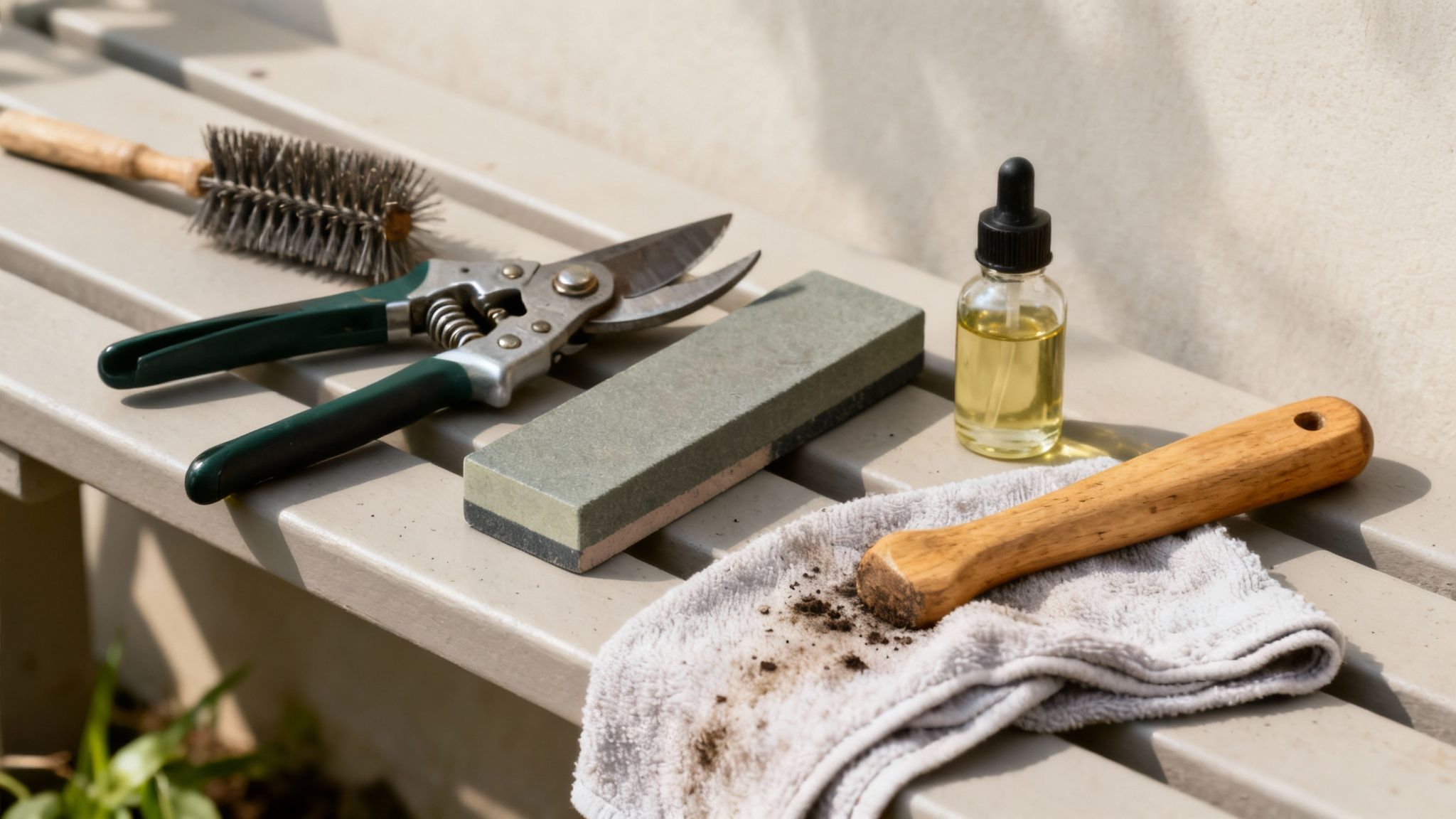
You know, a good garden tool isn’t just something you buy for a season—it’s an investment you make for a lifetime of gardening. But like any quality investment, it needs a little upkeep to perform at its best. Think of it like a chef’s favorite knife; a few moments of care after each use keeps it sharp, clean, and ready for whatever you throw at it.
Taking care of your tools isn’t just about making them last. It’s about safety and getting the job done right. A dull pruner will crush a stem instead of slicing it clean, which can open the door to plant diseases. A rusty shovel makes every dig feel like twice the work. A few simple habits can keep your must have garden tools in peak condition for years to come.
The Clean-Up Routine After Every Use
Honestly, the most important thing you can do for your tools is to clean them after you’re done for the day. It takes maybe five minutes, but it prevents a whole world of problems, from rust buildup to accidentally spreading disease from one plant to another.
First things first, grab a stiff brush or a putty knife and knock off all the caked-on mud and gunk. A quick spray from the hose helps loosen anything stubborn.
Next—and this is critical for cutting tools—give them a quick disinfection. This is especially important if you’ve been trimming back diseased plants. Just wipe the blades down with a cloth soaked in rubbing alcohol. It’s a simple move that stops pathogens in their tracks.
Finally, dry every single tool thoroughly with an old rag. Moisture is the primary cause of rust, so never, ever put your tools away wet. This one step is your best line of defense against corrosion.
Sharpening for Peak Performance
Let me tell you, a sharp tool is a safe tool. When a blade is dull, you have to use more force, which is how slips and accidents happen. Plus, dull blades make ragged, ugly cuts that can seriously damage your plants. Sharpening your shovels, pruners, and hoes just once or twice a season makes a world of difference.
You don’t need a bunch of fancy equipment, either. A simple mill file is perfect for putting a good edge back on shovels, spades, and hoes. For finer tools like pruners and loppers, a smaller diamond file or a sharpening stone will give you that precise, clean edge you’re looking for.
Maintaining a sharp edge on your tools is like keeping your kitchen knives honed. It transforms a frustrating, laborious task into a quick, satisfying one, allowing the tool to do the work for you.
To get started, clamp the tool in a vise or just hold it firmly. Following the original angle of the bevel, just push the file in one direction, away from the blade. It usually only takes a few clean passes to bring a keen edge back.
Protecting and Storing Your Tools Properly
Okay, so your tools are clean, dry, and sharp. The last step is storing them correctly to protect them from the elements.
Wipe down all the metal surfaces with a thin coat of lubricating oil—boiled linseed oil works great, but even a little WD-40 will do the trick. This creates a barrier against moisture. For any wooden handles, rubbing them down with boiled linseed oil every so often keeps them from drying out, splintering, and cracking.
Always store your tools in a dry spot, like a garage or shed. Hanging them on a pegboard or a wall rack is the best way to go. It keeps them organized, prevents blades from getting dinged up, and allows air to circulate, which is just another way to keep rust at bay. While choosing from the best garden tool brands gives you a head start on durability, this simple care routine is what will truly make them last a lifetime.
The Final Verdict: Are These Tools Worth It?
Investing in a set of quality, essential garden tools isn’t just about buying equipment; it’s about investing in a more enjoyable and successful gardening experience. From the precision of a good hand trowel to the leverage of a sturdy garden fork, each tool plays a specific role in turning your vision into a reality. The right gear saves you time, protects your body from strain, and promotes the health of your plants.
While building a complete toolkit takes time, starting with these core must-haves ensures you’re equipped for nearly any task. By choosing durable materials and caring for your tools properly, you’ll have a reliable set of companions in the garden for years to come. Remember, the goal is to find tools that feel right for you, making every moment spent in the garden a pleasure.
At Reva Housing, we’re dedicated to helping you make confident, well-informed purchases for every part of your home and garden. Find more in-depth guides and reviews at https://revahousing.com.
