



Let’s get straight to it: is ceramic cookware safe? The short answer is yes. Modern, high-quality ceramic cookware is widely considered one of the safest choices out there for the health-conscious home cook. It’s completely free from the controversial chemicals you might have heard about, like PFOA and PTFE, which were common in older non-stick pans. When you pick a reputable brand, you get that slick non-stick performance without the old risks.
Understanding Ceramic Cookware Safety
When you hear “ceramic cookware,” you might picture fragile pottery, but the stuff in our kitchens is a whole different beast. The real appeal of today’s ceramic cookware lies in what it doesn’t have. Unlike traditional non-stick pans that once relied on coatings containing per- and polyfluoroalkyl substances (PFAS), ceramic surfaces offer a clean, worry-free alternative.
This is a huge reason they’ve become so popular. The technology behind these pans is designed to give you a safe, stable cooking surface that won’t break down or release sketchy fumes, even if you accidentally overheat it a bit.
The Two Faces of Ceramic Cookware
It’s important to know that “ceramic cookware” usually means one of two very different things. Each has its own build and, by extension, its own safety profile.
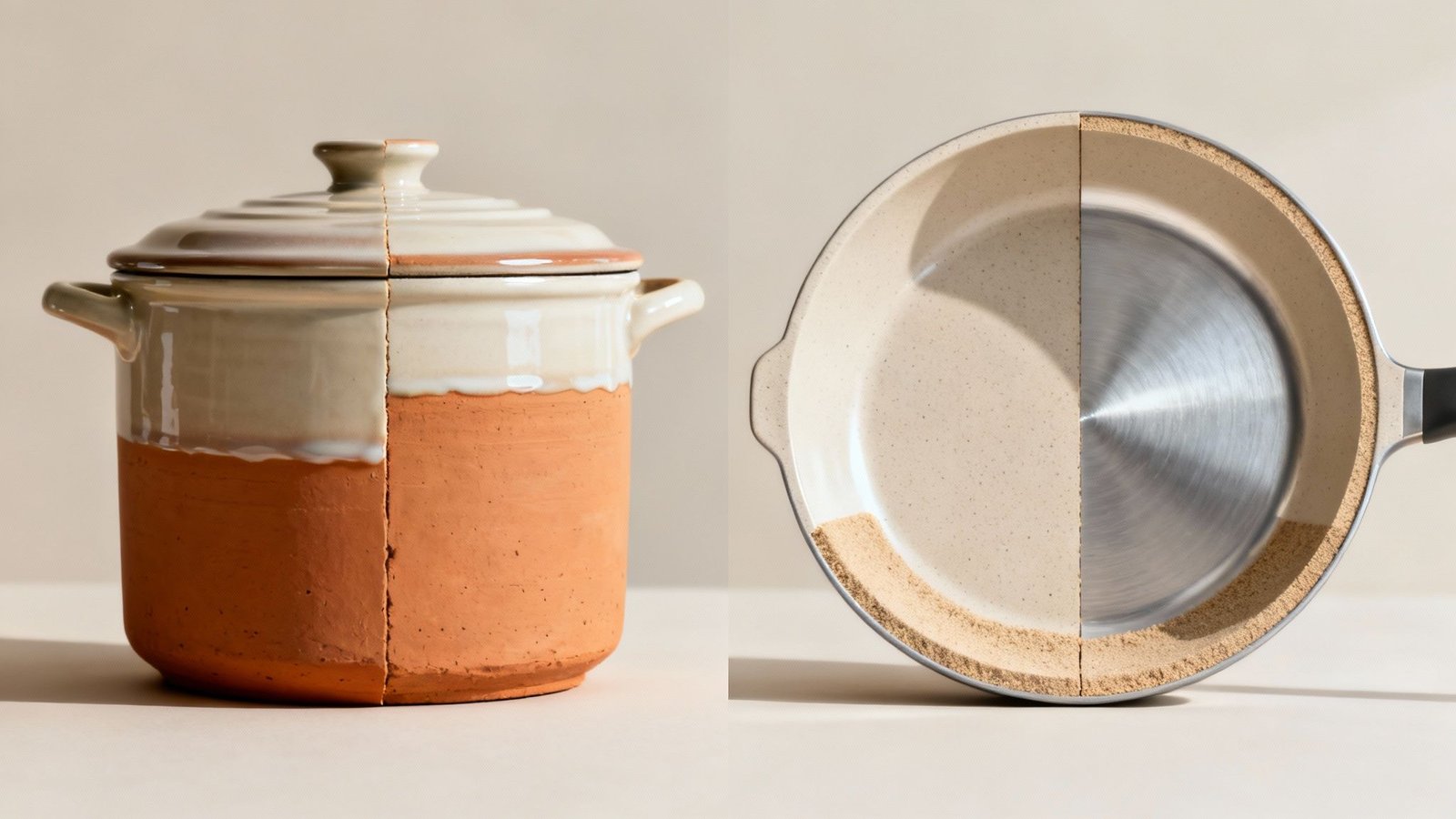
- Ceramic-Coated Cookware: This is the type you’ll see most often. It has a metal core—usually aluminum, which is fantastic for conducting heat—that’s covered with a slick, non-stick layer of ceramic sol-gel. A good way to think of it is a metal pan wearing a protective, sand-based jacket.
- 100% Solid Ceramic Cookware: This is the real deal—cookware made entirely from clay and natural minerals, then fired in a kiln at blistering hot temperatures. It’s incredibly durable, totally non-reactive, and has no metal core, making it a pure and inert vessel for your food.
Both are designed to be free of PFAS chemicals, but how they’re made directly impacts how they perform and how you should care for them.
Key Takeaway: Most of the time, “ceramic cookware” refers to pans with a ceramic coating over a metal base. This coating is derived from sand and is a modern, non-toxic alternative to traditional chemical non-stick surfaces.
This distinction is crucial because the safety of ceramic-coated pans depends entirely on the quality and integrity of that surface layer. According to Dr. Joe Zagorski from Michigan State University’s Center for Research on Ingredient Safety, quality ceramic coatings are typically free of concerning chemicals and are considered safe. These coatings are mainly made of silicon dioxide and metal oxides and do not contain PFAS. You can learn more about these ingredient safety findings to dig into the science.
To help you get a clearer picture, here’s a quick rundown of the main safety points.
Ceramic Cookware Safety At a Glance
This table breaks down the key safety features and what they mean for you in the kitchen.
| Safety Feature | Explanation | What to Look For |
|---|---|---|
| PFAS-Free Surface | Doesn’t contain PFOA, PTFE, or other “forever chemicals” found in traditional non-stick. | Labels explicitly stating “PFAS-Free,” “PFOA-Free,” and “PTFE-Free.” |
| No Toxic Fumes | The ceramic coating is stable and won’t release harmful fumes if overheated. | Reputable brands that test their products for thermal stability. |
| Heavy Metal Free | Quality brands test for lead and cadmium to comply with strict regulations like Prop 65. | Third-party certifications or compliance statements on the packaging or brand’s website. |
| Non-Reactive | Won’t leach chemicals or alter the taste of acidic foods like tomato sauce. | Both 100% ceramic and high-quality ceramic coatings offer this benefit. |
Ultimately, choosing a well-made piece from a brand that’s transparent about its materials is the best way to ensure you’re getting all the benefits without any of the worries.
Decoding What Ceramic Cookware Is Actually Made Of
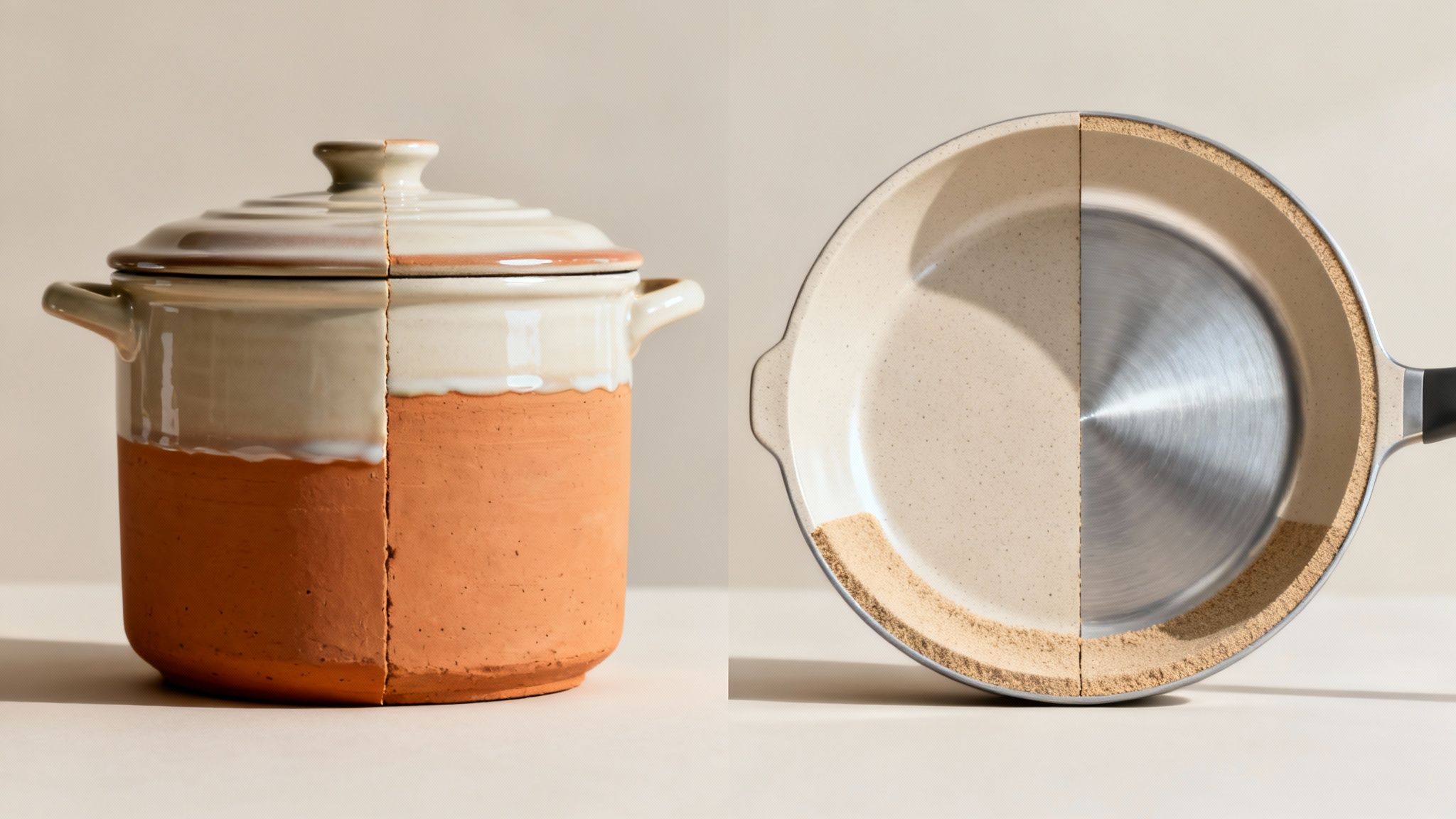
To really figure out if ceramic cookware is safe, we need to pop the hood and see what’s actually in it. The word “ceramic” gets thrown around a lot, but it’s a bit of a misnomer. It’s not one specific thing. The pans you see lining store shelves actually fall into two very different camps, and their construction is what makes all the difference for performance and safety.
Getting this distinction is the single most important part of the entire safety conversation. Understanding the difference between a solid ceramic pot and a ceramic-coated pan is your key to making a smart choice. One is pure, natural material all the way through, while the other is a modern hybrid that relies on some clever tech to deliver that non-stick promise.
Type 1: The Workhorse – 100% Solid Ceramic Cookware
Picture a beautiful, handcrafted piece of pottery, but tough enough to handle the direct heat of your stove. That, in a nutshell, is 100% solid ceramic cookware. It’s made from natural clay, quartz, and other minerals mixed into a slurry, shaped, and then fired in a kiln at crazy-high temperatures—often over 2,000°F.
This firing process, called vitrification, fuses everything into an incredibly hard, non-porous material that’s completely inert. Because it’s made entirely from the earth, it contains no metals, no synthetic chemicals, and no coatings that could ever chip off into your food. This purity makes it totally non-reactive, so it won’t leach anything into your meal or mess with the taste of acidic foods like tomatoes or lemon juice. It’s the original, time-tested way to cook safely.
Type 2: The Modern Mainstay – Ceramic-Coated Cookware
This is what most people picture when they hear “ceramic cookware” today. It’s a smart marriage of old and new materials, built for the convenience we expect in a modern kitchen.
Think of it like this: a strong, lightweight metal body wearing a durable, sand-based jacket.
- The Core: The pan itself is usually made of aluminum or hard-anodized aluminum. This metal core is brilliant at conducting heat fast and evenly, which means you won’t get those annoying hot spots that scorch one side of your pancake while the other is raw.
- The Coating: The cooking surface is where the real magic is. It’s covered in a special sol-gel coating derived from silicon—which is basically sand. This liquid gel is sprayed onto the metal base and then baked on, forming a hard, glossy, non-stick surface that has the look and feel of ceramic.
This sol-gel technology is what lets manufacturers create cookware that is explicitly PFAS-free, meaning it’s made without chemicals like PFOA and PTFE.
The crucial takeaway here is that the safety of ceramic-coated cookware is entirely dependent on the quality and integrity of this surface layer. A well-made coating from a reputable brand provides a stable, non-toxic barrier between your food and the metal core beneath it.
Both 100% ceramic and ceramic-coated options were created to offer a modern, health-conscious alternative to traditional non-stick pans. While they get there in different ways, their shared mission is to give you peace of mind in the kitchen. Knowing how they’re built helps you ask the right questions when you shop and care for your pan properly to keep it safe for years.
Unpacking the Health and Toxicity Concerns
Let’s get right to the heart of it. When you’re standing in your kitchen, you want peace of mind, not a nagging worry about what might be seeping into your family’s dinner. The question “is ceramic cookware safe?” almost always comes down to one thing: chemicals. For years, the conversation has been dominated by concerns over traditional non-stick pans, and for good reason.
For decades, that magical, slippery surface on most non-stick pans was made with Polytetrafluoroethylene (PTFE), which you probably know by its brand name, Teflon. While PTFE is perfectly stable at normal cooking temperatures, the trouble starts when the pan gets too hot. If you accidentally overheat a traditional non-stick pan to above 500°F (260°C), the coating can start to break down and release fumes that can cause a nasty flu-like condition called “polymer fume fever.”
This is where ceramic cookware immediately stands out. Its coating is made from a sand-based sol-gel, which means it contains absolutely no PTFE. You can breathe a sigh of relief knowing that even if you get distracted and leave a pan on the burner for too long, you won’t have to worry about releasing those specific toxic fumes.
The Heavy Metal Question: Lead and Cadmium
Beyond PTFE, there’s another ghost from cookware’s past: heavy metals. Lead and cadmium were legitimate concerns, especially in older, poorly regulated ceramic dishes and glazes where they could leach into food. It was a serious health risk.
Thankfully, the landscape today is completely different, at least for any reputable brand you’d consider buying. Modern manufacturers are bound by strict safety standards designed to prevent this exact problem.
In the U.S., one of the toughest benchmarks is California’s Proposition 65. This law requires businesses to warn consumers about significant exposure to chemicals known to cause cancer or reproductive harm.
What does this mean for your frying pan? For a ceramic cookware brand to be sold in California without a scary warning label, it has to prove its products don’t leach lead or cadmium above incredibly strict safety levels. This one regulation has effectively raised the safety bar for the entire industry.
When you see a brand that’s transparent about its testing and is Prop 65 compliant, you can feel confident that heavy metals are a non-issue. This shift to rigorous, health-first standards is a huge part of why modern ceramic cookware has earned its safe reputation.
A Balanced Look at Nanoparticles
As cookware technology gets more sophisticated, a newer topic has entered the conversation: nanoparticles. Some ceramic coatings use tiny, nano-sized particles of titanium dioxide or silica to make the surface even smoother and more durable. This has kicked off a debate—could these microscopic particles break free from the coating and get into our bodies?
Right now, the science is still evolving, and you’ll see different approaches from regulators.
- In the United States: The FDA generally considers these materials safe. The current thinking is that the nanoparticles are locked tightly within the coating and aren’t released during normal cooking.
- In the European Union: Regulators tend to be more cautious. They often place stricter limits on using nanomaterials in products that touch food until more long-term studies are done.
This is a complex topic, and it really underscores why it’s so important to buy from established brands that are upfront about what’s in their coatings. While there isn’t a major alarm bell ringing, if nanoparticles are a personal concern for you, look for companies that specifically market their coatings as “nanoparticle-free.”
This whole conversation is part of a larger trend. Consumers are demanding more transparency, which in turn is pushing the industry to create even safer products. This growing awareness is a key reason the global ceramic cookware market, valued at USD 5.8 billion, is expected to hit USD 9.6 billion by 2030, as more home cooks actively search for better, safer alternatives to old-school non-stick. You can explore more market insights on Grand View Research.
How to Choose Verifiably Safe Ceramic Cookware
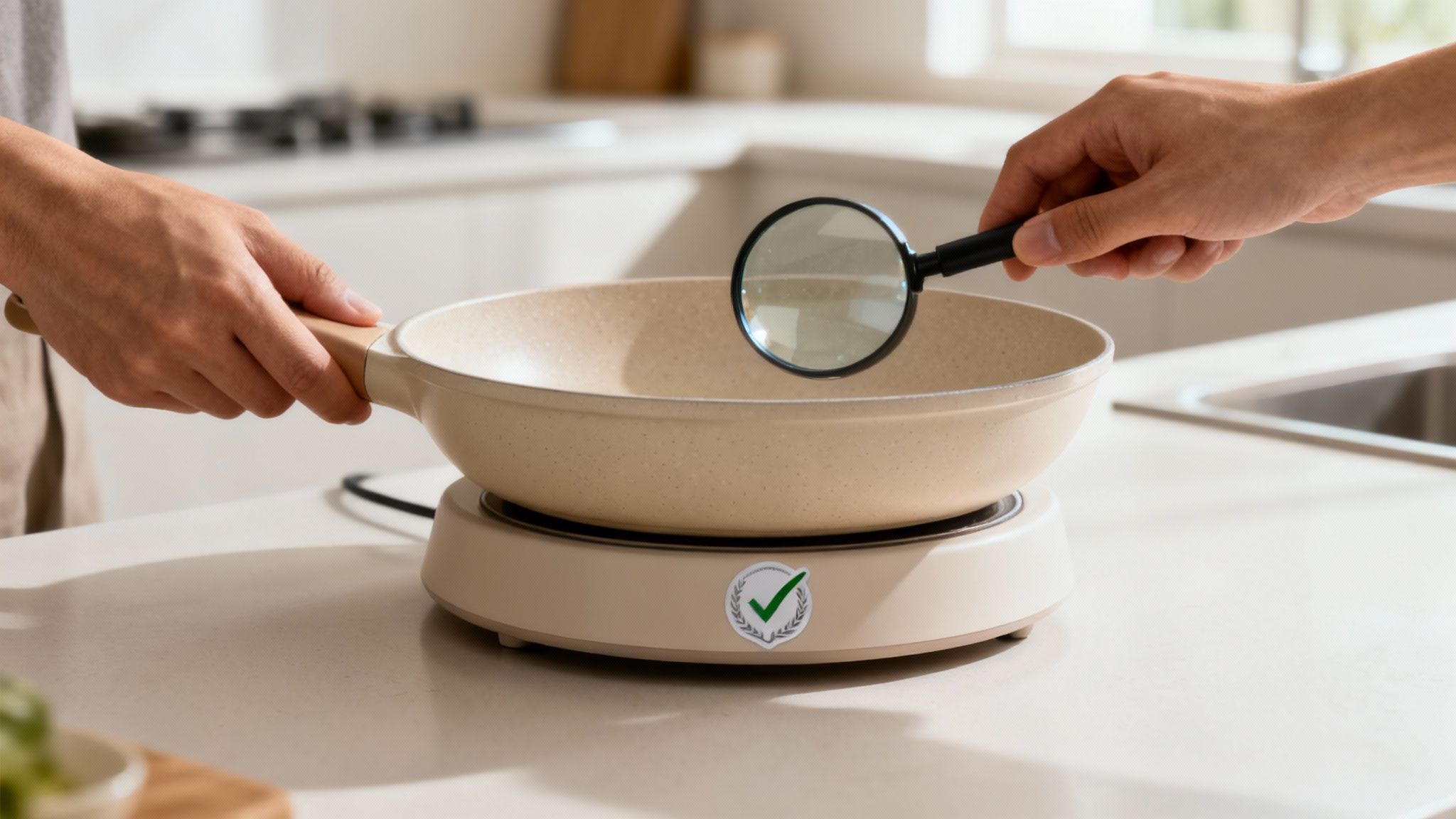
Walking through the cookware aisle can feel a bit overwhelming. Every brand seems to promise the safest, most durable pan you’ll ever own. But you can cut through the noise by focusing on a few key things that signal real quality and safety. Your goal isn’t just to find cookware that’s non-toxic on day one, but one that’s built to stay that way.
Think of it like buying a car. You don’t just admire the shiny paint job; you pop the hood and check the engine. The same logic applies here. Marketing claims are the paint, but the real engine is the build quality and third-party validation. A truly safe ceramic pan is where excellent materials meet durable, thoughtful construction.
This push for safer kitchen gear isn’t just happening here—it’s a global trend. The Asia Pacific region, for example, dominated the global ceramic cookware market with a 37.80% share, valued at USD 1.7 billion. That demand is driven by a massive population, rising incomes, and a strong culture of home cooking, which shows a clear global appetite for reliable, safe kitchenware. You can discover more insights about these market trends.
Look for Third-Party Certifications
The most reliable way to know if a brand’s safety claims are legit is to look for independent proof. Words like “green” or “eco-friendly” can be marketing fluff, but a certification from a recognized authority means the pan has actually been tested.
Here’s what to keep an eye out for:
- Prop 65 Compliance: This is a big one for U.S. consumers. If a brand says it’s compliant with California’s Proposition 65, it means the cookware has been tested and found to be free from harmful levels of lead and cadmium.
- LFGB Certification: Think of this as the European equivalent, and it’s often considered even stricter. Products that pass LFGB testing have been thoroughly checked to ensure no harmful substances will leach into your food.
- NSF Certification: While you see this more in commercial kitchens, an NSF mark means the product meets high standards for public health protection. It’s a great sign of quality.
These certifications force transparency. They prove a company has invested the time and money to verify its products are as safe as they claim.
Decode the Marketing Jargon
Cookware brands love their buzzwords, but some matter far more than others. Knowing what to look for helps you ignore the fluff and focus on what actually impacts safety. The single most important label you should look for is “PFAS-free.”
This is the umbrella term for the whole family of “forever chemicals,” which includes both PFOA and PTFE. A pan that is truly PFAS-free is your safest bet. While a “PFOA-free” label is a good start, it doesn’t tell the whole story, as other PFAS chemicals could still be lurking.
Buyer’s Tip: Prioritize the “PFAS-free” claim above all others. This single phrase confirms the cookware is made without the entire class of chemicals that have raised health concerns in traditional non-stick pans.
Assess the Build Quality
A pan’s physical construction is directly tied to its long-term safety. A cheaply made ceramic-coated pan will degrade quickly, potentially exposing the aluminum core underneath and definitely losing its non-stick magic. A well-built pan, on the other hand, will hold its own for years.
When you’re shopping, pick up the pan and check for these signs of quality:
- A Heavy Base: A thicker, heavier base usually means better materials and much better heat distribution. It’s also far less likely to warp under high heat, which is key to protecting the ceramic coating from cracking.
- A Smooth, Flawless Coating: Look closely at the cooking surface. It should be perfectly smooth and even, with no bumps, pits, or weird spots, especially around the rivets holding the handle.
- Solid Handles: The handles should feel like they’re part of the pan, attached with sturdy rivets—not just screws that can loosen over time. A wobbly handle isn’t just annoying; it’s a genuine safety hazard.
By prioritizing verifiable certifications, understanding the key terminology, and physically assessing the cookware’s quality, you can confidently choose a pan that actually delivers on its promise of safety. Our extensive guides on kitchenware can help you compare specific brands and models.
Proper Care to Maximize Safety and Longevity
Owning a great set of ceramic cookware is just the first step. The real secret to keeping it safe and functional for years to come lies in how you treat it. Think of that slick, non-toxic surface as the most important part of the pan—because it is.
Proper care isn’t just about aesthetics; it’s about preserving the integrity of the cooking surface you invested in. A few simple habits are all it takes to prevent the coating from degrading, ensuring you get that safe, non-stick performance meal after meal.
The Golden Rule of Heat Management
One of the biggest mistakes people make with ceramic pans is blasting the heat way too high. Ceramic is a fantastic heat conductor, which means you get a great sear on low-to-medium heat without needing to crank the dial. In fact, high heat is the fastest way to kill the non-stick surface.
Always cook on low to medium heat. This is non-negotiable. Extreme heat can cause the non-stick properties to break down. While it won’t release toxic fumes like old-school Teflon, it will absolutely ruin your pan’s performance and cut its life short.
I’ve found the best approach is to let the pan preheat for a minute on a lower setting with a little bit of oil or butter. This gentle warm-up protects the coating and gives you fantastic, even results every time.
Utensils and Cleaning Best Practices
The second enemy of your ceramic cookware is physical damage. The surface is tough, but it’s not invincible. Scratches from metal utensils and harsh cleaning methods are a surefire way to wear down that coating.
Utensil Choices Matter
Put the metal utensils away. Seriously. Even one little scrape from a fork or metal spatula can create a weak spot in the coating that gets worse over time.
- Do Use: Anything soft. Wood, silicone, bamboo, or nylon utensils are your best friends here. They won’t scratch or chip the delicate surface.
- Don’t Use: Metal anything. That means no metal forks, knives, spatulas, or whisks. They will cause permanent damage and compromise the non-stick layer.
The Hand-Washing Mandate
I know some brands claim their pans are “dishwasher safe,” but trust me, it’s a shortcut worth skipping. The combination of high heat, aggressive detergents, and the potential for jostling against other dishes is brutal on a ceramic coating.
For cleaning, just follow these simple steps:
- Let it Cool: Never plunge a hot pan into cold water. The sudden temperature change can cause thermal shock, which might warp the pan or even crack the coating.
- Use a Soft Sponge: A gentle wash with warm, soapy water and a non-abrasive sponge or cloth is all you need.
- Dry Thoroughly: Always dry the pan completely before putting it away to prevent water spots and residue buildup.
Restoring a Tired Non-Stick Surface
Even if you do everything right, you might notice your pan losing a bit of its slickness. This is usually due to a nearly invisible film of burnt-on oil or food residue. Before you think about tossing it, give this simple trick a try.
Make a paste with baking soda and a small amount of water. Gently scrub the pan’s surface with the paste using a soft sponge, then rinse and dry it well. This mild abrasive is often just enough to strip away that stubborn residue and bring back much of the pan’s original non-stick magic. Keeping your cookware in top shape is just one part of a well-equipped kitchen; for other essential tools, consider checking out reviews like our guide to KitchenAid’s blender lineup.
Ceramic Cookware vs Other Popular Materials
Figuring out if ceramic cookware is the right choice often means putting it into context. How does it actually stack up against the classic pans you already have in your kitchen? Let’s put it head-to-head with stainless steel, cast iron, and traditional non-stick to see where it really shines—and where you might have to make a few trade-offs.
Every material has its own personality in the kitchen. Stainless steel, for instance, is the undisputed workhorse loved by pro chefs for getting that perfect, beautiful sear on a steak. The downside? It’s notoriously unforgiving with delicate foods like eggs or fish, demanding a generous amount of oil or butter to keep things from sticking.
Then there’s cast iron, the time-tested champion of heat retention that develops a fantastic natural non-stick surface once it’s properly seasoned. Of course, the trade-off is its sheer weight and the specific care it needs—you have to be diligent with cleaning and re-seasoning to keep it from rusting. These are the kinds of details you weigh when choosing any quality kitchenware, much like considering the craftsmanship behind a heritage brand, which we explore in our article on Henckels’ legacy of excellence in kitchenware.
Performance and Safety Showdown
To make your decision a little easier, I’ve put together a table that breaks down how these materials compare across the features that matter most to home cooks. It really helps highlight the unique balance that modern ceramic cookware brings to the table.
Cookware Material Safety and Performance Comparison
Here’s a quick side-by-side look at the most popular cookware materials to help you decide which one best fits your cooking style and priorities.
| Material | Health & Safety | Non-Stick Performance | Durability | Maintenance Level |
|---|---|---|---|---|
| Ceramic | Excellent. No PFAS, PFOA, or PTFE. No toxic fumes if overheated. | Excellent (initially). Can degrade without proper care. | Good. Coating is prone to scratching from metal utensils. | Medium. Requires hand-washing and low heat to preserve the coating. |
| Stainless Steel | Excellent. Non-reactive and highly stable. | Poor. Requires significant oil or butter; food sticks easily. | Excellent. Extremely durable and resistant to scratches. | Low. Dishwasher safe and easy to clean with abrasive pads. |
| Cast Iron | Excellent. A safe, seasoned surface. Can add a bit of dietary iron to food. | Good to Excellent. Depends entirely on its seasoning. | Excellent. Virtually indestructible; can last for generations. | High. Requires careful seasoning, no soap, and immediate drying. |
| Traditional Non-Stick | Fair to Good. Newer pans are PFOA-free, but PTFE can release fumes if overheated. | Excellent. Unmatched food release when the coating is intact. | Poor to Fair. Coating scratches easily and has a limited lifespan. | Low. Generally easy to clean, but the coating is fragile. |
As you can see, each material asks for something different from the cook. Ceramic offers that amazing non-stick glide right out of the box without the chemical worries, but it expects a gentle touch in return.
This graphic really drives the point home: gentle handling is the key to making your ceramic cookware last. From keeping the heat low to washing it by hand, a little mindfulness goes a long way.
Ultimately, ceramic cookware carves out its niche as a fantastic, safe option for anyone who wants non-stick convenience without the chemical baggage of traditional coatings. Just be ready to commit to taking good care of it, and it will take good care of you.
Got Questions About Ceramic Cookware? Let’s Talk.
Even after you’ve done your homework, some real-world questions always pop up once you start using ceramic cookware every day. Let’s get into the nitty-gritty of the most common concerns, so you can feel completely confident at the stove.
These are the moments that can make you second-guess your gear—the accidental scratch, the pan that just isn’t slick anymore. Knowing what’s really going on is the key to a long, happy, and safe relationship with your cookware.
My Ceramic Pan Got Scratched. Is It Still Safe?
This is, without a doubt, the question I hear most often. And the answer is pretty reassuring: yes, a minor scratch on a quality ceramic pan is generally not a health risk. The sol-gel coating itself is inert and non-toxic, meaning a small scuff isn’t going to suddenly leach anything nasty into your food.
The real issue with a scratch is performance. Food will start to catch and stick in that spot, which is just plain annoying. Now, if you have a deep gouge that clearly exposes the aluminum core underneath, that’s a slightly different conversation. While the risk from aluminum exposure through cookware is considered low, it’s probably best to avoid cooking highly acidic foods like tomato sauce in a pan with that level of damage.
Help! My Ceramic Pan Lost Its Non-Stick Magic.
If your eggs are suddenly sticking to a pan that was once as slick as an ice rink, the culprit is almost always a sneaky buildup of burnt-on, carbonized oil. Over time, microscopic food and oil particles can polymerize on the surface, creating an invisible, sticky layer that kills the non-stick effect. This isn’t a safety problem, but it definitely ruins the cooking experience.
You can often bring it back to life. Just make a simple paste of baking soda and water and give it a gentle scrub with a soft sponge. This mild abrasive is usually enough to lift that stubborn residue without hurting the ceramic coating, restoring much of its original glide.
Pro Tip: Stick to oils with a high smoke point (like avocado or grapeseed oil) and make a habit of cooking on low-to-medium heat. This one change can dramatically slow down that sticky buildup and keep your pan’s non-stick surface working for years.
Can I Just Toss My Ceramic Pan in the Dishwasher?
I know, I know. The box probably said “dishwasher-safe.” But if you want your pan to last, you should almost always skip the machine. Dishwashers are brutal environments—the combination of high heat, harsh detergents, and the potential for getting banged around is a death sentence for that delicate ceramic coating.
Hand-washing is the single best insurance policy for your cookware. It’s honestly all you need. A quick, gentle wash with warm soapy water and a soft cloth will keep that surface performing exactly as it should. Think of it as a two-minute investment to protect the pan you invested in.
At Reva Housing, we believe confident cooking starts with trustworthy tools. Our in-depth guides and reviews are designed to help you find kitchenware that is safe, reliable, and perfectly suited to your home. Explore our latest reviews and comparisons to find your next favorite kitchen essential.
