



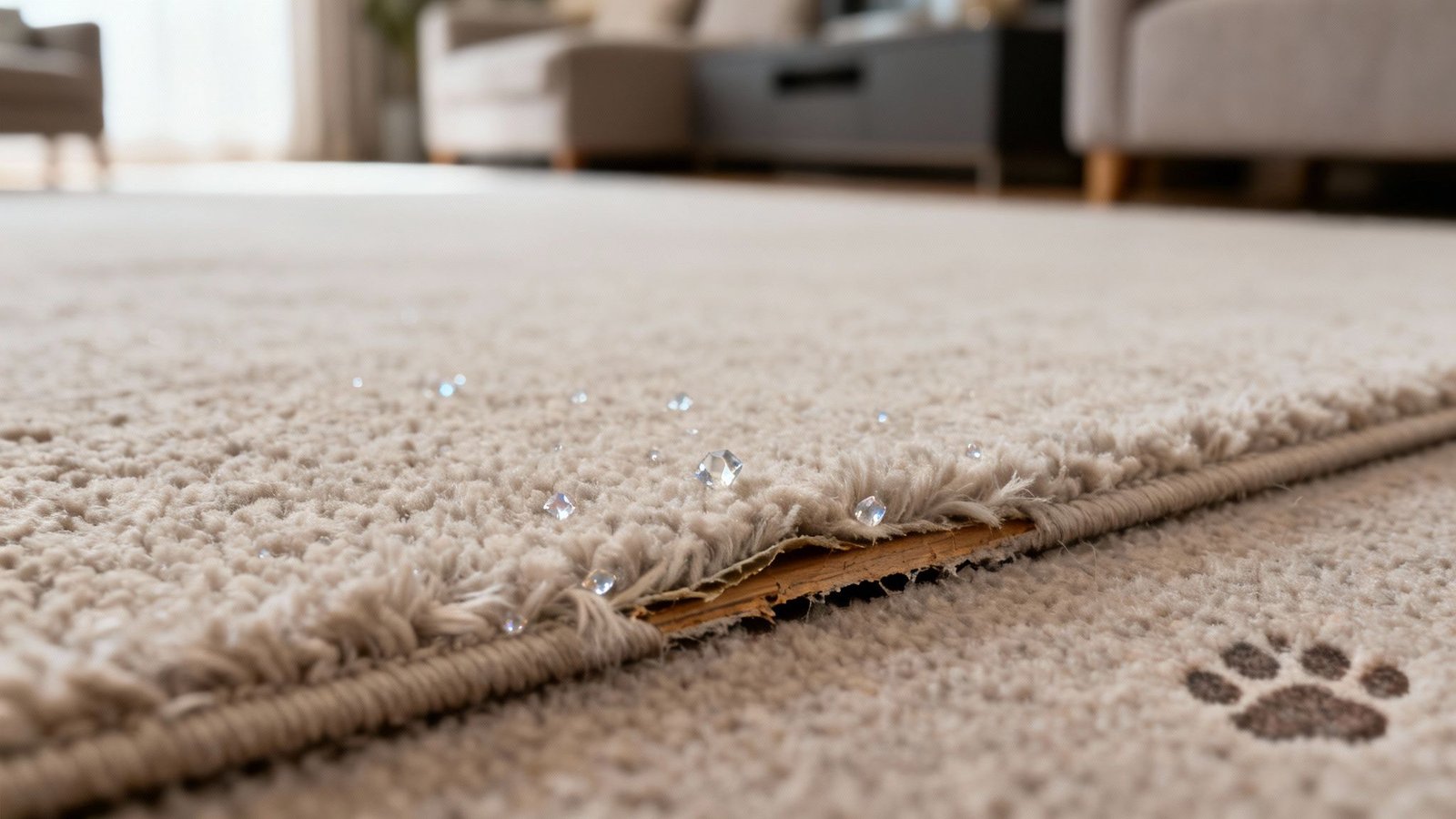
To get rid of pet odors for good, you have to understand what you’re up against. It’s not just a surface-level problem. Simply scrubbing a stain often just pushes the odor-causing stuff deeper into the carpet fibers and the padding underneath, which only makes the smell worse down the road.
Why Pet Odors Linger In Your Carpet
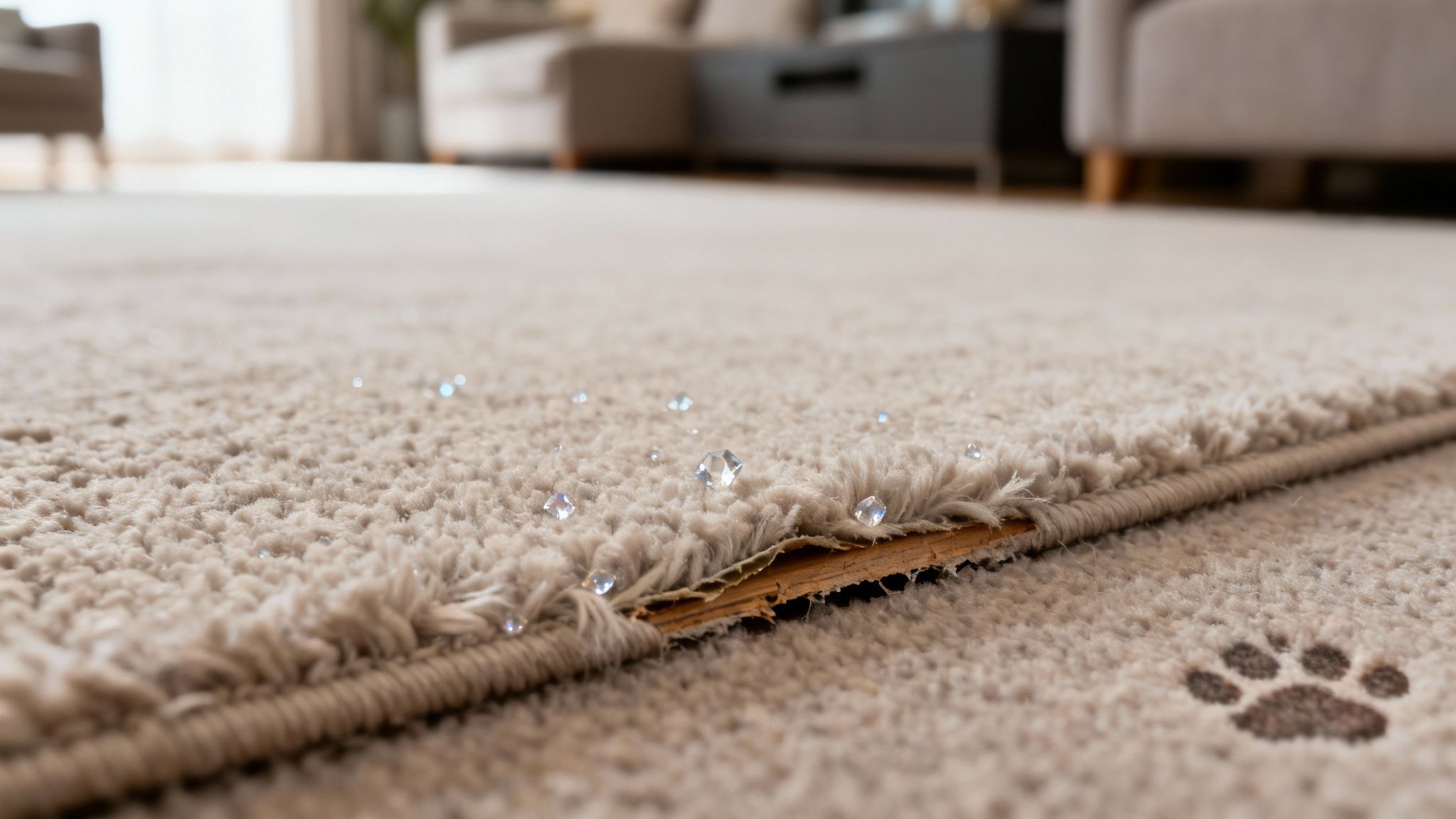
Have you ever cleaned up a pet accident, convinced the smell was gone, only for it to reappear with a vengeance on a humid day? You’re not imagining things. There’s real science behind why pet odors—especially urine—are so incredibly stubborn.
The main offender is uric acid, a key component in pet urine. While other parts of the urine are water-soluble and wash away easily, uric acid isn’t. It forms non-soluble crystals that latch onto carpet fibers like tiny, smelly barnacles. When you clean with regular soap and water, you might remove the visible stain, but those microscopic crystals get left behind, buried deep in the carpet.
The Science of Stubborn Smells
Those uric acid crystals are the source of that “ghost” smell that keeps coming back. They stay dormant when dry, but the moment they get hit with moisture—humidity in the air, steam from the shower, or even a fresh cleaning attempt with the wrong product—they reactivate. As they get damp, they release a pungent combination of ammonia and mercaptans, creating that unmistakable, foul urine odor all over again.
But it’s not just about urine. Our furry friends contribute to the household aroma in other ways, too.
- Dander and Oils: Just like us, pets shed dead skin cells (dander) and have natural oils on their skin and fur. These particles settle deep into the carpet, attracting dust and dirt, which creates that general “doggie” or “cat” smell over time.
- Deep Penetration: Liquids don’t just sit on the surface of your carpet. They soak right through the fibers, into the carpet backing, the padding underneath, and sometimes even the wooden subfloor. Once the odor source hits those deeper layers, just cleaning the top of the carpet is completely useless.
Key Takeaway: Real odor removal isn’t about masking the smell with air fresheners. It’s about finding a cleaner that can chemically break down and destroy the uric acid crystals and other organic compounds causing the problem in the first place.
To tackle these different smells, it helps to know what you’re dealing with. Each source has its own characteristics that make it linger.
Common Pet Odor Sources and Their Characteristics
| Odor Source | Primary Cause | Why It Lingers |
|---|---|---|
| Urine | Uric acid crystals | Crystals reactivate with moisture, releasing ammonia smell repeatedly. |
| Dander/Oils | Shed skin cells and natural body oils | Oils embed in fibers, attract dirt, and create a musty, animal scent. |
| Feces | Bacteria and organic compounds | Bacteria can thrive in carpet fibers, creating a persistent foul odor. |
| Vomit | Stomach acid and undigested food | The acidic nature can damage fibers while bacteria cause a sour smell. |
Recognizing the source helps you choose the right cleaning method, because a simple surface spray won’t do much for a problem that’s soaked down to the subfloor.
How Your Carpet Type Affects Odors
The material of your carpet also plays a huge role in how it traps odors. Natural and synthetic fibers handle pet messes very differently.
Wool, for instance, is incredibly absorbent. That means it soaks up liquids (and smells) quickly and deeply, making it a real nightmare to clean without professional help. On the other hand, synthetic materials like nylon or polyester are less porous and often come with built-in stain resistance, giving you a slightly better chance of cleaning the mess before it becomes a permanent resident. For more on this, our comprehensive pet care guides offer more insights to help you make informed decisions for your home.
The battle against these smells is a big deal for homeowners. The market for pet odor control products has swelled to over USD 15 billion, with North America alone making up about USD 8 billion of that. A fast-growing piece of this market is dedicated to pet odor eliminators like enzymatic sprays, which are projected to double from USD 1.7 billion in 2025 to USD 3.5 billion by 2033. This shows a clear shift toward products that actually neutralize odors instead of just covering them up. This detailed industry analysis highlights just how critical choosing the right product really is.
Your First Response to a Fresh Pet Accident
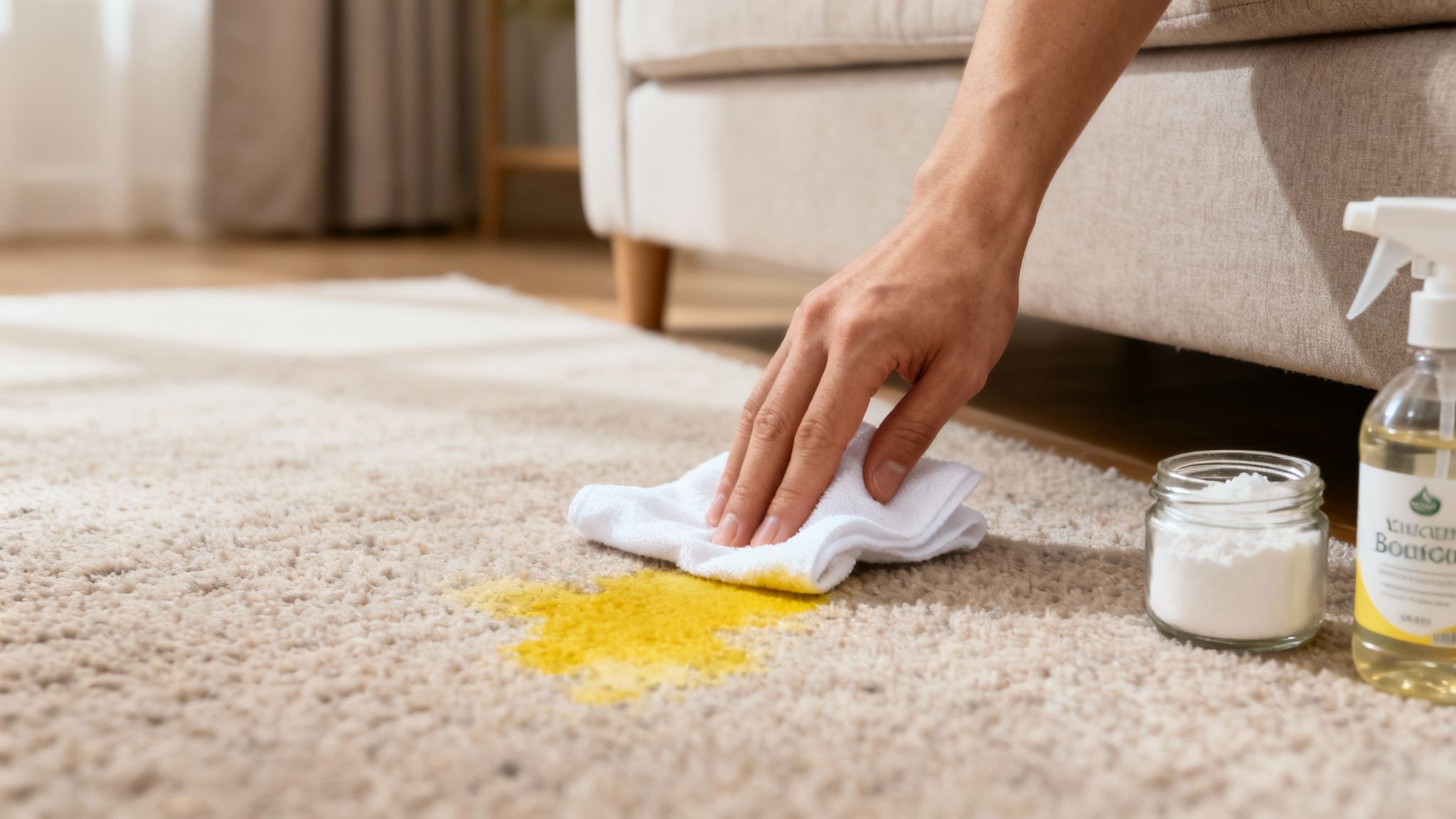
It’s happened. You’ve discovered a fresh pet accident, and what you do in the next few minutes is absolutely critical. Acting fast can be the difference between a quick cleanup and a permanent, lingering smell that seems to follow you from room to room. Every second counts before that liquid seeps deep into your carpet padding and subfloor.
Your gut reaction might be to grab a brush and start scrubbing like mad, but that’s the single worst thing you can do. Scrubbing just grinds the urine deeper into the carpet fibers, permanently damages their texture, and spreads the mess, making the problem spot much, much larger.
The golden rule is simple: blot, don’t scrub.
The Crucial First Step: Blotting
Lay a thick stack of clean paper towels or a highly absorbent, color-safe cloth over the wet spot. Now, press down firmly—don’t be gentle. The goal is to soak up as much liquid as humanly possible. You’ll probably need to repeat this with fresh towels several times until they come away dry.
For a little extra oomph, try standing on the towels for a minute or so. Your body weight provides the perfect, consistent pressure to pull that liquid up from the carpet backing. You want to get as much urine out as you can before it has a chance to break down into those notoriously stinky ammonia compounds.
This immediate response is so important because pet messes are a uniquely stubborn problem. It’s a reality that has fueled a massive industry, with the carpet spot remover market projected to grow from USD 1.3 billion in 2025 to USD 2.1 billion by 2035. With homeowners making up about 40% of that market, it’s clear we’re all in this fight together. Interestingly, the top priority for buyers has shifted from just stain removal to true odor elimination, pushing companies to develop formulas that chemically neutralize smelly compounds. You can see more details in this carpet spot remover market analysis.
The DIY Odor-Neutralizing Solution
Once you’ve blotted the area until it’s nearly dry, it’s time to neutralize what’s left. You don’t need a fancy commercial cleaner for this first response; a couple of household staples can work wonders on the alkaline uric acid in urine.
What You’ll Need:
- Distilled White Vinegar: The acetic acid is your secret weapon against the ammonia in pet urine.
- Baking Soda: A classic for a reason. It absorbs leftover moisture and odors right out of the fibers.
- A Spray Bottle: For getting the vinegar solution right where you need it.
- Cool Water: To dilute the vinegar.
In your spray bottle, mix a solution of 50% distilled white vinegar and 50% cool water. Before you go to town on the stain, do a quick spot test on a hidden area of your carpet—like inside a closet or under the sofa—just to make sure it won’t cause any discoloration.
Pro Tip: Never, ever use hot water or a steam cleaner on a fresh urine stain. The heat can permanently set the protein stain, bonding it to the carpet fibers and making the smell virtually impossible to remove.
Applying Your Solution
Spray the vinegar and water mixture generously over the affected area. Don’t be shy; make sure you cover the entire spot and even a little bit beyond its edges. Let that solution sit and soak in for about 5 to 10 minutes. This gives the vinegar time to get in there and neutralize the ammonia.
After it’s had time to work, grab another clean cloth and blot the area again to soak up the excess vinegar solution.
Next, sprinkle a liberal amount of baking soda over the now-damp spot. You might hear a little fizzing—that’s a good sign! It means the baking soda is reacting with the vinegar and pulling the last of the mess to the surface.
Now, you just have to let the baking soda dry completely. This might take a few hours or even overnight. As it dries, it will continue to absorb any lingering odors. Once it’s fully dry and caked, just vacuum it all up. This one-two punch doesn’t just mask the smell; it knocks it out on a molecular level.
Choosing the Right Cleaner to Really Destroy Odors
Once you’ve handled an immediate accident with a DIY fix, it’s time to bring in the big guns for those deep-set, stubborn smells. I know, walking down the cleaning aisle can feel overwhelming with a wall of options, but it all gets a lot simpler once you understand what’s actually happening inside the bottle.
Your real goal isn’t to cover up the smell with perfume. It’s to find a product that completely obliterates the source. When it comes to pet odors in carpet, that choice almost always boils down to two heavy hitters: enzymatic cleaners and oxygen-based cleaners. They work in totally different ways, and picking the right one is key.
The Power of Enzymatic Cleaners
Think of enzymatic cleaners as a microscopic cleanup crew you unleash on the stain. These formulas are loaded with beneficial bacteria and enzymes that have one job: to hunt down and devour organic waste. We’re talking about the uric acid, proteins, and other compounds in pet urine, feces, and vomit.
They don’t just mask the smell; they literally eat the source until there’s nothing left to stink. It’s a pretty brilliant process, but it does require a little patience. The enzymes need time and a damp environment to do their work. This usually means spraying the spot, covering it with a damp towel, and letting it sit for several hours or even overnight.
- Best For: Deep-set, old, or stubborn urine stains. Nothing else comes close to their ability to break down the uric acid crystals that cause that lingering smell.
- Pro Tip: Always check the label. Some enzymatic cleaners are formulated for specific messes (urine vs. vomit, for example). Grabbing the right one will give you much better results.
How Oxygen-Based Cleaners Work
On the other side, you have oxygen-based cleaners. These guys work through a more immediate chemical reaction. When an oxygen cleaner (often containing hydrogen peroxide or a similar compound) hits the organic material in a stain, it releases tiny oxygen bubbles.
This process, known as oxidation, aggressively breaks apart the chemical bonds of the stain and odor molecules, lifting them right out of the carpet fibers. They are fantastic for their quick action and impressive stain-lifting power.
But—and this is a big but—they are a type of color-safe bleach. This means you absolutely must test them on a hidden spot of your carpet first, like inside a closet or under a sofa, to make sure they don’t cause any discoloration.
Crucial Safety Note: Never, ever mix different types of cleaners, especially anything containing ammonia with a product that has bleach (which some oxygen cleaners do). This combination creates toxic chloramine gas, which is incredibly dangerous for you and your pets to breathe.
Comparing Pet Odor Cleaning Solutions
Choosing between these options is a lot easier when you see their strengths and weaknesses laid out. Here’s a quick breakdown to help you pick the best weapon for your particular fight.
| Cleaner Type | How It Works | Best For | Things to Consider |
|---|---|---|---|
| Enzymatic | Uses beneficial bacteria to “eat” organic waste and odor-causing compounds. | Old urine stains, deeply embedded odors, and preventing remarking. | Requires patience; needs to stay damp for hours to be effective. |
| Oxygen-Based | A chemical reaction releases oxygen to break down and lift stains and odors. | Fresh stains, visible discoloration, and general sanitizing. | Can potentially discolor some sensitive dyes; always spot-test. |
| DIY Vinegar | Acetic acid neutralizes the ammonia in fresh urine on a molecular level. | Immediate response to fresh accidents to prevent odor from setting. | Less effective on old, set-in stains where uric acid has crystallized. |
Seeing it this way makes the choice clearer, right? For a fresh accident with a visible stain, oxygen cleaners are great. For that mysterious smell that won’t go away, enzymatic is your best bet.
Reading Labels and Keeping Pets Safe
When you’re at the store, just flip the bottle over and scan the ingredients. You’re looking for products that are clearly labeled “pet safe” or “non-toxic” after they dry. Try to steer clear of anything with harsh chemicals like chlorine or high concentrations of ammonia.
Thankfully, most reputable brands today design their formulas with pet safety as a top priority. They use ingredients that are tough on odors but gentle on paws and noses once the job is done. At the end of the day, the best cleaner is the one that solves your odor problem for good, without putting your furry family members at risk.
Deep Cleaning for Those Set-In Smells
When you’re dealing with a smell that just won’t quit, it’s a sure sign the problem has gone way beyond the surface fibers. Those stubborn, lingering odors mean the source—usually urine—has soaked deep into the carpet padding, and a simple spot treatment isn’t going to cut it. This is where you have to roll up your sleeves and bring out the big guns to really get rid of that pet odor for good.
Getting these deep-set smells out takes a more aggressive approach, but trust me, you can get professional-level results on your own. It all comes down to using the right equipment and knowing what you’re doing. The goal here is to flush the carpet backing and padding, not just clean the top you can see.
Before you douse your carpet in any cleaning solution, there are a few simple but critical steps to follow. You need to inspect the area, choose the right product for the job, and—I can’t stress this enough—always test it on a hidden spot first.
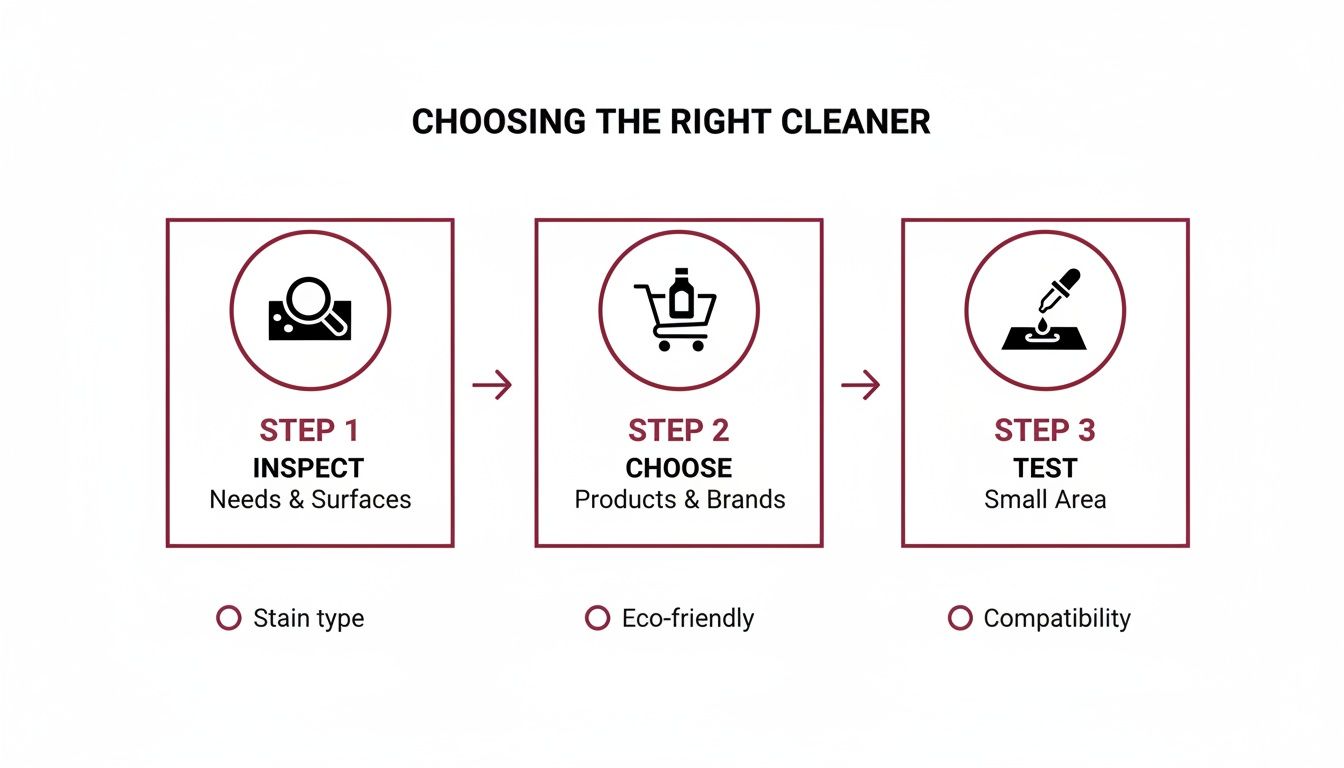
Following this sequence is your best defense against accidentally bleaching or damaging your carpet. It also makes sure you’re using the most effective cleaner for your specific mess.
Using a Carpet Cleaning Machine
Renting a carpet cleaning machine from a local hardware or grocery store is easily one of the most effective DIY methods for deep-set odors. These machines are workhorses. They work by injecting a solution of hot water and cleaning formula deep into the carpet and then immediately sucking the dirty water back out with powerful suction.
Before you even think about turning it on, give the entire room a thorough vacuuming. Pay extra attention to the problem areas to lift as much loose dander, dirt, and pet hair as possible. If you have pets, using the best vacuum for pet hair is a non-negotiable first step. It keeps the machine from clogging and helps the cleaning solution penetrate where it needs to go.
Insider Tips for Success:
- Pick the Right Potion: Don’t just grab any old carpet shampoo. Look for a formula specifically made for pet odors, ideally one with enzymatic properties. These are designed to break down the organic compounds in urine, not just mask them.
- Don’t Drown Your Carpet: It’s so tempting to drench a smelly spot, but over-saturating the carpet can create even bigger problems down the line. Make one slow pass forward while spraying the solution, then another slow pass backward over that same area just to extract the water. You can repeat it if you need to, but avoid flooding the carpet.
- Extraction Is Everything: This is the most crucial part of the whole process. After your cleaning passes, go over the area multiple times with only the machine’s suction function (no spraying). The drier you can get the carpet, the better. Leaving it sopping wet creates a perfect breeding ground for mold and mildew, and you’ll just trade one bad smell for another.
The point of a carpet cleaner isn’t just to wash the carpet—it’s to flush out the contaminants. Think of it like rinsing out a dirty sponge. You have to squeeze all the gross water out to get it truly clean.
The Hard Truth About Steam Cleaning
Steam cleaning is another popular deep-cleaning method, mostly known for its power to sanitize surfaces with high heat. A steam cleaner uses hot, vaporized water to kill bacteria, dust mites, and other allergens hiding in your carpet fibers. It can be fantastic for a general freshening up and sanitizing the spots where your pets love to hang out.
However, steam cleaning comes with a huge, flashing warning sign when it comes to pet urine.
High heat is your absolute enemy when you’re dealing with protein-based stains like urine or vomit. The intense heat can essentially “cook” the proteins, permanently bonding them to the carpet fibers. This can set the stain and the smell forever, making them impossible to remove.
When to Steam (and When to Run Away):
- Use it for: Sanitizing carpets to kill germs, zapping dander-related allergens, and getting rid of that general musty or “doggie” smell.
- Avoid it for: Any fresh or old urine stains. The heat will lock in the stain and the odor, making your problem ten times worse.
If you decide steam cleaning is right for your situation (because there’s no urine involved), treat it just like a carpet cleaning machine. Extract as much moisture as you can when you’re done. Open the windows, set up some fans, and get that air circulating to speed up the drying process. The last thing you want is that damp, mildewy smell to creep in.
Keeping Your Carpet Smelling Fresh for the Long Haul
Dealing with a pet accident is one thing. Actually winning the war against that lingering “pet smell” is another battle entirely. It requires a shift from being reactive to being proactive.
The goal isn’t just to clean up messes. It’s to build a few simple, sustainable habits that stop odors from setting up camp in your carpets in the first place. This is how you keep your whole home smelling fresh day in and day out, not just for an hour after you clean.
Your number one tool in this fight? Your vacuum cleaner. Seriously. A weak, cheap vacuum just skims the surface, leaving behind the dander, hair, and dirt that create that funky smell. A high-quality vacuum designed for pet hair is probably the single best investment a pet owner can make. These machines have the raw suction power and specialized brushes to dig deep and pull out the embedded fur that standard models leave behind.
Creating a Proactive Cleaning Routine
You have to vacuum regularly. There’s just no way around it. For a home with pets, you should be hitting the high-traffic areas at least twice a week, with a full-house vacuum once a week. This simple rhythm stops odor-causing stuff from getting ground deep into your carpet fibers and padding.
Beyond just vacuuming, here are a few other smart moves to add to your playbook:
- Use Strategic Area Rugs: Throw some stylish, washable area rugs down where your pets hang out the most—in front of the couch, by their bed, near the door. They act like a sponge for hair and dander, and you can just toss them in the washing machine. Easy.
- Get an Annual Professional Cleaning: Think of this as a yearly “deep reset” for your carpets. The commercial-grade steam cleaners pros use have way more extraction power than a rental machine, flushing out allergens and any deep-set odors you didn’t even know were there.
- Let the Fresh Air In: Never underestimate the power of opening a window. Good ventilation circulates the air, helping to dissipate airborne odor particles before they have a chance to settle into your fabrics. It’s simple, free, and surprisingly effective.
Expert Tip: When you’re shopping for a new vacuum, keep an eye out for models with a HEPA filter. These things are amazing at trapping microscopic allergens like pet dander. It’s a game-changer not just for smells, but for your home’s overall air quality, too.
Go Straight to the Source
Sometimes, the best defense is a good offense. Managing odors often means managing the source: your pet. A few simple grooming and household tweaks can make a massive difference.
Grooming is huge. Brushing your pet a few times a week removes all that loose fur and dander before it ever hits your floor. Staying on top of litter box hygiene is also critical for cat owners.
Don’t forget to consider your pet’s emotional state, either. Anxiety and stress can sometimes lead to marking or accidents. Creating a calm environment with plenty of toys and their own safe spaces can cut down on these behaviors.
If accidents are happening a lot, though, it’s always smart to check in with your vet to make sure there isn’t an underlying health issue. By pairing a solid cleaning routine with proactive pet care, you’re building a multi-layered defense that keeps your home a fresh, welcoming space for everyone.
Got Questions? We’ve Got Answers.
Even after you’ve blotted, sprayed, and deep-cleaned, a few tricky questions always seem to pop up. Getting lingering pet odors out of carpet for good can feel like a guessing game sometimes, but getting clear answers makes all the difference. Think of this as your quick-reference guide for the tough spots.
We’ve pulled together some of the most common questions pet owners run into, from tackling old, mystery stains to making sure your cleaning methods won’t accidentally ruin your carpet. These are the direct answers you need to handle any pet mess with confidence.
How Do I Get Rid of Old, Dried Urine Stains I Just Found?
Finding an old, dried urine stain is a special kind of headache, especially when moving into a new home or rearranging furniture. The visible part might be long gone, but the odor-causing uric acid crystals are still lurking deep in the fibers, just waiting for a humid day to make themselves known again.
For these ghost stains, your go-to vinegar solution just won’t cut it. This is a job for an enzymatic cleaner, and it’s non-negotiable.
- Go on a Hunt: If the stains aren’t obvious, grab a UV blacklight and turn off the lights. Old urine stains will glow a spooky yellowish-green, revealing every single hidden spot you need to treat.
- Soak It, and Then Some: Don’t be shy with the enzymatic cleaner. Generously spray the area, making sure you soak the carpet well beyond the stain’s visible border. Trust me, the stain underneath the carpet is always much larger than what you see on top.
- Give It Time to Work: The enzymes need two things to break down the uric acid: time and moisture. Cover the treated spot with a damp towel and a layer of plastic wrap on top to keep it from drying out too fast. Let it sit for at least 12-24 hours. Seriously, don’t rush this part.
- Blot and Let It Be: After the waiting period, remove the covering and use a clean cloth to blot up as much of the excess moisture as you can. Then, just let the area air dry completely. Once it’s dry, a quick vacuum will help fluff the carpet fibers back up.
Will These Cleaning Methods Damage My Carpet?
This is a great question, and an important one. The last thing you want is to create a permanent bleach spot while trying to remove a temporary odor. The real answer depends entirely on your carpet’s material and the cleaner you’re using.
- Wool Carpets: These are the divas of the carpet world—beautiful but extremely sensitive. Stick to pH-neutral cleaners or products specifically labeled as safe for wool. Absolutely no high heat, vinegar, or ammonia, as they can permanently damage the natural fibers.
- Synthetic Carpets (Nylon, Polyester): Good news. Most synthetic carpets are built to be far more durable and can handle both enzymatic and oxygen-based cleaners without much fuss. Even so, you should never, ever skip the spot test.
- Oxygen-Based Cleaners: Products with hydrogen peroxide can act as a mild bleach. They’re generally safe for most solution-dyed carpets, but they can cause discoloration on certain dyes. Always, always test on a hidden area first.
The Golden Rule: No matter what product you’re using or what kind of carpet you have, always do a spot test. Pick an inconspicuous area—inside a closet, under the sofa—and apply a small amount. Wait for it to dry before you treat a visible stain. Better safe than sorry.
Why Does the Urine Smell Keep Coming Back After I Cleaned It?
If you’ve cleaned a spot only to have the smell return with a vengeance (especially on humid days), it means you only cleaned the surface. The original accident soaked deep through the carpet fibers and into the padding—and maybe even the subfloor. When the air gets moist, it reactivates the uric acid crystals you left behind.
This is the classic sign that a simple surface spray just wasn’t enough.
The only way to truly solve this is to re-treat the area, ensuring your cleaning solution penetrates just as deeply as the urine did. For really stubborn spots, this might mean using a carpet cleaning machine or even a syringe to inject an enzymatic cleaner directly into the carpet padding. It sounds extreme, but it’s the only way to destroy the odor at its source. Don’t be afraid to be aggressive with your saturation on these phantom smells.
At Reva Housing, we believe an informed decision is the best decision. For more in-depth guides and honest reviews on products that make your house a home, explore our full library of resources.
Find your next favorite home essential at https://revahousing.com.
