



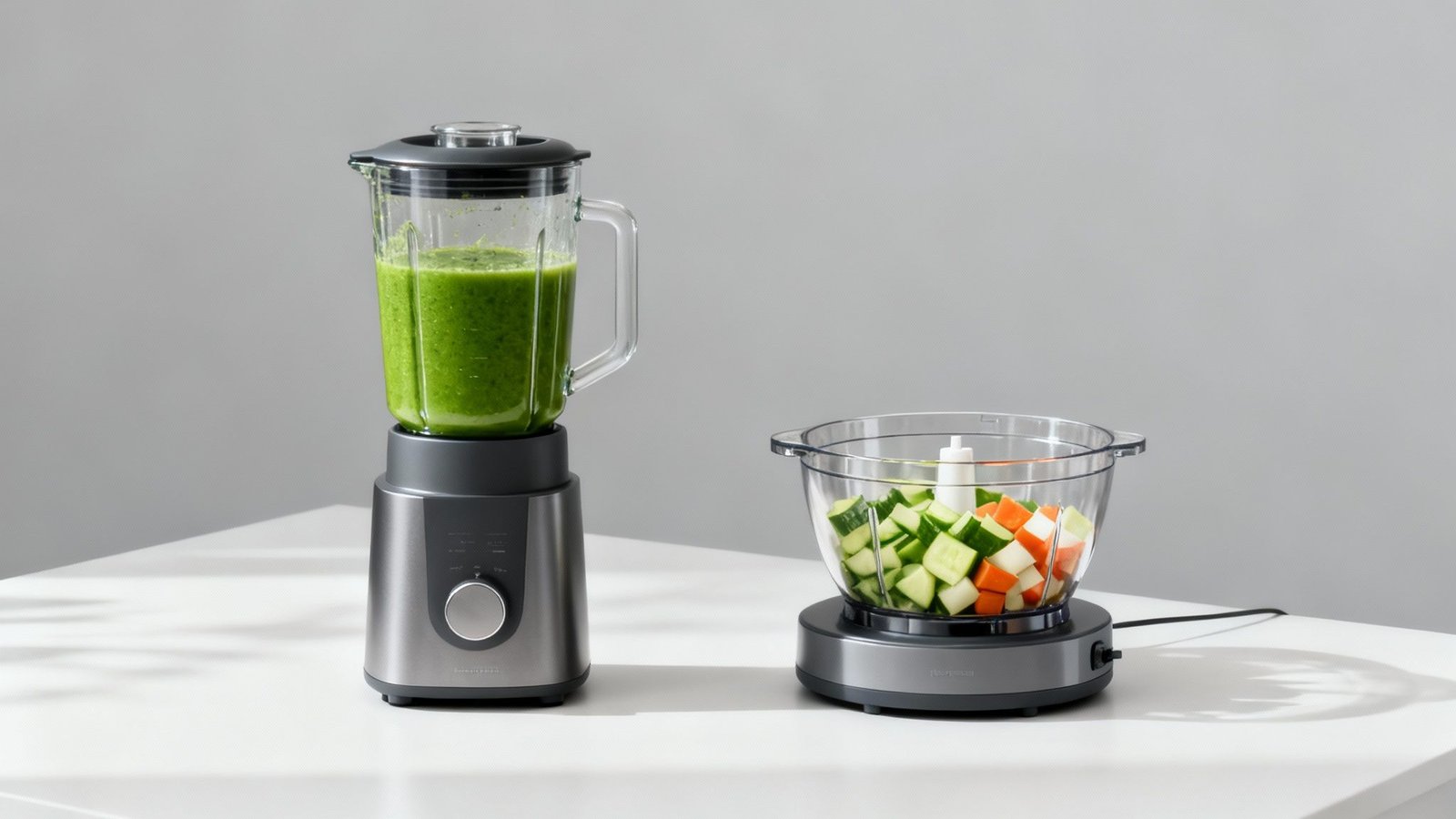
It really comes down to one core idea: blenders are masters of liquefying, while food processors are built for labor-intensive prep work. Think of a blender as creating a powerful vortex to pulverize ingredients for smoothies and soups. A food processor, on the other hand, is all about precision, using different sharp blades in a wide bowl to chop, shred, and even mix dough.
Your Essential Kitchen Showdown
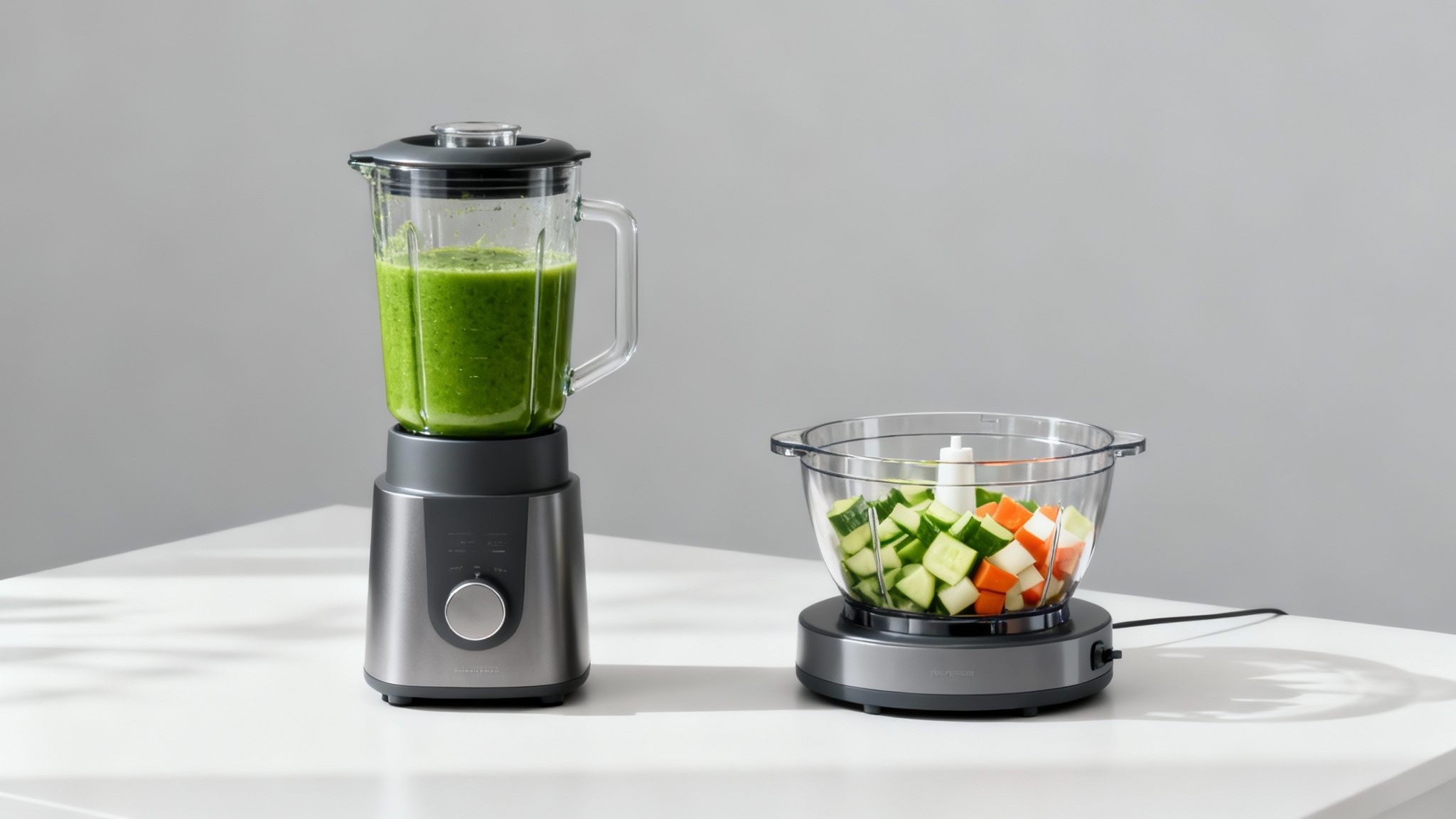
Choosing between a blender and a food processor can feel tricky because, on the surface, their jobs seem to overlap. But their designs are fundamentally engineered for very different results. Getting this distinction right is the key to avoiding a lot of kitchen frustration.
It’s no surprise these appliances have become staples. The global market for them was valued at a whopping USD 8.47 billion back in 2022 and is only expected to keep growing, a trend you can track over at places like gminsights.com.
A blender’s main goal is to create a perfectly smooth, uniform mixture. Its tall, narrow jar is purpose-built to funnel everything—liquids and solids alike—down into a small but mighty set of blades. This creates that signature swirling vortex, pulling every last bit into the blades until it’s completely broken down.
A food processor works on an entirely different principle. It uses a wide, flat work bowl and comes with an arsenal of interchangeable blades and discs. This design gives ingredients room to move around, letting the S-shaped blade chop, mince, or mix without turning your ingredients to mush. For a wider look at other essential appliances, you might find our guides to modern kitchenware helpful.
Quick Look: Blender vs. Food Processor Key Differences
To cut through the noise, here’s a quick table breaking down the main characteristics of each appliance at a glance.
| Feature | Blender | Food Processor |
|---|---|---|
| Primary Function | Liquefying & Puréeing | Chopping, Shredding, Mixing |
| Best For | Smoothies, soups, sauces, frozen drinks | Dicing vegetables, making dough, shredding cheese |
| Blade Design | Fixed, often dull blades at the base | Interchangeable sharp S-blades & discs |
| Bowl/Jar Shape | Tall and narrow to create a vortex | Wide and flat for even processing |
This table makes it pretty clear: while both spin blades, how they do it and what they’re designed to accomplish are worlds apart. One is for drinking your ingredients, the other is for prepping them.
Comparing Core Mechanics and Design
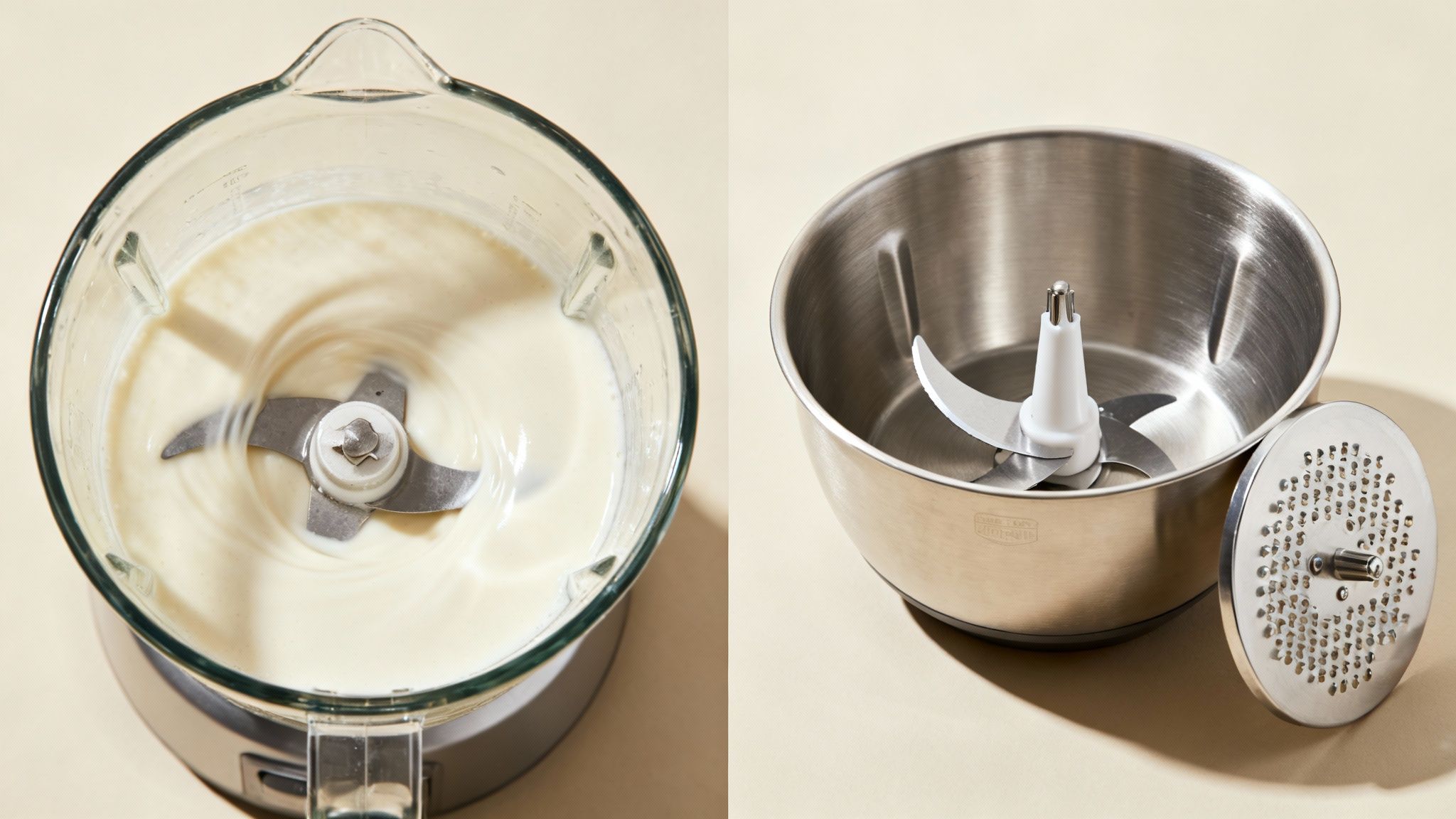
To really settle the blender vs food processor debate, you have to look past the buttons and motors. The real story is in their fundamental architecture—the shape of the container and the design of the blades. These two things dictate everything about how they work and what they’re good at.
A blender is all about its tall, narrow jar. That specific shape isn’t just for looks; it’s engineered to create a powerful vortex. When you fire it up, the ingredients are constantly sucked down into the blades, ensuring every last bit gets pulverized over and over until you have a perfectly smooth liquid.
This cyclonic action is built for one thing: liquefaction. It’s the reason blenders are masters of silky-smooth smoothies, velvety soups, and creamy sauces. The whole point is to completely obliterate texture, not to preserve it.
The Blender Jar and Fixed Blades
In a blender, the blade assembly is almost always fixed to the bottom of the jar. And surprisingly, the blades are often on the duller side. They’re designed less for slicing and more for pulverizing at mind-boggling speeds—some of the high-performance models can spin at over 20,000 RPM. It’s this one-two punch of a vortex and sheer brute force that lets a blender turn ice, frozen fruit, and tough greens into liquid.
A blender’s entire game plan is circulation. It uses liquid to pull solids into a high-speed pulverizing zone, creating a uniform, drinkable, or pourable consistency.
This design is incredibly specialized. While it’s a genius at handling liquids, it’s pretty clumsy with dry ingredients or any task where you want to keep some texture. If you’ve ever tried to chop an onion in a blender, you know the result: a disappointing mix of giant chunks and watery onion mush.
The Food Processor Bowl and Versatile Blades
Now, flip over to the food processor. It’s got a wide, squat work bowl. This design gives ingredients plenty of room to spread out, which is key for even processing. Instead of a vortex, it uses razor-sharp blades spinning at a much lower speed to chop, slice, or shred with a ton of control.
But the biggest difference is the blade system. A blender has its one fixed blade, but a food processor comes with a whole toolkit of interchangeable attachments:
- S-Blade: This is your go-to blade. The S-shaped attachment sits low in the bowl and is incredibly sharp, perfect for chopping, mincing, mixing, and puréeing thick things like hummus or pesto.
- Slicing Disc: A flat disc that sits near the top of the bowl, it creates perfectly uniform slices of cucumbers, potatoes, or zucchini in seconds.
- Shredding Disc: This works just like the slicing disc but grates hard cheese, carrots, and cabbage without any effort.
- Dough Blade: Usually made of plastic, this duller blade is designed specifically to knead dough without overworking the gluten.
This modular setup is what gives the food processor its incredible versatility. It’s a prep machine, not a liquefier. The wide bowl and sharp, slower blades give you a level of precision that a blender just can’t touch. When you start exploring different brands, you can see how these designs are fine-tuned; for instance, you can learn more about KitchenAid’s blenders to see how they optimize their jars and blades specifically for smooth blending. In the end, it all comes down to the shape of the container and the job of the blade.
A Head-to-Head Task Comparison
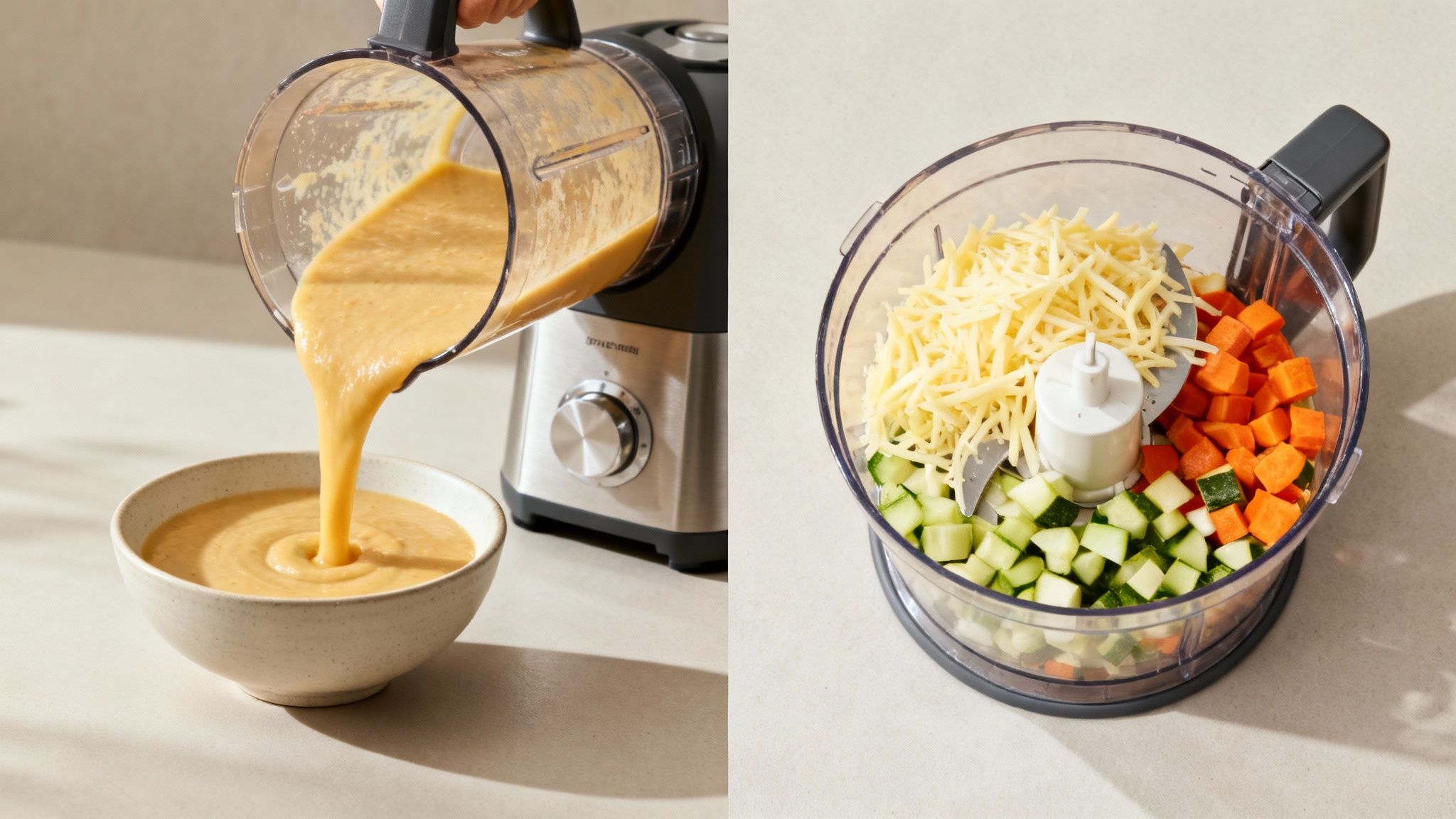
Alright, let’s move past the technical specs and get our hands dirty. The real story of a blender versus a food processor isn’t just about what each can do, but how well they do it. The quality of your final dish—whether it’s a smoothie, salsa, or pie dough—hinges entirely on picking the right tool for the job.
These appliances are kitchen staples for a reason. In 2019 alone, Americans bought roughly 25.8 million blenders, a testament to their popularity. If you’re curious about the numbers, you can explore the research on kitchen appliance sales for a deeper dive.
But that popularity can also breed confusion. Let’s break down exactly what you can expect from each machine, task by task.
The Realm of Liquids: Smoothies and Soups
When your goal is a velvety, sippable consistency, the blender is the undisputed champion. There’s just no contest. Its powerful motor and the physics of its vortex-creating jar are specifically engineered to pulverize fiber, creating a perfectly smooth, unified liquid.
Take a green smoothie, for example. A blender effortlessly annihilates tough kale, frozen fruit, and solid ice, turning them into a drinkable, grit-free liquid. The result is consistently creamy. Try that in a food processor, and you’re in for a bad time. It’ll roughly chop the ingredients, but it just can’t create the vortex needed to break them down completely. What you’re left with is a chunky, fibrous sludge.
The same logic applies to puréed soups. A blender delivers that silky, restaurant-quality finish every time. A food processor will leave you with a more rustic, slightly grainy texture.
Key Takeaway: For any recipe where the endgame is a smooth liquid—from protein shakes to creamy tomato soup—a blender isn’t just the better choice; it’s the only one that will give you a superior result.
Precision Prep Work: Chopping and Shredding
Here, the tables turn completely. The food processor, with its wide bowl, interchangeable discs, and wickedly sharp S-blade, gives you the control and versatility needed for tedious prep tasks.
Imagine making a mirepoix (a mix of diced onions, carrots, and celery). With its S-blade, a food processor can pulse these veggies into a uniform dice in seconds. If you attempted this in a blender, you’d end up with a watery, unevenly processed mush with big chunks floating in vegetable juice. It’s a mess.
The same goes for shredding a block of cheese. A food processor with its shredding disc attachment will turn a block of cheddar into a perfect pile of shreds in under a minute—fast, consistent, and effortless. A blender simply can’t do this. It will either fail to process the cheese block or, if you manage to break it up, turn it into a clumpy, unusable paste.
This makes the food processor your go-to for making coleslaw, slicing potatoes for a gratin, or pulsing up breadcrumbs.
To make the differences crystal clear, here’s a quick rundown of how each appliance handles common kitchen jobs.
Appliance Performance by Common Kitchen Task
| Task | Winner | Blender Performance | Food Processor Performance |
|---|---|---|---|
| Smoothies & Shakes | Blender | Excellent. Creates a perfectly smooth, vortex-pulverized texture. | Poor. Results in a chunky, fibrous, and unappealing sludge. |
| Puréed Soups | Blender | Excellent. Delivers a silky, velvety, restaurant-quality finish. | Fair. Produces a more rustic, slightly grainy texture. |
| Chopping Vegetables | Food Processor | Poor. Creates a watery, uneven mush. Lacks control. | Excellent. Achieves a fast, uniform dice with just a few pulses. |
| Shredding & Slicing | Food Processor | Fails. Cannot shred or slice; will create a paste. | Excellent. Uses discs for fast, consistent, and perfect results. |
| Making Dough | Food Processor | Fails. Motor is not designed for low-speed, high-torque tasks. | Good. Kneads dough quickly and efficiently without overworking it. |
| Grinding Nuts/Flour | Blender | Good. High-powered models excel, but can overheat. | Fair. Can work, but may result in an uneven, mealy texture. |
| Nut Butters | Tie | Excellent (High-Power). Creates ultra-smooth butter but may need a tamper. | Good. Easier process, but results in a slightly thicker texture. |
| Dips (Hummus, Pesto) | Food Processor | Fair. Can work, but the narrow base makes scraping difficult. | Excellent. Wide bowl offers superior control over texture. |
As you can see, the winner really depends on what you’re trying to accomplish.
The Crossover Challenge: Nut Butters and Dips
Some tasks fall into a gray area where both appliances can technically get the job done, but the process and the final product are quite different. Making homemade nut butter is the perfect example.
A high-powered blender can produce incredibly smooth nut butter. Its motor is built for the long run times needed, and its vortex continuously pulls the nuts down into the blades. The catch? You’ll likely need a tamper to keep things moving, and you have to watch for overheating.
On the other hand, a food processor handles the task with more ease. It breaks down the nuts with its S-blade without needing much intervention from you. The final texture is often slightly thicker and less processed than what a blender produces, which some people actually prefer. For thicker dips like hummus or pesto, the food processor’s wide bowl and pulse function give you far better control over the final texture.
Making an Informed Buying Decision
Alright, let’s get down to the brass tacks. Choosing between a blender and a food processor isn’t just about picking an appliance; it’s about picking the right tool for your kitchen. You have to think past the shiny features and focus on what you’ll actually use day-to-day. Your kitchen size, how many people you cook for, and your personal cooking style should be calling the shots here. A smart choice means you get a workhorse, not just another gadget collecting dust on the counter.
The market for these appliances is absolutely exploding—it’s projected to hit nearly USD 19 billion by 2035. That growth is fueling some cool advancements like quieter motors and smart features, giving us more options than ever. But it also means more noise to cut through.
The best way to make the right call is to match the machine to your reality.
Capacity and Kitchen Footprint
First things first: size matters. A massive, 14-cup food processor is an absolute beast for meal prep or big family dinners. But for a single person in a tiny apartment? It’s overkill and a storage nightmare. The same goes for blenders. A giant 64-ounce blender is fantastic for making smoothies for the whole crew, but it feels ridiculous for a single serving.
Before you even click “buy,” grab a tape measure. Seriously. Check your counter and cabinet space. A bulky machine that doesn’t have a convenient home will become a chore to pull out, and you just… won’t. Think about how much you actually cook at once and pick a size that fits your real life, not your aspirational Pinterest-board life.
Motor Power and What It Really Means
Wattage numbers get thrown around a lot, but they mean different things for these two appliances. It’s not an apples-to-apples comparison.
For a blender, high wattage (1,000 watts or more) is king. That number translates directly into the raw, high-speed power needed to obliterate frozen fruit, crush ice into snow, and turn tough, fibrous greens like kale into a liquid so smooth you can’t even taste the health. Without it, you get chunky smoothies and a burnt-out motor.
For a food processor, it’s less about speed and more about torque. The wattage (often around 600-700 watts) reflects the rotational force the motor can sustain. This is the muscle you need for tough jobs like kneading heavy bread dough or powering through sticky dates for energy balls. A food processor motor is built for endurance under a heavy load, not for lightning-fast pulverizing.
Key Insight: A blender’s power is all about speed—pulverizing hard solids into silky liquids. A food processor’s power is about torque—muscling through heavy, dense ingredients without giving up.
Accessories, Cleanup, and Material Durability
Don’t get so caught up in performance that you forget about the daily grind of owning the thing. An appliance is only useful if it isn’t a pain to use and clean.
- Valuable Accessories: For food processors, a good set of slicing and shredding discs is a massive value-add, saving you tons of tedious prep time. For high-performance blenders, a tamper is non-negotiable; it’s the only way you’ll get thick mixtures like hummus or nut butter moving.
- Ease of Cleaning: Check for dishwasher-safe components. This is huge. A blender with a self-cleaning cycle (just add soap, water, and run it) is a godsend. Food processors have more parts, so look for a simple design without too many nooks and crannies where food can get stuck.
- Container Material: Glass jars feel premium and won’t stain or hold odors, but they’re heavy and can shatter. BPA-free plastic is lightweight and won’t break, but it can get cloudy or stained over time from things like tomato sauce or turmeric. It’s a trade-off between durability and weight.
Ultimately, a smart buy is a balance of power, size, and simple usability. For a closer look at how specific models hold up in the real world, check out our featured reviews to see them put through their paces.
Do You Actually Need Both Appliances?
This is where the rubber meets the road. After digging into the mechanics and performance, the final call in the great blender vs food processor debate comes down to something simple: your actual, real-world cooking habits. It’s time to be honest about what you really make in the kitchen to avoid buying a pricey appliance that just gathers dust on the counter.
The choice gets surprisingly clear when you think about your routine. If your mornings run on smoothies, your post-workout fuel is a protein shake, and your go-to comfort food is a silky butternut squash soup, then a high-quality blender is non-negotiable. It’s the only tool that can deliver that perfectly smooth, grit-free texture those liquid-heavy recipes demand.
On the flip side, if you find yourself constantly chopping mountains of veggies for stews, shredding cheese for taco night, or whipping up pie crusts from scratch, a food processor will feel like your most valuable kitchen assistant. It’s a prep-work beast, built to save you from tedious manual labor and handle tasks that a blender would just turn into a soupy mess.
Mapping Your Cooking Style to the Right Appliance
To make it even clearer, this chart maps common kitchen tasks to the ideal appliance.
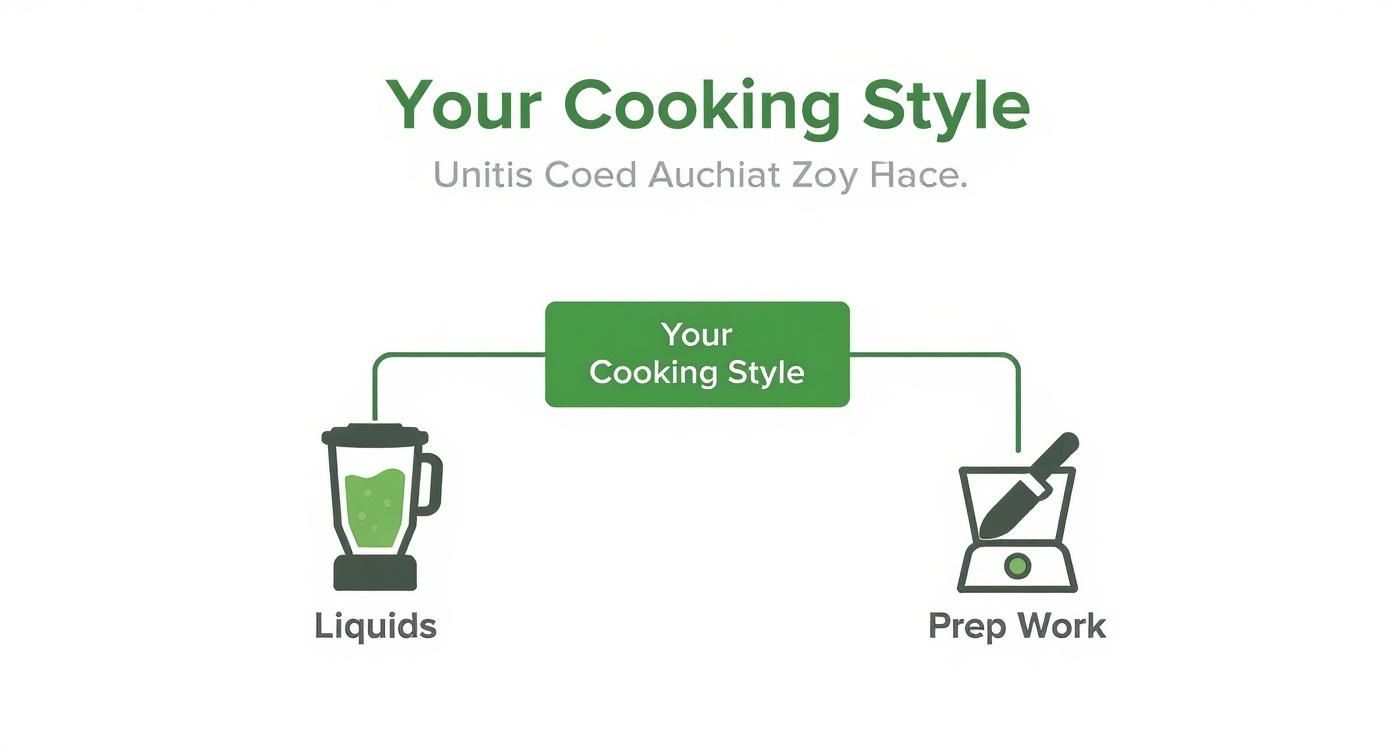
As you can see, if your kitchen life is all about liquids, a blender is your best friend. But if your focus is on prep, a food processor is the clear winner.
For the ambitious home cook, though, these appliances aren’t really competitors—they’re a team. Think of it this way: the food processor handles all the foundational prep work, while the blender comes in for the finishing touches, like sauces, soups, and dressings. Owning both unlocks a whole new level of kitchen efficiency, letting each machine do what it does best without compromise. This powerful synergy is exactly why so many serious cooks make room for both.
The Hybrid Appliance Compromise
So what about those all-in-one, blender-and-food-processor hybrid models? They promise the best of both worlds in a single, space-saving unit, which sounds great for smaller kitchens. These systems typically use one motor base with interchangeable blender pitchers and food processor bowls.
While they’re definitely convenient, they almost always come with a performance trade-off. The motor might be optimized for a blender’s high-speed needs, meaning it could struggle with a food processor’s high-torque jobs, like kneading a heavy dough.
The real question to ask before buying a hybrid is this: Am I willing to sacrifice some specialized performance for convenience and counter space? For many casual cooks, the answer is a resounding yes. But if you demand peak performance for specific tasks, two separate, dedicated machines are still the way to go.
Frequently Asked Questions
After laying it all out, a few specific questions always seem to bubble up. Let’s tackle the most common ones that pop up when you’re trying to decide between these two kitchen workhorses.
Can a Blender Replace a Food Processor for Chopping?
It’s tempting to think you can, but trust me, using a blender for chopping is a recipe for disaster. A blender is designed to do one thing really, really well: pulverize. Its tall jar and powerful motor create a vortex that pulls everything down to the blades to be liquefied.
Toss in some onions or carrots, and the stuff at the bottom turns to mush in seconds while the chunks at the top stay completely whole. You end up with an uneven, watery mess—a weird mix of puree and giant chunks. If you need a consistent dice or mince, the food processor with its wide bowl and S-blade is the only tool for the job.
Can a Food Processor Make a Decent Smoothie?
You can certainly try to make a smoothie in a food processor, but you’re not going to like the result. A food processor just doesn’t have the high-speed motor or vortex action required to obliterate tough, fibrous ingredients like kale or break down frozen fruit into that silky, drinkable texture we all want.
Instead of a creamy, velvety smoothie, you’ll get something gritty and chunky. It’s more like a poorly mixed slushy than a proper smoothie. It’ll combine the ingredients, but it won’t truly liquefy them, leaving you with a pretty unappealing texture.
The Bottom Line: A blender is for drinking your ingredients, while a food processor is for prepping them. Try to swap them for their main jobs, and you’ll just end up frustrated.
Is an Immersion Blender a Good Substitute?
An immersion blender (or stick blender) is an incredible tool, but it’s not a true substitute for a countertop blender or a food processor. Its real strength is blending directly in a pot, which is perfect for pureeing hot soups right on the stove or whipping up a quick batch of mayo or sauce.
Its motor, however, is much less powerful than a countertop model’s, so it really struggles with hard stuff like ice or big chunks of frozen fruit. And it has zero chopping, shredding, or slicing abilities. Think of it as a specialist for creating smooth textures in convenient, smaller batches.
Which Appliance Is Genuinely Easier to Clean?
For a quick, daily cleanup, the blender usually wins. Many modern blenders come with a self-cleaning cycle that’s genuinely effective. Just add a drop of dish soap, some warm water, and let it run on high for 30-60 seconds. The vortex does all the scrubbing for you.
A food processor has more moving parts—the bowl, lid, pusher, S-blade, and various discs—which all need to be taken apart. While most components are dishwasher-safe, handwashing means dealing with sharp blades and getting into all the little nooks and crannies of the lid and feed tube. It’s just a bit more of a project.
At Reva Housing, we know that having the right tool can completely change your experience in the kitchen. For more deep dives and reviews that help you buy with confidence, check out our other guides at https://revahousing.com.

1 Comment
Pingback: The Cuisinart CPT-122: Is This the Best Small Toaster for Your Kitchen?