



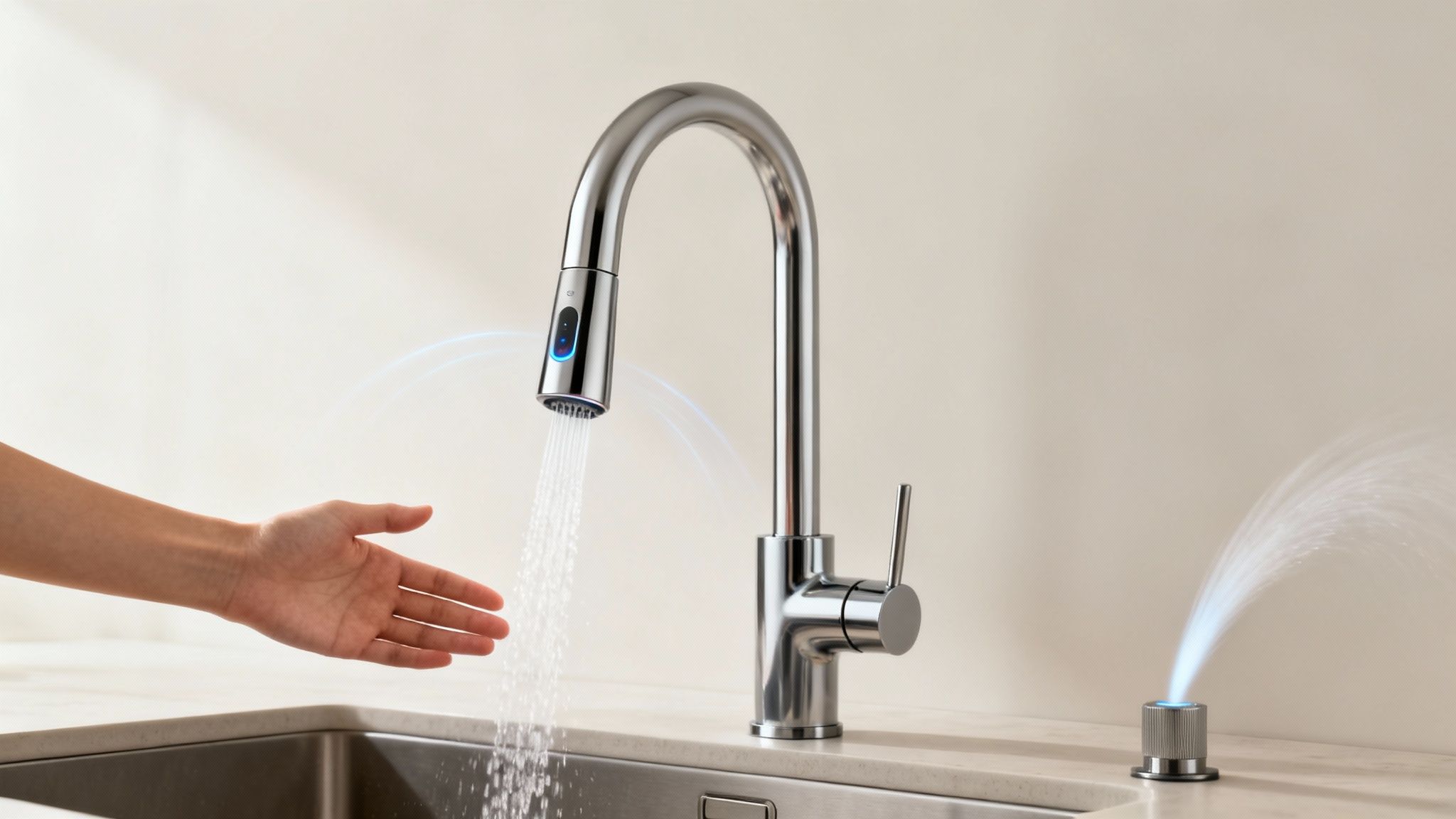
Choosing the right kitchen faucet might seem like a small detail, but it’s one of the most important decisions for your kitchen’s functionality and style. It’s the most-used fixture in the room, a workhorse that needs to be reliable, easy to use, and beautiful. Get the choice right, and you’ll have a fixture you love using every single day.
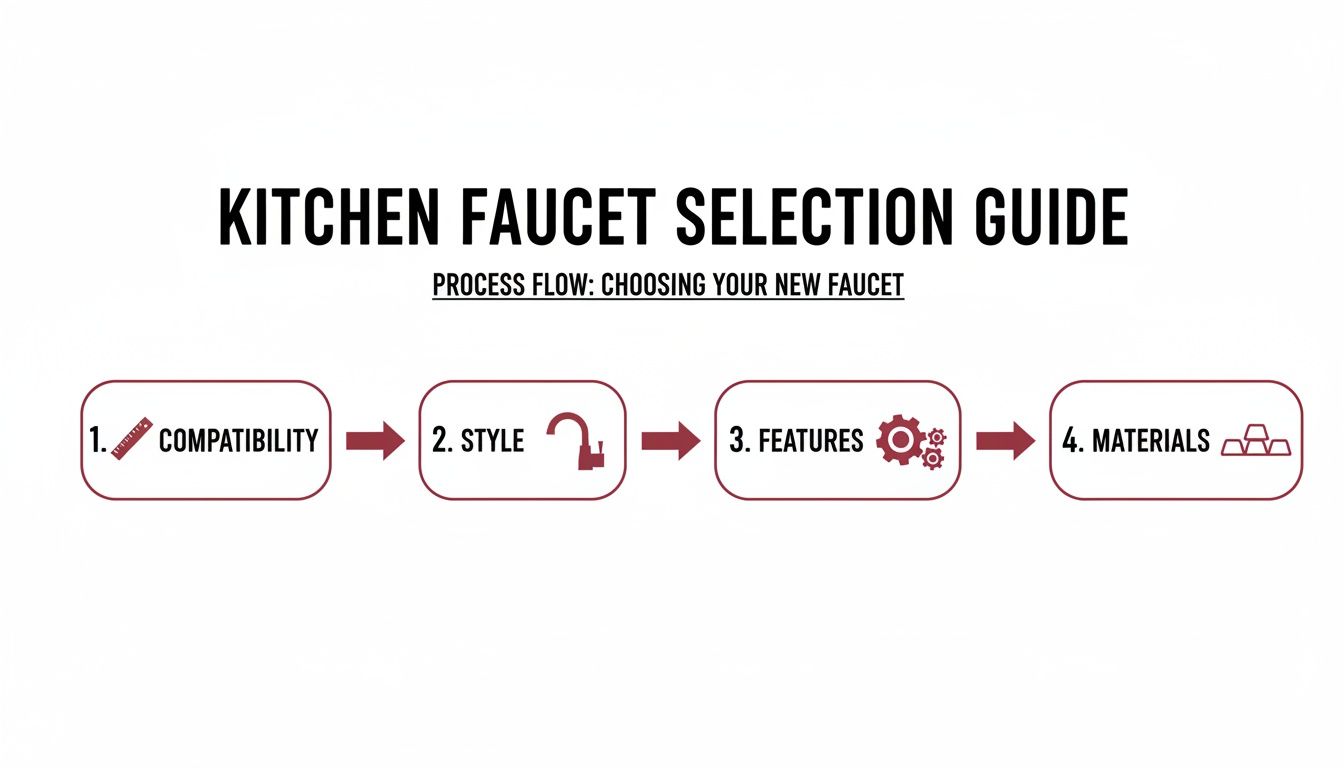
This guide will walk you through everything you need to know, breaking down the process into four simple steps:
- Compatibility: Making sure the faucet fits your sink and countertop perfectly.
- Style & Finish: Picking a look that complements your kitchen’s aesthetic.
- Features & Functionality: Finding the tech that makes your life easier.
- Materials & Durability: Choosing a faucet built to last for years to come.
By the end, you’ll be able to confidently select a kitchen faucet that not only looks fantastic but also makes your daily routine feel a little less like a chore.
1. Check Your Sink and Countertop Compatibility
Before you fall in love with a sleek, high-arc design, let’s start with a quick reality check. The most beautiful faucet in the world is useless if it doesn’t fit your sink. This is the crucial first step that will save you a world of frustration.
Count the Mounting Holes
Look at your sink or countertop where the current faucet is installed. The number of pre-drilled holes dictates your options.
- One Hole: Common in modern kitchens, this setup is perfect for single-handle faucets with integrated pull-down or pull-out sprayers.
- Two Holes: Typically supports a single-handle faucet plus an accessory like a side sprayer or soap dispenser.
- Three Holes: The classic standard for faucets with separate hot and cold handles, known as a widespread or center-set mount.
- Four Holes: Includes the three holes for a traditional faucet plus an extra one for an accessory.
What if you have three holes but want a single-hole faucet? No problem. Many models come with an optional deck plate (or escutcheon) that cleanly covers the unused holes, giving you a modern look without replacing your sink.
Take Key Measurements
Two measurements are non-negotiable for a perfect fit:
- Spout Height: The vertical distance from the countertop to the highest point of the faucet. Ensure it fits under any overhead cabinets or window sills. High-arc or “gooseneck” styles are great for filling tall pots.
- Spout Reach: The horizontal distance from the faucet base to where the water stream lands. You want the water to flow into the middle of the sink basin to avoid awkward washing and excessive splashing.
Getting these measurements right is the most practical step you can take. It ensures your new faucet will function perfectly within the real-world dimensions of your kitchen. And if you’re having general water flow issues, it might not be the faucet’s position—you might want to check our guide on how to unclog a sink to rule out other problems.
2. Match Faucet Styles and Finishes to Your Kitchen
Once the technical specs are sorted, it’s time for the fun part—choosing a faucet that brings personality to your kitchen. The style and finish are what everyone sees first, tying the whole room together or standing out as a bold statement piece.
Faucet Type and Handle Style
How a faucet operates is just as important as how it looks. Think about your daily habits to find the right model.
- Pull-Down Faucets: The spray head pulls straight down from a high-arc spout. They are fantastic for deep sinks and filling tall pots.
- Pull-Out Faucets: The faucet body pulls out toward you on a flexible hose. This style often has a longer hose, which is perfect for rinsing all corners of a wide sink.
- Single-Handle: The king of convenience, letting you adjust temperature and flow with one hand.
- Double-Handle: Offers a classic, symmetrical look and precise, independent control over hot and cold water.
- Hands-Free: Touch-activated or motion-sensing models offer the ultimate in hygiene and ease of use.
A Deep Dive into Faucet Finishes
The finish gives your faucet its character, impacting both its look and durability. The global kitchen faucet market has swelled to an estimated value of over USD 8 billion, driven by homeowner demand for diverse and resilient finishes. You can dig into the numbers yourself with industry research on ResearchAndMarkets.com.
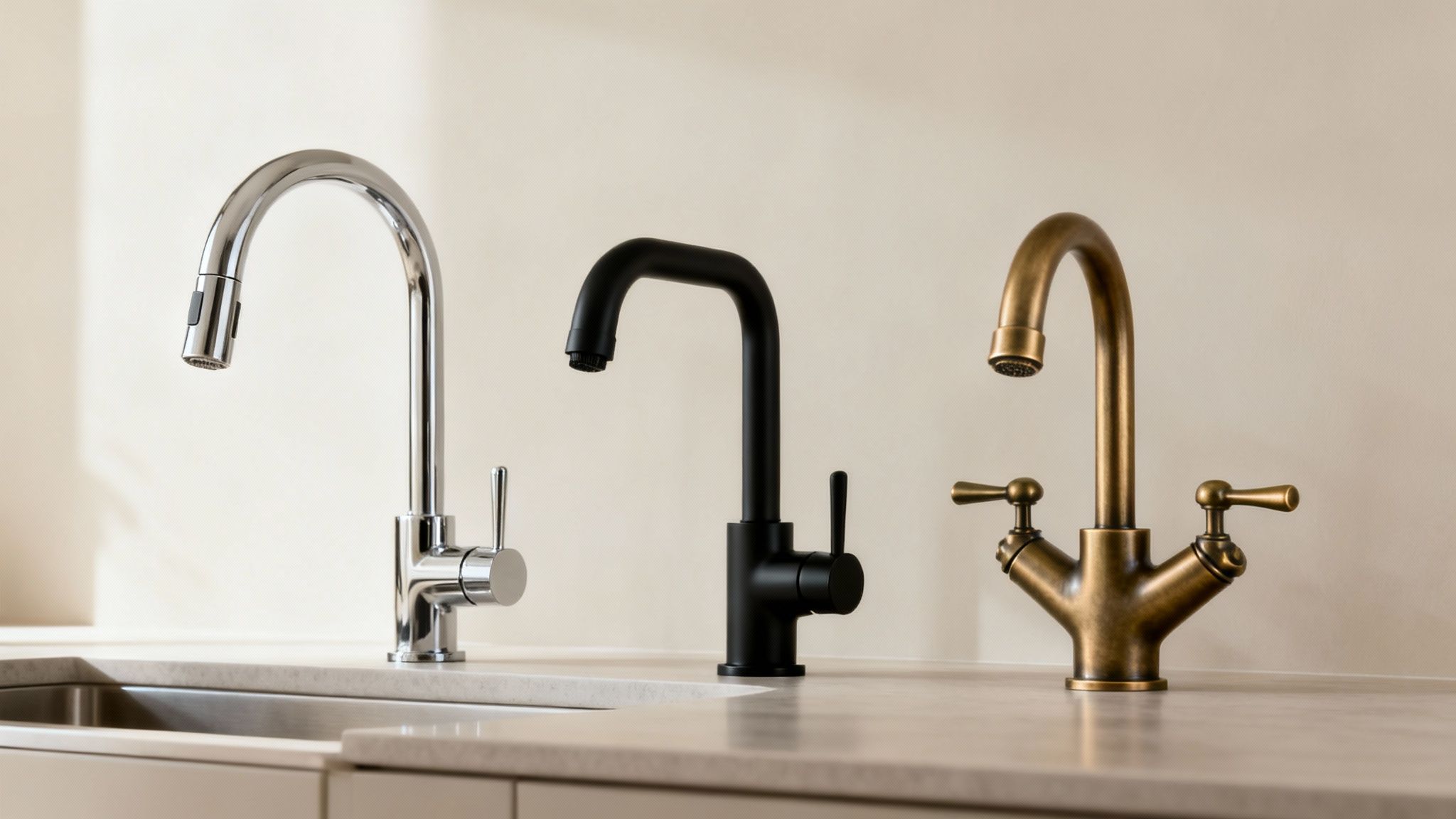
- Chrome: Affordable, versatile, and bright. Its biggest downside is that it shows every water spot and fingerprint.
- Stainless Steel & Brushed Nickel: The most popular choices for modern kitchens. Their soft, matte look is brilliant at hiding fingerprints and water spots, making them a low-maintenance dream. For cleaning tips, see our guide on how to clean stainless steel.
- Matte Black: A bold, contemporary statement that creates stunning contrast. It’s great at hiding smudges but can show mineral deposits from hard water.
- Brass & Gold Tones: Adds instant warmth and a touch of luxury. These finishes are perfect for creating a focal point in the kitchen.
The right finish does more than just look good—it simplifies your cleaning routine. Consider how much time you want to spend wiping down your faucet when making your final decision.
3. Decode Smart Features and Functional Tech
Beyond looks, the technology inside a modern faucet can truly change your daily kitchen experience. From multi-function spray heads to touchless activation, these upgrades are engineered to make chores faster, cleaner, and easier. The smart kitchen faucet market is projected to reach nearly USD 1.5 billion by 2025, a testament to our growing appetite for convenience and water-saving tech. You can explore these trends in this report on cognitivemarketresearch.com.
Key Features to Consider
- Multi-Function Spray Heads: Most pull-down and pull-out models now offer multiple spray modes. An aerated stream is perfect for filling pots, while a powerful spray blasts away stubborn food. Some premium models feature a blade spray to scrape scraps toward the drain.
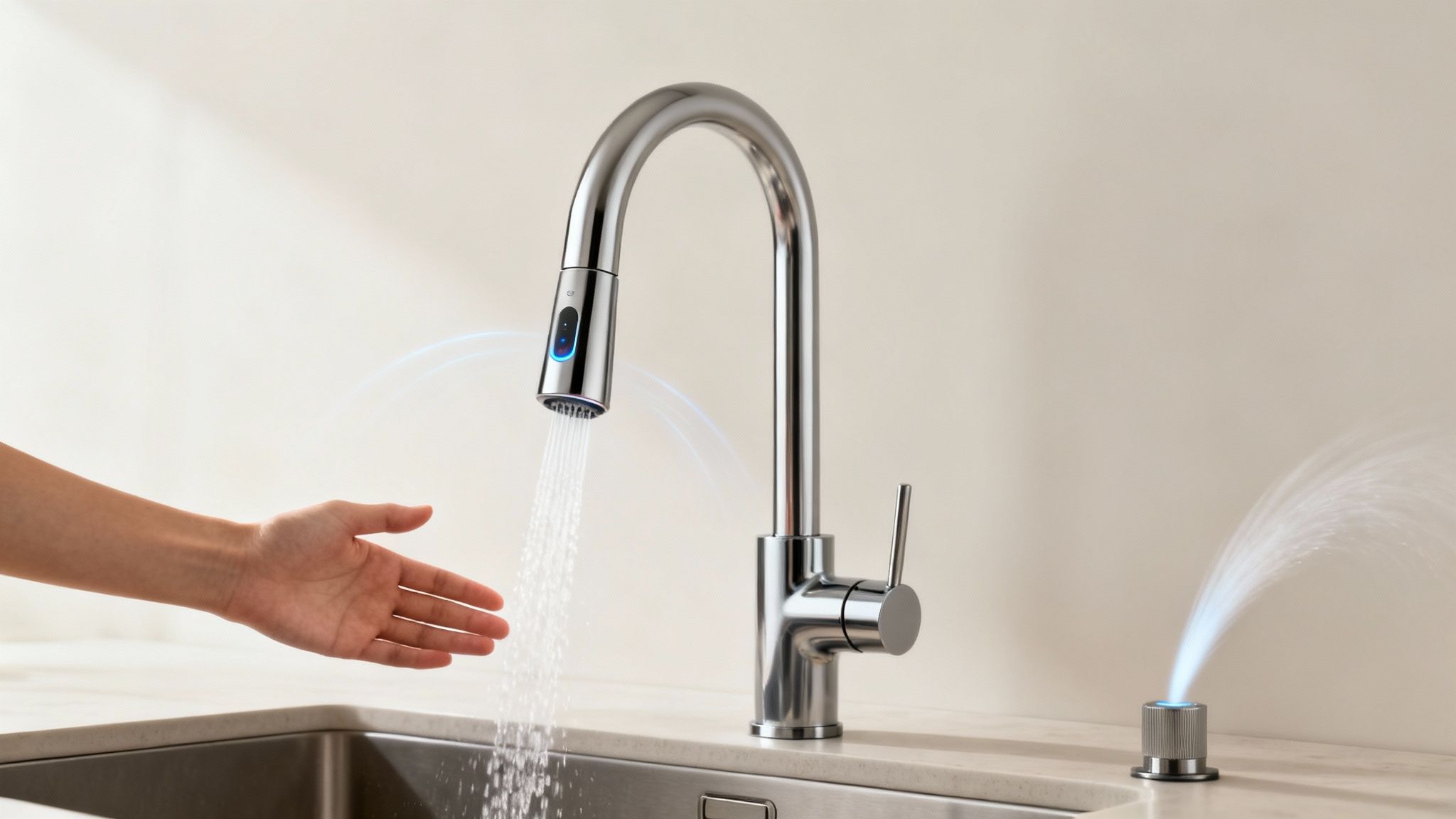
- Touchless Technology: A huge win for hygiene. Touch-on faucets let you tap anywhere on the spout or handle to start and stop the water. Touchless (motion-sensing) faucets use a sensor to turn on and off automatically, eliminating the need to touch the faucet at all.
- Voice Activation: The latest in kitchen tech, these faucets sync with smart home systems like Alexa or Google Assistant to dispense precise measurements or set specific temperatures with a simple voice command.
- Ceramic Disc Valves: This is the undisputed gold standard for internal parts. Two ultra-hard ceramic discs create a perfect, watertight seal, guaranteeing a lifetime of drip-free use. This is a non-negotiable feature for any quality faucet.
4. Select Materials Built for Durability
A faucet’s slick finish might catch your eye, but what it’s made of is what truly counts. The core material is the single biggest factor in whether your faucet will last for five years or twenty.
Best Materials for a Faucet Body
- Solid Brass: The gold standard for durability. It’s highly resistant to corrosion, making it the top choice for homes with hard water. Its proven longevity is why brass and bronze faucets hold a dominant 40% market share, as detailed in this faucet market analysis from Future Market Insights.
- Stainless Steel: Another fantastic, naturally lead-free option that stands up extremely well to rust and corrosion. It doesn’t need a separate finish to protect it, making it a tough-as-nails choice for modern kitchens.
- Zinc and Zinc Alloys: Found in budget-friendly faucets, these materials are far less durable. Zinc is more likely to corrode over time, leading to premature leaks and failure. If mineral buildup is an issue for you, our guide on how to remove hard water stains can help.
Pro Tip: When you’re in the store, pick up the faucet. A heavier faucet almost always indicates solid brass construction, while a lighter one is likely made from zinc alloys or plastic parts.
Frequently Asked Questions (FAQs)
Here are answers to a few common questions that pop up before making a final decision.
1. How do I know if a faucet will fit my sink?
First, count the mounting holes on your sink or countertop (usually one to four) and ensure your new faucet matches. Second, measure your countertop’s thickness to confirm the faucet’s mounting hardware is long enough to clamp on securely.
2. What’s the best faucet material for hard water?
Solid brass and stainless steel are the best choices. Both are excellent at resisting the mineral buildup and corrosion that hard water causes. A faucet with a PVD (Physical Vapor Deposition) finish offers an extra layer of protection against scratches and tarnishing.
3. Are touchless faucets worth the extra money?
It depends on your lifestyle. For a busy family kitchen or for anyone concerned with hygiene, the hands-free convenience often justifies the higher price. They also help conserve water by shutting off automatically. However, a high-quality traditional faucet will still serve you beautifully if you’re on a tighter budget.
4. What is GPM and why should I care?
GPM stands for gallons per minute and measures water flow. Federal standards cap kitchen faucets at 2.2 GPM, but high-efficiency models with a WaterSense label use 1.5 GPM or less. Thanks to modern aerator technology, these efficient faucets provide strong pressure while saving you money on your water bill.
5. Should I install the faucet myself or hire a plumber?
If you’re replacing an old faucet with a similar new one, it’s often a manageable DIY project with basic tools. However, you should hire a plumber if you’re changing the faucet type, if your shut-off valves are old, or if you simply don’t feel confident. A small leak can cause significant water damage, making a plumber a worthwhile investment.
Making Your Final Choice
Choosing a kitchen faucet is about finding the perfect balance of form, function, and durability. By carefully considering your sink’s compatibility, matching the style to your decor, selecting features that simplify your life, and insisting on quality materials, you can make an informed decision with confidence. The right faucet isn’t just a purchase—it’s a long-term investment in your kitchen’s daily workflow and overall appeal. Take your time, weigh your options, and you’ll find a fixture you’ll be happy to use for years to come.
