




On average, you can expect most major kitchen appliances to stick around for 9 to 15 years. That range, however, is a big one. A simple, sturdy gas stove is often built for the long haul, while more complex machines packed with electronics might have a shorter tour of duty in your kitchen.
The True Lifespan Of Your Kitchen Workhorses
Ever stood in front of your fridge and wondered, “How much longer have you got?” You’re not alone. It’s a critical question for any homeowner trying to budget for the future or staring down the barrel of a costly repair versus a brand-new purchase.
Knowing the typical lifespan of your kitchen essentials gives you a realistic benchmark. It helps you plan ahead, so a sudden breakdown feels less like a crisis and more like a manageable next step. Think of each appliance as having its own “life expectancy,” shaped by its design, how hard it works, and how complex it is.
A Quick Look at the Numbers
Let’s get right to it. Some appliances are true marathon runners, built to last for decades, while others have a shorter service cycle thanks to intricate parts or the intense heat they generate day in and day out. While the numbers can vary, industry data gives us a solid baseline for what to expect from your most-used kitchen companions.
This chart breaks down the average lifespans for three of the most essential appliances in any modern kitchen.
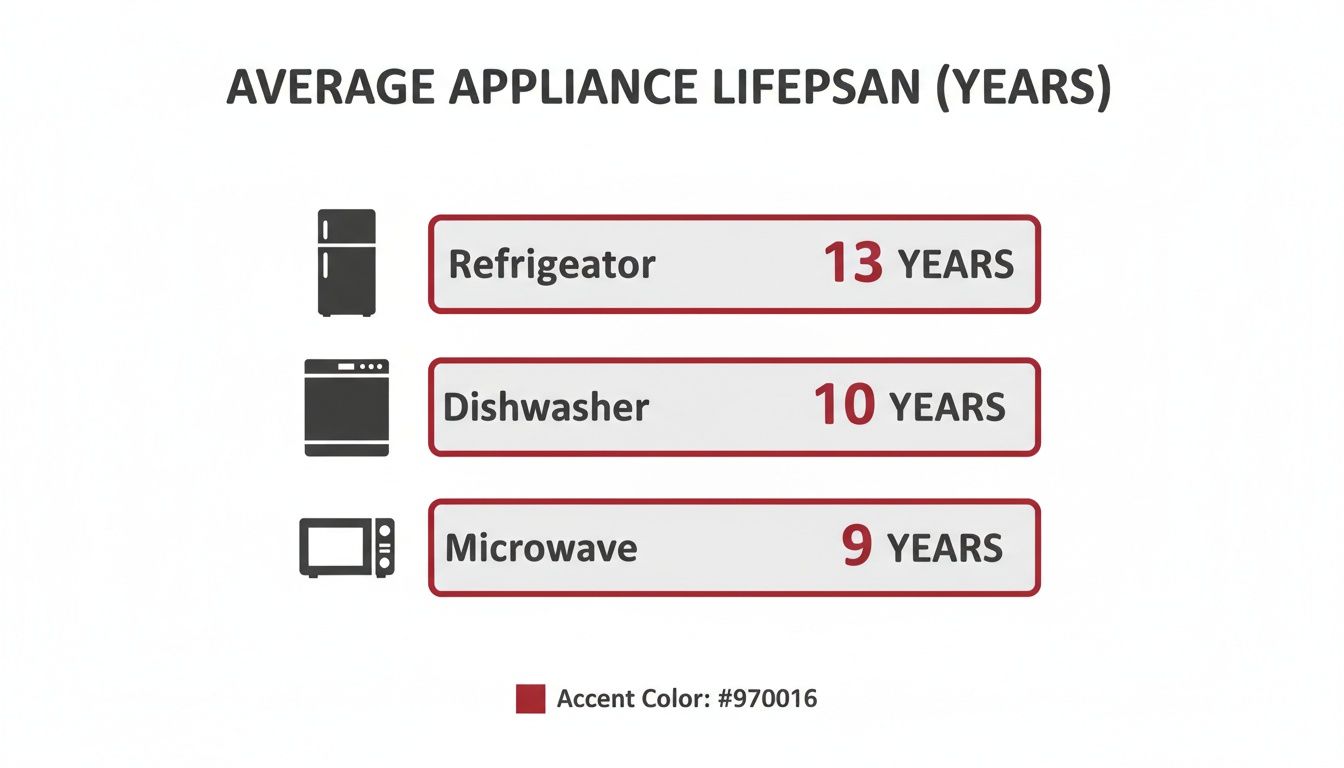
As you can see, refrigerators tend to lead the pack in longevity. Machines with more complex moving parts and high-heat elements, like dishwashers and microwaves, generally have a slightly shorter expected run.
Key Appliance Lifespan Averages
To give you an even clearer picture, we’ve put together a quick-reference table. It covers a wider range of kitchen workhorses, assuming typical household use and at least some basic maintenance.
Average Lifespan Of Common Kitchen Appliances
| Appliance | Average Lifespan (Years) |
|---|---|
| Refrigerator | 9 – 13 |
| Gas Range/Stove | 15 |
| Electric Range/Stove | 13 |
| Dishwasher | 9 – 10 |
| Microwave | 9 |
| Garbage Disposal | 10 – 12 |
| Range Hood | 14 |
| Cooktop (Induction) | 10 – 11 |
| Coffee Maker | 5 – 10 |
| Stand Mixer | 10 – 15 |
It’s interesting that the refrigerator, the quiet hero of the kitchen, typically lasts between 9 to 13 years. Full-sized models often hit the higher end of that range, while their compact cousins average closer to 9 years. There’s some good news, too—recent data suggests that appliance longevity has been slowly but steadily improving since 2019.
Of course, these are just averages. A dishwasher in a two-person household might easily outlast one in a busy family kitchen by several years. If you find yourself in the market for a new one, our guide on how to choose a dishwasher can point you toward a durable model that fits your needs.
Ultimately, these numbers are your starting point. Next, we’ll dig into why these lifespans vary so much and what you can actually do about it.
Why Some Appliances Outlast Others
Ever wonder why your friend’s dishwasher is still chugging along after a decade, while yours gave up the ghost in five years? It’s not just luck. While the average lifespans are a good starting point, they don’t tell the whole story. The real question is why some appliances seem to defy the odds, and the answer comes down to a few key factors you can actually control.
Think of it like owning a car. A well-maintained vehicle that’s driven with care will always outlast one that’s pushed to its limits and rarely sees a mechanic. The same logic applies directly to your refrigerator, oven, and dishwasher. Their final lifespan is really a combination of their build quality, how they were installed, the demands of your daily routine, and the TLC you give them along the way.
The Foundation of a Long Life
Before an appliance even makes it through your front door, its potential for a long, productive life is already being shaped. Two things, in particular, set the stage right from the beginning.
- Brand Quality and Build: Let’s be honest—not all appliances are created equal. Premium brands often invest more in higher-quality components, like beefier motors, thicker insulation, or more durable compressors. That upfront investment in better materials and engineering pays off in a longer service life. For example, a fridge with a high-efficiency compressor doesn’t have to work as hard to stay cool, which means less wear and tear over the years.
- Proper Installation: An appliance’s first day on the job is critical. A botched installation can create a domino effect of problems that will absolutely shorten its life. A dishwasher that isn’t perfectly level will cause water to pool, inviting leaks and causing parts to fail early. A refrigerator without enough breathing room for its coils will force the compressor into constant overtime, drastically cutting down its lifespan. Professional installation ensures everything is level, secure, and properly connected from day one.
Daily Habits That Make a Difference
The way you use your appliances every day has a massive impact on how long your kitchen appliances last. Small, consistent habits can either preserve your machines or slowly wear them down.
Think of it this way: your appliances have an “engine” that works harder under heavy loads. Constantly overloading them or using them improperly is like redlining your car’s engine all the time—it’s guaranteed to wear out faster.
For instance, slamming a microwave door is a surprisingly common habit that can wreck the latch mechanism, a frequent point of failure. Overstuffing your dishwasher puts extra strain on the motor and spray arms, and running a garbage disposal without enough cold water can cause the motor to overheat and seize up.
The Power of Preventative Maintenance
Simple, consistent maintenance is the single most powerful tool you have to get more years out of your appliances. Neglect is the silent killer of kitchen machinery, with dust, grease, and mineral buildup being the top offenders behind most preventable breakdowns.
A few simple actions can make a world of difference:
- Cleaning Refrigerator Coils: When condenser coils are clogged with dust, it’s like wrapping them in a thick winter blanket. The compressor has to work much, much harder to get rid of heat. A quick vacuuming once or twice a year can dramatically boost efficiency and help you avoid a premature failure.
- Maintaining Dishwasher Filters: Food gunk trapped in the dishwasher filter not only smells bad but also restricts water flow. Even worse, it makes the pump strain to do its job, which can eventually burn it out. A quick rinse every few weeks is all it takes to keep things running smoothly.
- Wiping Down Stove and Cooktop Surfaces: Letting spills burn onto your electric or gas range can corrode the surfaces and clog up burner ports. Cleaning them up right away doesn’t just keep your appliance looking new; it ensures it functions safely and efficiently.
By getting a handle on these four pillars—brand quality, installation, daily use, and maintenance—you shift from being a passive appliance owner to an active participant in their longevity. You gain control over the things that truly decide whether your kitchen workhorses will just meet their expected lifespan or, even better, blow right past it.
Your Essential Appliance Maintenance Checklist
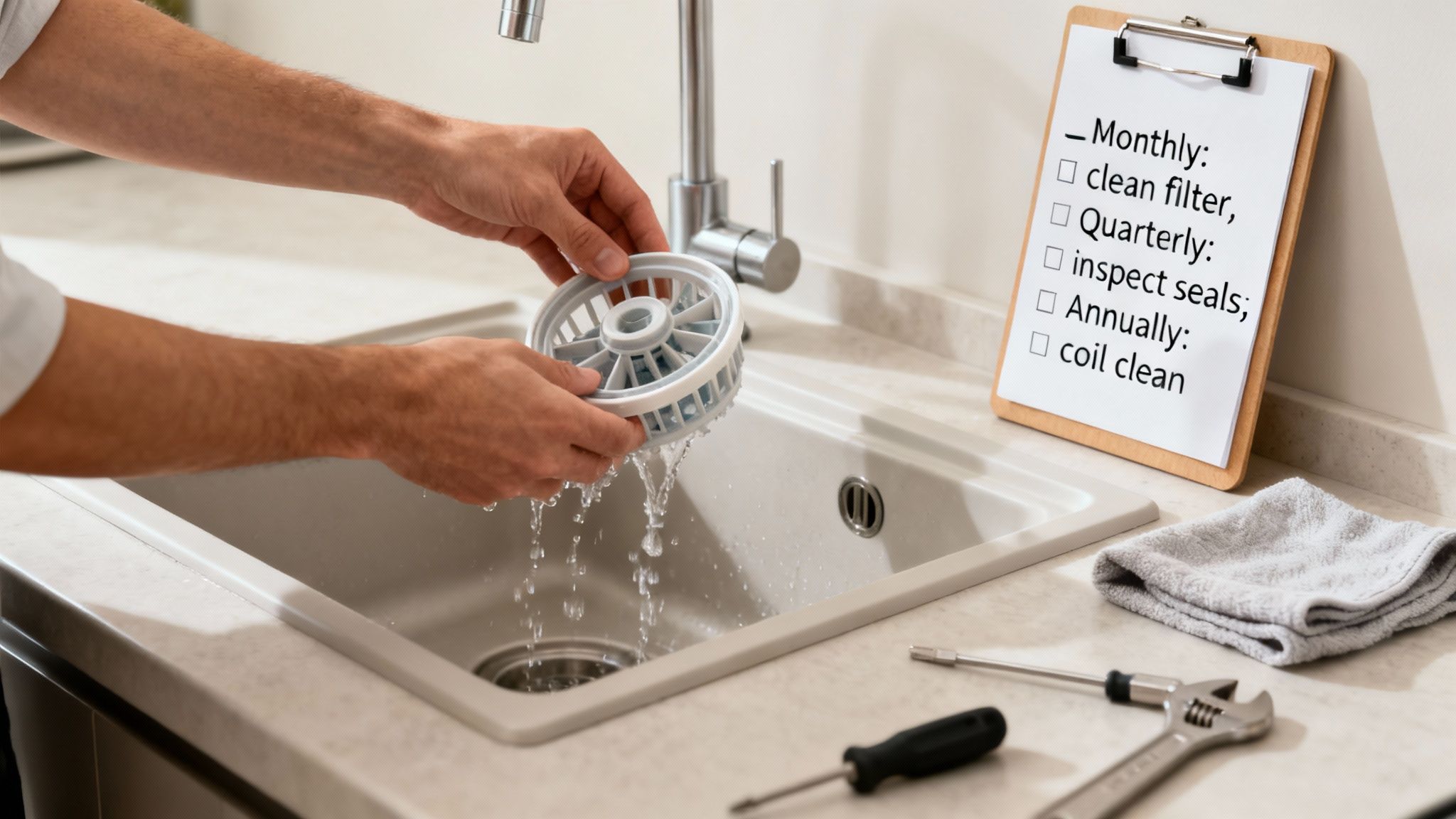
Knowing what affects your appliances’ lifespan is one thing, but actually doing something about it is another. The good news? You have way more control than you think. A few simple, consistent habits can tack years onto the life of your kitchen workhorses, helping you dodge costly breakdowns and just making them run better day-to-day.
But don’t worry, this isn’t some overwhelming, complicated list. Smart maintenance is all about doing targeted, manageable tasks at the right time. By breaking down the routine into monthly, quarterly, and annual checks, you can stay on top of everything without it feeling like a massive chore.
Monthly Maintenance Quick Wins
These simple jobs take just a few minutes each month but pay off big time in the long run. Think of them as the basic hygiene for a healthy kitchen, stopping tiny issues before they snowball into something much worse.
- Dishwasher Filter Clean: Pop out and rinse the filter at the bottom of your dishwasher. This one little step keeps old food bits from clogging the spray arms and pump, which means cleaner dishes and less strain on the motor.
- Garbage Disposal Flush: Give your disposal a good rinse by running it for a minute with cold water. For a deeper clean and to sharpen the blades, grind up a handful of ice cubes and some citrus peels—it also helps things smell a lot fresher.
- Range Hood Filter Degreasing: If you have a metal mesh filter, just pop it out and let it soak in some hot, soapy water. A clean filter is your first line of defense against grease and smoke settling all over your cabinets.
Consistent maintenance is the single most powerful tool you have to get more years out of your appliances. Neglect is the silent killer of kitchen machinery, with dust, grease, and mineral buildup being the top offenders.
Quarterly Tasks for Peak Performance
Every three or four months, it’s worth spending a little extra time on some deeper checks. These tasks get into the hidden parts of your appliances—the ones working hard behind the scenes.
Refrigerator and Freezer Door Gasket Check
That rubber seal around your fridge and freezer doors is everything when it comes to efficiency. Wipe it down with a damp cloth and a mild cleaner to get rid of any sticky gunk that could cause it to tear. A tight seal keeps the cold air locked in, so your compressor doesn’t have to work overtime.
Oven and Range Deep Clean
While you should always wipe up spills as they happen, a quarterly deep clean prevents that baked-on grime from becoming a permanent resident. If you have a self-clean feature, use it sparingly—the intense heat can be tough on electronic components. And don’t forget the cooktop! Regularly cleaning it, whether it’s gas or electric, prevents corrosion and makes sure everything heats evenly.
Annual Maintenance Deep Dive
Once a year, set aside an hour for the most impactful maintenance tasks you can do. These big jobs are crucial for getting the most life and efficiency out of your major appliances, directly affecting how long your kitchen appliances last.
- Refrigerator Condenser Coil Cleaning: This is, without a doubt, the most important thing you can do for your fridge. Carefully pull it away from the wall, unplug it, and use a vacuum with a brush attachment to gently clear away all the dust, pet hair, and whatever else has collected on the coils. Clean coils get rid of heat efficiently, which can prevent compressor failure—the #1 reason refrigerators get replaced.
- Oven Calibration Check: Feel like your oven is running a little hot or cold? Test its accuracy with a simple oven thermometer. If the temperature is off by more than 15-20°F, check your owner’s manual. Most have simple instructions for recalibrating it so your food cooks perfectly every time.
- Dishwasher Inspection: Go beyond just the filter. Check the spray arms for any clogged holes and make sure they can still spin freely. Give the interior a quick once-over for any signs of rust or damage, and run an empty cycle with a dishwasher cleaner to bust through any mineral buildup or soap scum.
To make things even easier, here’s a simple schedule you can follow.
Seasonal Kitchen Appliance Maintenance Schedule
This checklist breaks down the most important maintenance tasks by how often you should do them. Following this schedule is one of the best ways to keep your appliances running smoothly and for a lot longer.
| Appliance | Monthly Task | Quarterly Task | Annual Task |
|---|---|---|---|
| Refrigerator | Check for expired food | Wipe down door gaskets | Clean condenser coils |
| Dishwasher | Clean the filter | Inspect spray arms | Run a cleaning cycle |
| Oven/Range | Wipe up spills | Deep clean interior/cooktop | Check oven calibration |
| Garbage Disposal | Flush with cold water | Clean with ice & citrus | Check for leaks/wear |
| Range Hood | Degrease the filter | Wipe down the exterior | Inspect fan and light |
| Microwave | Wipe down interior | N/A | Check door seal |
Sticking to a routine like this means you’re not just cleaning—you’re actively investing in a longer, more reliable future for your essential kitchen tools.
And for many of these tasks, a good surface cleaning is just as important. Knowing how to properly care for specific materials is key. For a perfect, streak-free finish, you can find expert advice on how to clean stainless steel and keep your kitchen looking brand new.
Making The Call To Repair Or Replace
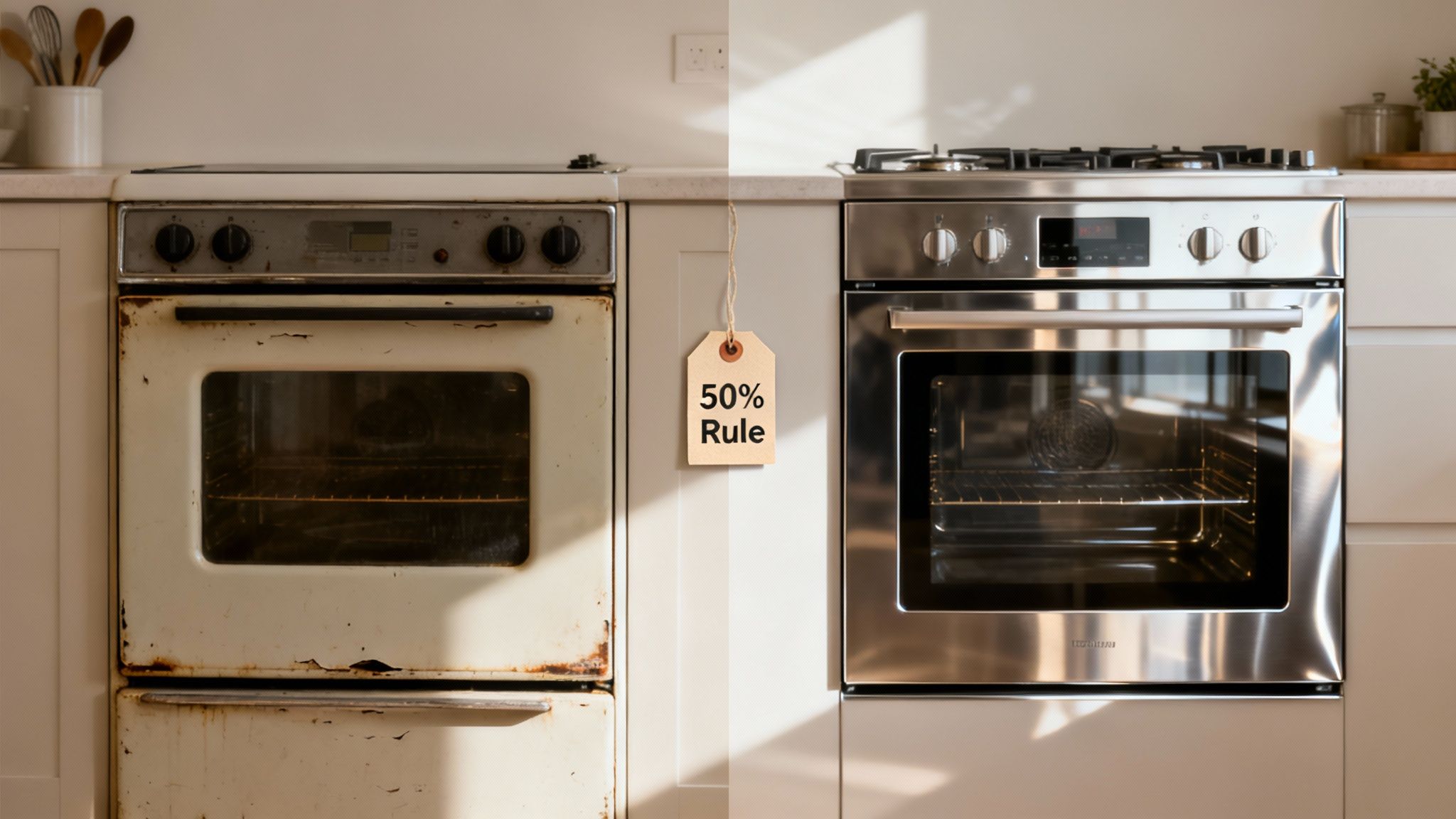
It’s a moment every homeowner dreads. The dishwasher stops draining, or the oven just refuses to heat up. The immediate, stressful question is always the same: do you sink more money into a repair, or is it time to cut your losses and invest in something new?
Making this call can feel like a high-stakes gamble, but a few simple guidelines can bring some much-needed clarity. Knowing the average lifespan of your kitchen appliances is your first step. When an appliance starts acting up, you have a solid benchmark to help you decide if it’s failing prematurely or just reaching the natural end of its road.
Introducing The 50 Percent Rule
To make this decision a little less gut-wrenching, many experts swear by the 50 percent rule. Think of it as a financial compass pointing you toward the most logical choice.
The rule is simple: If your appliance is more than halfway through its expected lifespan and the cost of the repair is more than 50% of what it would cost to buy a comparable new model, you should replace it.
This guideline is designed to stop you from throwing good money after bad. Pouring hundreds of dollars into a ten-year-old dishwasher that might only have a year or two left just isn’t a sound financial move.
Applying The Rule In Real Life
Let’s put this into practice with a common scenario. Imagine your refrigerator, which has an average lifespan of about 13 years, suddenly stops cooling. You’re eight years in, so it’s already past its halfway point. A technician quotes you $450 for a new compressor.
Here’s the breakdown:
- Age: 8 years old (past the 6.5-year midpoint).
- Repair Cost: $450.
- Replacement Cost: A new, similar model costs around $800.
Since the $450 repair is more than half of the $800 replacement price, the 50 percent rule strongly suggests it’s time to start shopping. You avoid spending a big chunk of change on an aging machine that could easily have another part fail in a few months.
Beyond The Numbers: Cost-Benefit Analysis
While the 50 percent rule is a fantastic starting point, the final decision should also factor in the hidden benefits of upgrading. It isn’t just about avoiding a repair bill; it’s about what you gain with a new appliance.
- Improved Energy Efficiency: Modern appliances, especially those with an ENERGY STAR certification, are ridiculously more efficient than their older counterparts. A new fridge can use up to 50% less energy than one from the early 2000s, which translates into real savings on your utility bills every single month.
- Advanced Features and Technology: An upgrade isn’t just a replacement; it’s an opportunity. You could get an oven with a built-in air fryer, a dishwasher with that coveted third rack, or a fridge with smart home connectivity. These aren’t just gimmicks—they can genuinely improve your daily kitchen routine.
- A Fresh Warranty: A new appliance comes with a brand-new warranty, and that peace of mind is priceless. Investing in a major repair for an old machine leaves you unprotected if another component fails just a few months down the line.
Deciding between repairing and replacing is a big decision, but it doesn’t have to be an overwhelming one. By using the 50 percent rule as your guide and weighing the long-term benefits of a new model, you can make a confident choice that’s right for your budget and your home.
And if you decide that replacement is the best path forward, our complete kitchen appliance buying guide can help you navigate all the options and find the perfect fit for your needs.
So, What Do You Do With the Old One?
You’ve made the call. The new appliance is on its way. But now you’re left with a big, heavy metal box taking up space. It’s tempting to just pay someone to haul it away and forget about it, but where it goes next actually matters.
Tossing a bulky appliance into a landfill should be the absolute last resort. Many of them, especially refrigerators and freezers, are full of refrigerants and oils that are seriously nasty for the environment if they leak out. The good news is, doing the right thing is surprisingly easy, and it often simplifies the whole replacement process for you anyway.
Check Retailer Take-Back Programs
Honestly, this is the path of least resistance. When you buy your new appliance, ask about their haul-away or take-back program. Most major retailers offer one, sometimes for free with delivery, other times for a small fee.
It’s the ultimate “out with the old, in with the new” service. The delivery team brings in your shiny new machine, disconnects the old one, and takes it away in the same trip. No fuss, no hassle. They handle the logistics, making sure your old unit gets to a certified facility where it’s properly recycled and any hazardous gunk is managed safely.
Find a Local Recycling Center
If the store you bought from doesn’t offer a take-back service, your next best bet is a local recycling center or scrap metal yard. The key here is to call ahead. Not every facility is equipped to handle appliances, especially ones with refrigerants like Freon.
You’re looking for a center that’s part of a certified Responsible Appliance Disposal (RAD) program. These are the pros who know exactly how to:
- Safely capture refrigerants so they don’t get released into the atmosphere.
- Drain hazardous oils and remove components like capacitors for proper disposal.
- Separate all the materials—metal, plastic, glass—so they can actually be recycled and reused.
A quick search for “appliance recycling near me” should get you a list of certified spots in your area.
Donate It If It’s Still Kicking
Just because an appliance doesn’t fit your kitchen remodel or has a minor quirk you’re tired of doesn’t mean it’s trash. If your old oven, microwave, or fridge is still in safe, working condition, please consider donating it.
A still-functioning appliance can be a huge blessing for a family in need, a local charity, or a non-profit thrift store. It’s a fantastic way to give that machine a second life and make a real difference in your community.
Organizations like Habitat for Humanity ReStores, Goodwill, and The Salvation Army often accept donations of working appliances. Just make sure to check their guidelines first—some have rules about age or cosmetic condition. It’s a true win-win: you keep a massive item out of the landfill and help someone out at the same time.
Your Burning Questions About Appliance Longevity, Answered
When you’re staring at a sputtering dishwasher or a fridge that’s starting to make weird noises, a lot of questions pop up. Should I have bought the smart one? Does leaving it plugged in all the time wear it out? Let’s clear the air and tackle some of the most common questions homeowners have about keeping their kitchen running smoothly.
Think of this as the straight-talk guide you need before you call for a repair or start shopping for a replacement.
Do Smart Appliances Last as Long as Regular Ones?
This is a great question, and the honest answer is: it’s a mixed bag. The mechanical guts of a smart appliance—the motor in your dishwasher, the compressor in the fridge—are usually built to the same standards as their “dumb” cousins. So, in theory, the core of the machine should last just as long.
But here’s the catch: the “smart” stuff introduces a whole new set of things that can go wrong. The circuit boards, Wi-Fi chips, and sensors are all extra points of failure. The fridge might still be cold, but if the smart screen dies or the app stops connecting, you’re left with a very expensive, very frustrating regular fridge.
The bigger issue down the road is software support. A manufacturer might decide to stop updating an appliance’s app after just five or six years. When that happens, you could lose features you paid for or, even worse, be left with security holes. So while the machine itself might have a decade of life left in it, its IQ could drop off much sooner.
Does Leaving an Appliance Plugged In Shorten its Life?
For your big workhorses—refrigerator, oven, dishwasher—the answer is a definite no. These appliances are engineered to be plugged in 24/7. They have internal systems that manage power, cycling on and off only when needed. In fact, that’s just how they’re supposed to operate.
It’s a slightly different story for smaller things on your countertop, like a coffee maker or a stand mixer. They do draw a tiny bit of “phantom power” while in standby, but the real enemy isn’t the continuous power draw; it’s power surges. One good jolt from a thunderstorm or a grid issue can fry their sensitive electronics in an instant.
While being plugged in won’t wear down your major appliances, a single power surge can be a death sentence for smaller gadgets. A simple surge protector is cheap insurance against that kind of sudden electrical damage.
Unplugging and re-plugging major appliances can actually cause more wear and tear on the cords and outlets than just leaving them be. For the smaller stuff, a good surge protector is really the best of both worlds.
How Much Does Brand Reputation Really Matter for Longevity?
Brand reputation is a pretty solid starting point, but it’s not a golden ticket to a 20-year lifespan. There’s a reason high-end brands like Sub-Zero or Monogram have the reputation they do—they often use heavier-gauge steel, more robust compressors, and premium components. That’s why you see them lasting 15-20 years and backed by longer warranties.
That said, plenty of mid-range brands like Bosch, Whirlpool, and GE have earned their stripes by building reliable machines for decades. They often hit that sweet spot of durability, features, and price. The trick is to look at specific model lines within a brand, because quality can definitely vary from their budget offerings to their premium lines.
Ultimately, a good brand name points to a certain level of engineering and quality control. But no matter what name is on the front, how long your kitchen appliances last will always come down to how well you maintain and use them.
Are Extended Warranties a Good Investment?
Ah, the age-old debate. The extended warranty can feel like a cozy safety net, but whether it’s actually worth the cash depends on what you’re buying and your tolerance for risk.
Before you tick that box, think about these points:
- The Appliance’s Track Record: Do a little digging on the specific model you’re buying. If forums and reviews are full of complaints about a specific part failing, that warranty might just pay for itself.
- The Cost of a Typical Repair: For a modern fridge loaded with electronics, one bad circuit board can easily cost more than the warranty itself. For a simpler appliance, like a basic gas range, the repair costs are often much lower.
- The 50% Rule: This is a classic for a reason. If your appliance is a few years old and a repair quote comes in at half the cost of a new one, you’re almost always better off replacing it. An extended warranty won’t help you there.
Honestly, in many cases, you’d be better off taking the money you’d spend on warranties and sticking it in a “home repair” savings account. But for those really expensive, high-tech machines where one electronic glitch can be a total disaster, it can be a worthwhile buy for the first few years.
