



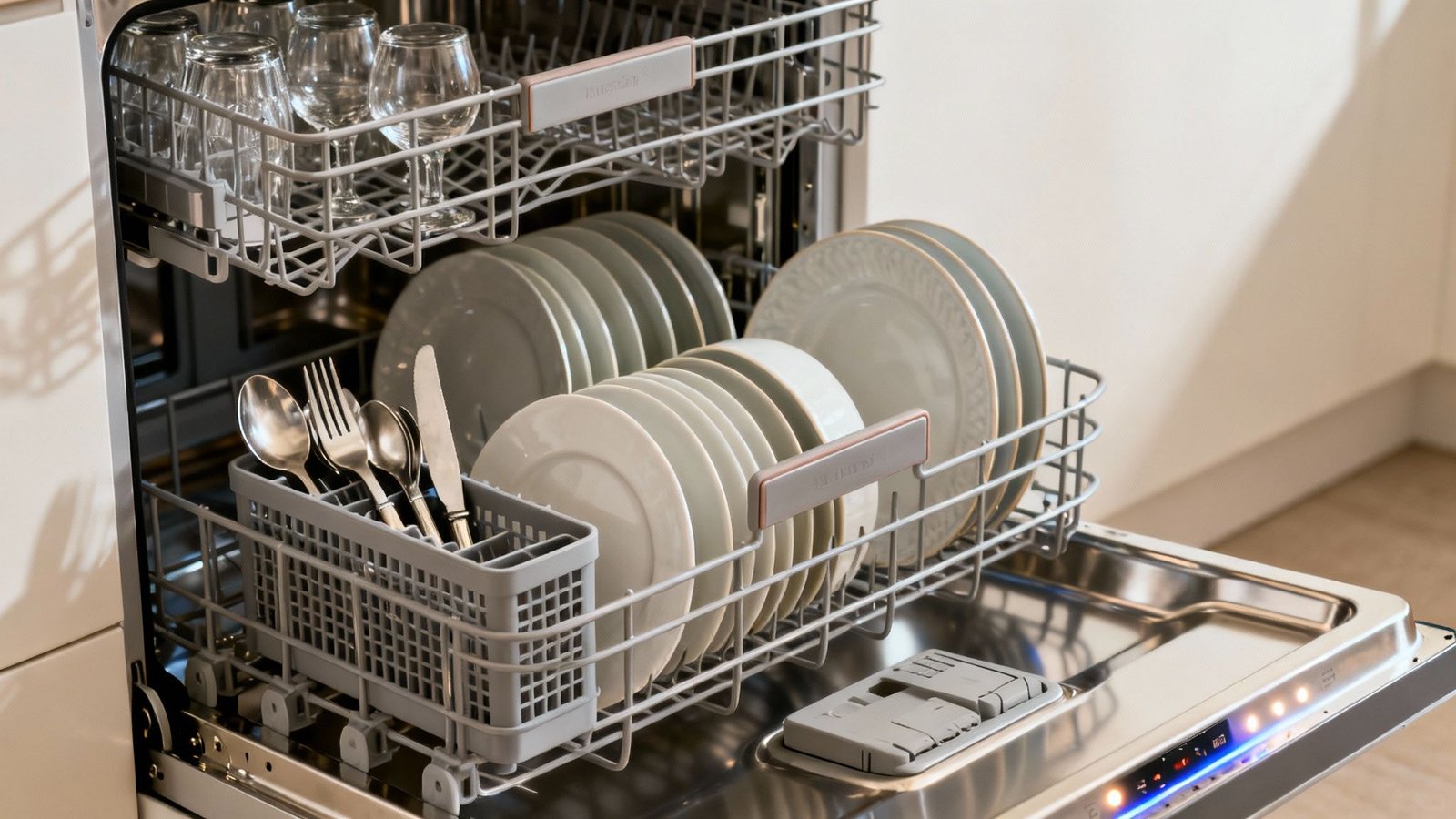
Figuring out which new dishwasher to buy really boils down to three things: the size that fits your kitchen, the features you’ll actually use, and a noise level that works for your home’s layout. If you focus on those three pillars, you can skip the confusing technical specs and find the perfect machine with confidence.
Finding the Right Dishwasher for Your Home
Let’s be honest, a new dishwasher is more than just another appliance—it’s a serious upgrade to your daily routine. But with all the options out there, just getting started can feel like a chore in itself. The trick is to start with the basics: what kind of dishwasher physically fits your space and your lifestyle? Nail this down first, and all the other decisions will fall into place.
The demand for dishwashers is exploding, and it’s a direct reflection of how much our home lives have changed. The global market is set to hit a staggering $9.5 billion by 2025, which is a huge leap from $7.2 billion in 2021. This isn’t just random growth; it’s being driven by a massive wave of home renovations and our collective desire for smarter, more streamlined kitchens.
Built-in vs Portable Models
When most of us picture a dishwasher, we’re thinking of a built-in model. It’s the classic style that slides neatly under the countertop, creating that seamless, integrated look. These are, by far, the most popular choice for homeowners and are designed to fit a standard 24-inch-wide opening.
They often come in premium finishes like stainless steel, which looks fantastic but needs a little care. Keeping that finish looking brand new is actually pretty easy with the right approach, which you can learn about in our guide on how to clean stainless steel.
But a built-in dishwasher isn’t your only play. Depending on your kitchen setup, one of these other types might be a much better fit.
Let’s quickly run through the most common dishwasher types so you can see where you land.
Dishwasher Types At a Glance
This table gives you a quick comparison of the most common dishwasher types to help you decide which one fits your kitchen layout and needs.
| Dishwasher Type | Best For | Installation | Typical Price Range |
|---|---|---|---|
| Built-in | Most homeowners; seamless kitchen design. | Professional installation recommended; requires dedicated space and plumbing. | $400 – $1,500+ |
| Freestanding/Portable | Renters or kitchens without a dedicated dishwasher cutout. | Connects to the kitchen faucet; can be rolled away for storage. | $300 – $700 |
| Drawer | Smaller households, secondary dishwasher, or accessible design. | Professional installation; fits into standard cabinetry. Can be single or double. | $800 – $2,000+ |
| Countertop | Apartments, RVs, or homes with very limited space. | Sits on the counter and connects to the faucet. No permanent plumbing needed. | $200 – $400 |
As you can see, there’s a solution for almost any kitchen, whether you have a custom-built space or are trying to add convenience to a rental.
Let’s break them down a bit further:
- Freestanding/Portable Dishwashers: These are a lifesaver for renters or anyone with a kitchen that wasn’t designed with a dishwasher in mind. You just roll it over to the sink, hook it up to the faucet, and you’re good to go. When it’s done, you can tuck it away in a pantry or corner.
- Drawer Dishwashers: These are a brilliant solution for smaller households that don’t generate a full load of dishes every day. Available in single or double-drawer setups, they let you run small, efficient loads without wasting water or energy. They’re also great as a second dishwasher in a butler’s pantry or bar area.
- Countertop Dishwashers: The name says it all. This is the most compact option out there, making it perfect for tiny apartments, RVs, or even an in-law suite. It sits right on your counter and functions a lot like a portable model, just on a smaller scale.
Choosing between a built-in or a more flexible option like a portable unit is your first major decision. A built-in dishwasher offers that polished, permanent look, while a portable model gives you freedom where a full installation just isn’t an option. In the end, your kitchen’s layout is going to make this choice for you.
Getting the Measurements and Fit Just Right
Nothing kills the excitement of a new appliance faster than the delivery team standing in your kitchen saying, “Sorry, it won’t fit.” Before you fall in love with a quiet motor or a fancy third rack, the absolute first thing you need to do is make sure your dream dishwasher will actually slide into its home.
A few minutes with a tape measure now will save you a massive headache later. Trust me.
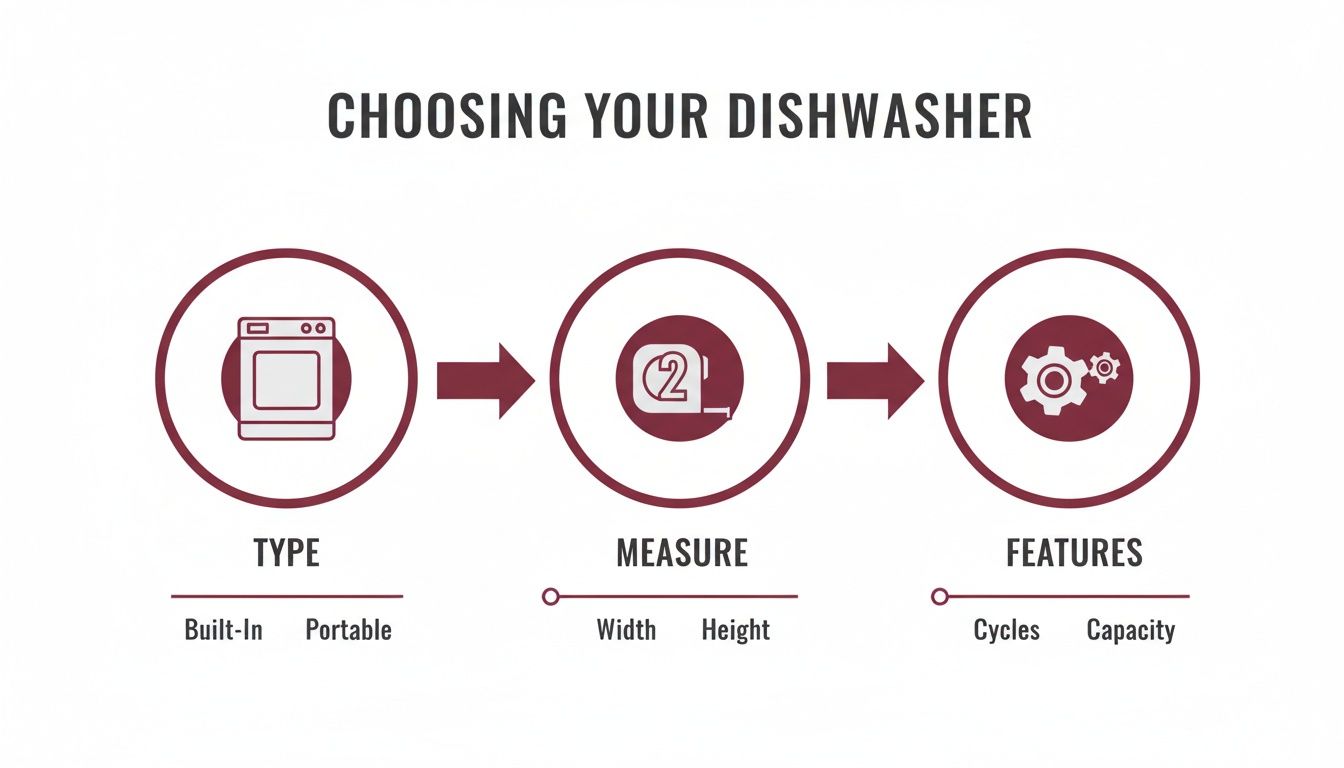
This process really is that simple: figure out the type you want, measure the space you have, and then you can get lost in all the cool features.
Measuring Your Dishwasher Cutout Like a Pro
Grab a tape measure. We’re going to get three key numbers for the opening: width, height, and depth. Simple, but do it right.
- Width: Measure the opening from cabinet to cabinet. Get a measurement at the top of the space and another at the bottom—cabinets aren’t always perfectly square. Jot down the smaller of the two numbers.
- Height: Measure from the floor right up to the underside of your countertop. Do this at the front of the opening and again at the back. Floors can slope, so always go with the shortest measurement to be safe.
- Depth: Measure from the back wall to the very front edge of your cabinets. Keep an eye out for any pipes or electrical boxes on that back wall that might eat into your space.
The gold standard for a dishwasher cutout is 24 inches wide, 35 inches high, and 24 inches deep. Don’t sweat it if you’re a little off; most dishwashers have adjustable leveling feet to handle minor bumps and slopes.
Watch Out for These Common Installation Hurdles
The basic numbers are one thing, but real-world kitchens have quirks. Thinking about these potential curveballs now will prevent a lot of cursing on installation day.
Door Clearance: Swing your current dishwasher door all the way open. Does it smack into your kitchen island, a corner, or the cabinet next to it? Make sure your new model will have plenty of room to open fully. Otherwise, you won’t be able to pull the racks out easily.
Countertop Overhang: Take a look at how far your countertop juts out past the cabinets. If it’s more than the standard inch or so, it could block the top controls on some of the sleeker, more modern dishwashers. This is a big deal for models where the buttons are hidden on the top edge of the door.
Uneven Floors: I mentioned this before, but it’s worth repeating: always use the lowest height measurement. This gives you the wiggle room to level the dishwasher with its adjustable feet. Trying to cram a tall appliance into a short space is a recipe for a scratched floor and a damaged machine.
A Quick Peek at Your Plumbing and Electrical
Last but not least, let’s make sure the essential connections are ready to go. This is a crucial step for a smooth, no-surprises installation.
Your new dishwasher needs three things to live:
- A Hot Water Supply Line: Poke your head under the kitchen sink. You should see a small shutoff valve coming off the hot water pipe. That’s where your dishwasher will get its water.
- A Drain Hose Connection: The dishwasher’s drain hose will either connect to a specific nozzle on your garbage disposal or to a Y-shaped pipe on your sink’s drain.
- A Power Source: Dishwashers need their own dedicated 120V electrical circuit. Look for a normal outlet under the sink or in the cabinet next door. If your current unit is hardwired directly (no plug), you’ll likely need an electrician to handle the swap.
Confirming these three hookups are in place and within reach means that when your shiny new dishwasher arrives, it’s a straightforward job, not a multi-day project.
Focusing On Features That Actually Matter
Alright, you’ve got your measurements locked in. Now comes the fun part: figuring out which bells and whistles you actually need. Modern dishwashers are packed with tech, but the real trick is cutting through the marketing hype to find the features that will genuinely make your life easier.
Let’s be honest, paying for a fancy cycle you’ll never use is just a quick way to overspend. So, let’s break down the features that pack the biggest punch, from the workhorse wash cycles to the clever tech that saves you time, water, and headaches.
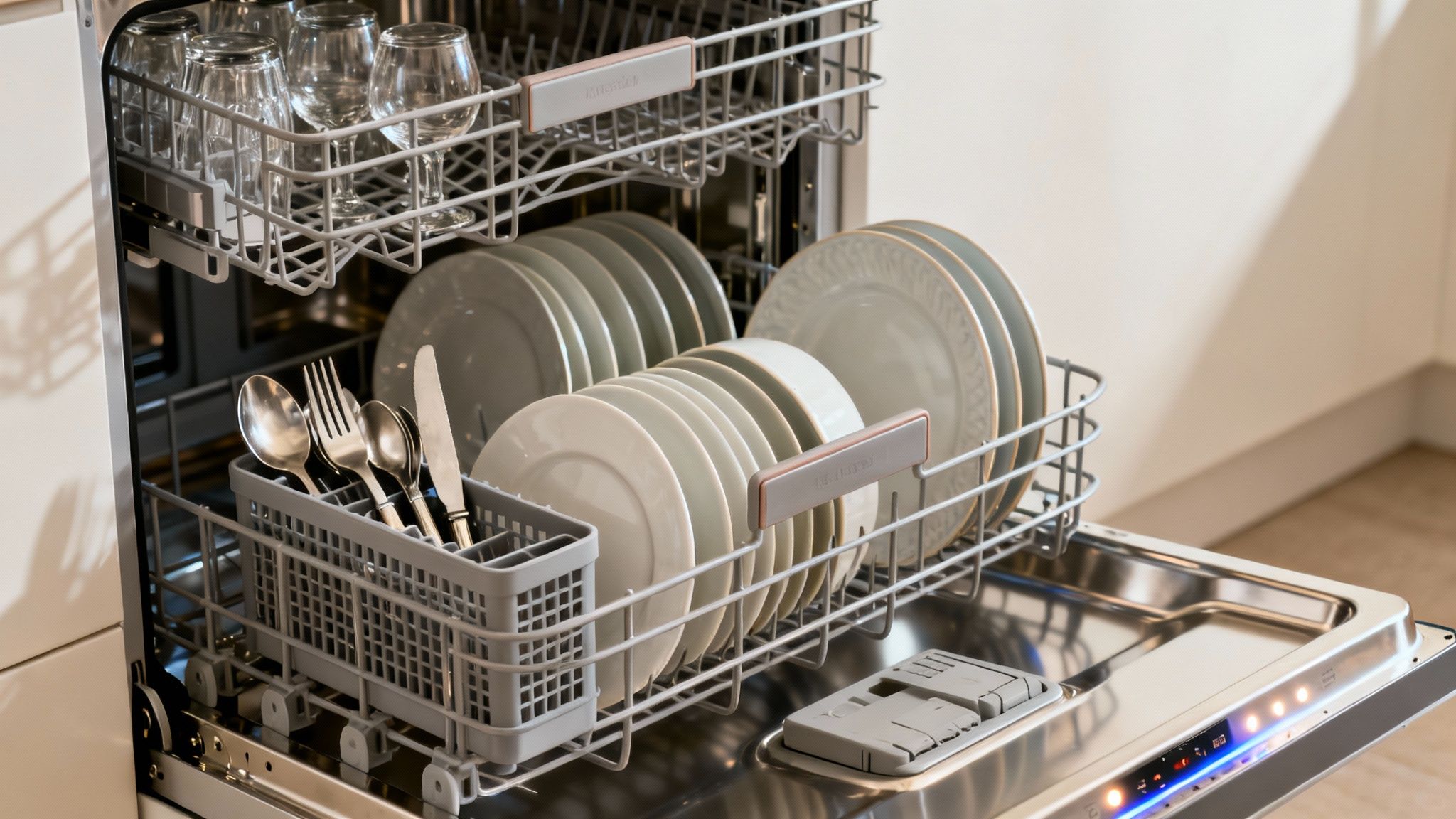
Wash Cycles That Fit Your Lifestyle
The core of any dishwasher is its cycle selection. While some models boast a dizzying list of specialty options, most of us will lean on a few key settings day in and day out.
- Normal Wash: This is your go-to, your everyday workhorse. It’s designed for typical loads with average food soil, balancing solid cleaning power with efficiency.
- Heavy or Pots & Pans: Got baked-on lasagna or greasy pans from last night’s dinner? This is the cycle that brings the extra heat and water pressure to obliterate tough grime without you having to pre-soak for an hour.
- Quick Wash or 1-Hour Wash: Perfect for lightly soiled dishes when you’re in a pinch, like cleaning glasses and plates from a party so you can use them again for dessert.
- Rinse Only: A lifesaver. It’s a quick, water-only spray that keeps food from turning into concrete on your plates if you aren’t ready to run a full load just yet.
One cycle that has become a must-have for many is the Sanitize option. This setting uses a final rinse at a blistering-hot temperature (usually 150°F or higher) to kill 99.9% of common household bacteria. If you have young kids, this is non-negotiable for cleaning baby bottles, pacifiers, and cutting boards.
The Game-Changing Third Rack
If there’s one feature people consistently rave about after upgrading, it’s the third rack. This slim tray sits at the very top of the dishwasher, giving you a dedicated spot for silverware, long utensils like spatulas and tongs, and even small ramekins.
The benefit is immediate. Moving your forks and spoons out of that bulky basket on the bottom rack frees up a shocking amount of real estate for more plates, bowls, and pots. It also solves the “nesting” problem, where spoons cuddle up and block the water spray. Laying everything flat on the third rack ensures a better, more consistent clean.
A third rack isn’t just about more space; it’s about smarter space. It streamlines loading and unloading and gets your silverware noticeably cleaner. For many people, once you’ve had one, you’ll never go back.
Intelligent Cleaning with Soil Sensors
One of the most valuable—and invisible—features is the soil sensor. Think of it as your dishwasher’s brain. These sensors use tiny light beams to measure how murky the wash water is, detecting how much food gunk is floating around.
The machine then uses that real-time data to automatically adjust the cycle time and water usage. If your dishes are only lightly soiled, it dials back the resources and finishes faster. If it senses a baked-on mess, it amps up the power to ensure everything comes out spotless.
This little piece of tech does two critical things:
- It ensures a perfect clean. No more guessing which cycle to use.
- It maximizes efficiency. You’re not wasting water and energy on a load that doesn’t need it, which translates directly into lower utility bills.
Understanding Dishwasher Noise Levels
In today’s open-concept homes, where the kitchen is the living room is the office, a dishwasher’s noise level is a huge quality-of-life factor. The sound is measured in decibels (dBA), and the rule is simple: the lower the number, the quieter the machine.
Here’s a quick guide to what those numbers actually mean:
- 60+ dBA: As loud as a normal conversation. You will absolutely know when this thing is running.
- 50-59 dBA: Noticeable but not obnoxious, like a quiet rainfall. Many entry-level models fall in this range.
- 45-49 dBA: This is the sweet spot for most homes. It’s quiet enough that you might hear faint swishing if you’re standing right next to it, but it won’t interrupt your Netflix binge.
- Below 44 dBA: Whisper-quiet. Seriously. Many of these models project a small light onto the floor just to let you know they’re actually on.
If your kitchen is the hub of your home, investing in a dishwasher rated at 49 dBA or lower is a move you won’t regret. Brands like Bosch and Miele are famous for their quiet operation, making them a top choice for anyone tired of shouting over their appliances.
Making Sense of Energy and Water Efficiency
When you’re shopping for a new dishwasher, it’s easy to get excited about stainless steel tubs, adjustable third racks, and whisper-quiet operation. But let’s be honest, one of the biggest—and often overlooked—wins of upgrading is the impact on your wallet and the planet. A modern, high-efficiency dishwasher is a seriously smart move that saves a shocking amount of water and electricity compared to that old clunker in your kitchen or, yes, even washing by hand.
This isn’t just about eco-friendliness, though that’s a great perk. It’s a practical financial decision. An inefficient appliance quietly siphons money from your bank account through your utility bills, while an energy-conscious model starts paying for itself from the first cycle.
What That ENERGY STAR Label Actually Means
The quickest way to find an efficient dishwasher is to look for the little blue ENERGY STAR logo. This isn’t just marketing fluff; it’s a government-backed seal of approval from the U.S. Environmental Protection Agency (EPA), certifying the appliance meets strict performance standards.
To earn that sticker, a standard dishwasher can’t use more than 3.5 gallons of water per cycle and must stay under 270 kilowatt-hours (kWh) per year. Simply choosing an ENERGY STAR model is your first and easiest step to guaranteeing long-term savings.
But what does that really mean in your kitchen? Today’s best models sip as little as 4 gallons per cycle. Compare that to handwashing the same pile of dishes, which can guzzle a mind-boggling 27 gallons of water. That’s a water use reduction of up to 80%. Knowing this makes it a lot easier to convince any “handwashing is better” skeptics in the house to finally embrace the machine. If you want to dive deeper, you can explore more dishwasher statistics to see just how much these savings add up.
The bottom line is simple: if a dishwasher has the ENERGY STAR label, you can trust it’s designed to perform effectively while minimizing its use of resources. It’s your shortcut to a smarter, more cost-effective purchase.
The Real-World Impact on Your Wallet
It’s one thing to talk about gallons and kilowatts, but it’s another to see how those numbers translate into actual money saved. The difference between an older, inefficient dishwasher and a new, certified model is dramatic.
Top-performing modern dishwashers often cost between $30 and $50 per year to run, depending on your local utility rates and how often you use them. In contrast, an outdated machine from 10-15 years ago could be costing you well over $100 annually. While that might not sound like a fortune, it adds up to hundreds of dollars over the appliance’s life.
Let’s put the savings into perspective with a direct comparison. It might surprise you just how much more efficient running a full load is.
Here’s a look at how a modern dishwasher stacks up against the old-fashioned sink-and-sponge method for the same amount of dishes.
Handwashing vs. Modern Dishwashers
| Metric | Handwashing (Same Load) | ENERGY STAR Dishwasher | Annual Savings |
|---|---|---|---|
| Water Used | ~27 gallons per load | ~4 gallons per load | Over 5,000 gallons |
| Energy Used | ~2.5 kWh (for water heater) | ~1.0 kWh per cycle | Significant electricity savings |
| Annual Cost | Varies widely, but higher | ~$35 per year (average) | Up to $100+ vs. old models |
The numbers don’t lie. Running a full load in a new dishwasher is almost always the more eco-friendly and budget-friendly choice.
Advanced Efficiency Features to Look For
Beyond the ENERGY STAR rating, certain features can further boost a dishwasher’s efficiency, giving you even more control over your resource consumption. Keep an eye out for these.
- Soil Sensors: We’ve mentioned them before, and for good reason—these sensors are brilliant. They actually measure how dirty the water is during the cycle and adjust the time and water usage on the fly. This means your machine never wastes resources on a load that’s only lightly soiled.
- Half-Load or Eco-Cycle Options: Perfect for those times you don’t have a full load but need to run the dishwasher anyway. These cycles are specifically designed for smaller loads or less-soiled dishes, using less water and energy without sacrificing cleaning power.
- Air-Dry or Fan-Dry Technology: Traditional heated drying is a major energy hog. Many new models now offer an air-dry option, which pops the door open at the end of the cycle. This lets steam escape and allows dishes to dry naturally with ambient air. It’s a simple feature that can slash your energy use significantly.
By prioritizing these features, you’re not just buying a new appliance. You’re making a conscious decision to lower your household’s environmental footprint and keep more money in your pocket, one clean dish at a time.
Finding the Best Value for Your Budget
Dishwasher prices feel like they’re all over the map, but a bigger price tag doesn’t automatically get you a better machine for your actual, day-to-day needs. The real trick is figuring out where your money makes the most impact. It’s all about breaking down what you can realistically expect at different price points, from the trusty entry-level workhorses to the premium models that are practically smarter than I am.
Finding true value is an exercise in making smart trade-offs. It’s about prioritizing features that actually make your life easier, like a durable stainless steel tub that helps dishes dry better and won’t hold onto stains. Or a quiet motor that doesn’t force you to shout over it during family dinner. These are the kinds of practical upgrades that deliver long-term satisfaction—way more than some niche cycle you might use once a year, if that.
What to Expect at Different Price Points
Let’s pull back the curtain on the price tiers so you know where to focus your search. A savvy shopper can find a fantastic dishwasher on almost any budget, as long as you know what defines each level. If you’re looking for a wider view on budgeting for all your kitchen gear, our comprehensive kitchen appliance buying guide is a great place to start.
- Entry-Level (Under $500): These are your no-frills, get-the-job-done machines. You can expect a plastic tub, basic wash cycles (Normal, Heavy, Rinse), and a bit more noise—typically above 50 dBA. They clean just fine, but you’ll miss out on things like adjustable racks or fancy drying features.
- Mid-Range ($500 – $900): Honestly, this is the sweet spot for most families. It’s where you’ll find the best balance of performance and price. In this range, stainless steel tubs become standard, and the machines get much quieter (often 45-49 dBA). You also start seeing really useful features like soil sensors, a third rack for silverware, and adjustable tines.
- Premium ($900+): When you step into this tier, you’re paying for top-tier craftsmanship, whisper-quiet operation (often below 44 dBA), and advanced tech. This is where you’ll find highly flexible interior layouts, specialized wash zones for pots and pans, Wi-Fi connectivity, and seriously effective drying systems.
A mid-range model with a stainless steel tub and a quiet motor often represents the best long-term investment. You get the most impactful upgrades without paying a premium for features you may not use regularly.
Savvy Shopping and Protecting Your Purchase
Finding the right model is only half the battle; getting it at the right price is the other. Timing your purchase can save you a surprising amount of cash. Keep your eyes peeled for major holiday sales events—Black Friday, Memorial Day, and Labor Day are classic times when retailers put heavy discounts on large appliances.
Beyond the big sales, don’t forget to check for manufacturer rebates. These can offer cash back on specific models or when you bundle appliances. A quick search on the brand’s website before you pull the trigger can uncover some hidden savings.
Finally, let’s talk about warranties. Your new dishwasher will come with a standard warranty, usually covering parts and labor for one year. But some brands go further, offering extended coverage on specific components like the racks or the stainless steel tub—sometimes for up to five years or even a lifetime. Taking a minute to understand this coverage gives you peace of mind and protects you from surprise repair bills down the road.
Keeping Your Dishwasher Running Like New
You did it. You picked out the perfect dishwasher, got it installed, and now the real journey begins. To keep that machine humming and your dishes sparkling for years to come, a little proactive care goes a very long way.
Think of it as a small investment of your time. Consistent maintenance helps you sidestep frustrating clogs, weird odors, and those dreaded service calls. It’s the secret to getting a flawless wash, every single time.
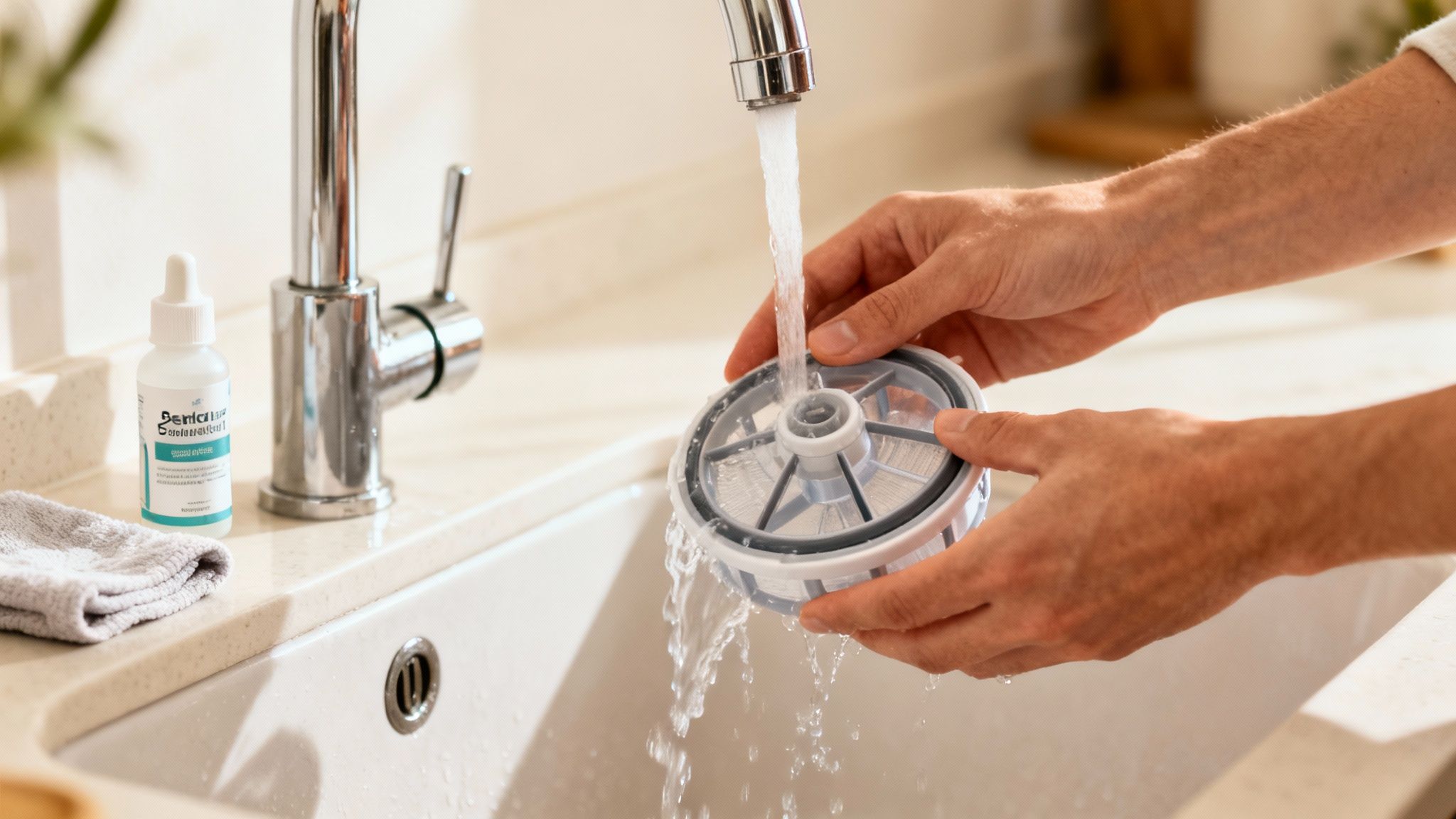
Simple Routines for a Happy Dishwasher
Good news: you don’t need to be a professional technician to keep your dishwasher in top shape. A few easy habits are all it takes to prevent the most common performance headaches and ensure water flows exactly where it needs to.
Here are the absolute essentials:
- Clean the Filter Weekly: This is non-negotiable and the single most important thing you can do. The filter, usually found at the bottom of the tub, is designed to trap food gunk. Once a week, just give it a quick twist to remove it, rinse it under hot water, and scrub it with a soft brush.
- Wipe Down the Door Seals: That rubber gasket around the door is a magnet for grime and mildew. A quick wipe with a damp cloth every few weeks keeps it clean and maintains a tight seal, which is your best defense against leaks.
- Inspect and Clean the Spray Arms: Those little holes in the spinning arms can get clogged with tiny food particles or mineral deposits from hard water. Check them monthly and use a toothpick or a pin to poke out any blockages so water can spray freely.
I’ve seen it a hundred times—most dishwasher performance problems, like food still stuck to plates or a funky smell, trace right back to a dirty filter. Making this one check a regular habit solves 90% of common issues before they even start.
Tackling Hard Water and Other Annoyances
Hard water is the silent enemy of many household appliances. It leaves behind that chalky white film on your glassware and a cloudy buildup inside the machine. Over time, this mineral scale can damage the heating element and other critical parts.
An easy fix is to run a cleaning cycle every month or two using a dishwasher-specific descaling product. In a pinch, a cup of white vinegar placed on the top rack of an empty machine works wonders, too.
If you’re fighting a bigger battle with mineral deposits on your glasses or other fixtures, our guide on how to remove hard water stains has some more in-depth solutions that can help.
Finally, remember that proper loading is a form of maintenance in itself. Don’t overcrowd the racks, and always make sure nothing is blocking the spray arms from spinning. This simple practice ensures water and detergent can reach every surface, giving you that perfect, sparkling clean you bought the machine for in the first place.
Still Have a Few Questions?
Even after you’ve narrowed it down, a few nagging questions can pop up right before you decide. Let’s tackle some of the most common ones I hear from shoppers to clear up any final doubts.
Is a Stainless Steel Tub Really Worth the Extra Cash?
In a word: absolutely. While you’ll see plastic tubs on entry-level models to keep the price down, upgrading to stainless steel is one of the smartest investments you can make in a dishwasher.
Why? Stainless steel is way more durable, so it won’t get stained or hold onto odors from last night’s fish dinner. Even better, it handles much higher heat. That means better sanitizing and, crucially, it helps your dishes get bone dry by holding onto that heat after the cycle finishes.
How Much Should I Actually Budget for a Good Dishwasher?
You don’t need to break the bank, but you don’t want to cheap out, either. For most families, the sweet spot is somewhere between $500 and $900.
In this range, you’re getting the features that make a real difference in daily life without paying a premium for stuff you’ll never use. Think quiet operation (look for models under 49 dBA), that stainless steel tub we just talked about, soil sensors, and often a handy third rack. You can find basic machines for under $500, but this mid-range offers the best bang for your buck and long-term value.
Do I Genuinely Need a Dishwasher with Wi-Fi?
Honestly, for most people, the answer is a hard no. Smart features sound cool in the showroom, but in reality, they can be more of a hassle. I’ve seen models where essential functions—like a simple rinse cycle or an eco-mode—are bizarrely locked behind a smartphone app.
Unless you have a very specific, recurring need to start your dishwasher while you’re away from home, you’re better off putting your money toward a model where every single function is right there on the control panel.
Focus on what matters: cleaning power, quiet operation, and a durable build. Smart connectivity can be a nice little extra, but it should never get in the way of the machine’s core job.
How Long Should a New Dishwasher Last?
With proper care, a well-made dishwasher should give you a solid 10 to 12 years of service. Of course, this depends on the build quality, how heavily you use it, and whether you do the simple maintenance tasks, like cleaning the filter every now and then. Sticking with a trusted brand known for reliability is a good way to ensure you hit the upper end of that lifespan.
Ready to explore more expert home and kitchen advice? The team at Reva Housing is constantly reviewing the latest appliances and homeware to help you make confident, well-informed purchases. Dive into our other guides at https://revahousing.com.
