



For the perfect evening around a crackling fire, the real secret isn’t just the fire pit—it’s the wood you choose to burn in it. So, what’s the absolute best wood for fire pit gatherings? The short and sweet answer is that dense, properly seasoned hardwoods like oak, ash, or maple are your best bet for a fire that’s long-lasting, hot, and burns clean.
Why Your Firewood Choice Matters
Picture the perfect backyard get-together, sharing stories under the stars. The quality of that experience often boils down to the fire you build. Picking the right firewood is the difference between a frustrating, smoky mess and a warm, inviting blaze that lasts for hours.
Not all wood is created equal, and getting a handle on the basics will completely transform your fire pit sessions. Think of it this way: a well-built fire starts long before you ever strike a match; it begins with picking the perfect fuel.
Hardwood vs. Softwood: The Main Event
The most fundamental split in firewood is between hardwoods and softwoods. It’s a simple concept with a huge impact on your fire.
Hardwoods come from slow-growing deciduous trees—the kind that drop their leaves in the fall. This slow growth makes their wood incredibly dense. Softwoods, on the other hand, come from faster-growing conifers like pine and fir, which results in a lighter, less dense wood.
That density is everything. It’s what makes hardwoods the undisputed champion for a great fire pit experience.
The Power of Dense Hardwoods
Because they are so dense, hardwoods are the marathon runners of the firewood world. They burn slower, hotter, and cleaner, which is exactly what you want for a relaxing evening.
- Longer Burn Times: Dense wood burns slowly and steadily. You won’t have to constantly get up and toss another log on the fire, letting you kick back and actually enjoy it.
- Higher Heat Output: Their compact structure is packed with energy. A cord of hardwood produces about 21.3 million BTUs (British Thermal Units), while softwoods typically only manage around 15.4 million BTUs. That’s a massive difference in warmth.
- Less Smoke and Sparks: Hardwoods have very little resin, which is the sticky sap that causes all that annoying smoke and dangerous popping sparks you get from softwoods.
To make it even clearer, here’s a quick breakdown of how these two types of wood stack up.
Hardwood vs Softwood at a Glance
| Characteristic | Hardwoods (Oak, Maple, Ash) | Softwoods (Pine, Fir, Cedar) |
|---|---|---|
| Density | High | Low |
| Burn Time | Long & Slow | Fast & Quick |
| Heat Output | High & Consistent | Lower & Intense Bursts |
| Smoke | Minimal | Moderate to High |
| Sparks | Very Few | Frequent Popping & Sparks |
| Coals | Excellent Bed of Hot Coals | Poor, Burns to Ash Quickly |
| Best For | Main fuel source for warmth and long fires | Kindling, starting fires, quick bursts of flame |
As you can see, while softwoods have their place for getting a fire started, hardwoods are what you need to keep it going strong.
Ultimately, picking the right wood is just as crucial as choosing the best fire pit for your patio. Both elements have to work together to create a safe, warm, and enjoyable atmosphere. When you start with a foundation of quality hardwood, you’re setting the stage for a perfect fire, every single time.
Understanding Hardwoods vs Softwoods for Fires
When it comes to choosing the best wood for your fire pit, everything boils down to one simple idea: the difference between hardwoods and softwoods. It’s a bit like cooking. Hardwoods are the slow-and-steady brisket, smoking for hours and delivering rich, consistent results. Softwoods? They’re the flash-in-the-pan stir-fry—all sizzle and flame, but gone in an instant.
One gives you that long, satisfying warmth perfect for a chilly evening, while the other puts on a quick, bright show that’s over before you know it. This isn’t just a matter of preference; it’s basic tree biology. Getting a handle on this is the first step to building a better, safer, and far more enjoyable fire every single time.
The Anatomy of Hardwood Heat
Hardwoods come from deciduous trees—think oak, maple, and ash—the kind that drop their leaves every fall. These trees take their sweet time growing, resulting in a dense, tightly packed cellular structure.
Picture a heavy wool blanket versus a loosely knit shawl. The hardwood’s dense “blanket” is packed solid with woody fiber, leaving very little room for air pockets. This density is its greatest strength. When it burns, the fire has to work to consume the fuel, which means the burn is:
- Slow and Steady: Hardwood logs release their energy gradually. You get hours of consistent heat without constantly having to play fire-tender.
- Hotter for Longer: All that compressed energy translates into a seriously high heat output. It creates a beautiful, deep bed of glowing coals that will radiate warmth long after the flames have settled down.
- Cleaner Burning: Hardwoods have very little resin (or sap), which is the primary culprit behind that thick, smelly smoke and all the dangerous popping. Less resin means a much more pleasant experience for everyone circled around the fire.
A fire built with good hardwood is all about relaxing. You’ll spend less time fussing with the logs and more time soaking in the warmth and enjoying the company.
That low-resin content is what makes hardwoods the safest and most reliable pick for a backyard fire pit. You get all the cozy ambiance with a fraction of the smoke and practically zero alarming sparks shooting into the night.
The Quick Burn of Softwood
On the flip side, you’ve got softwoods. These come from coniferous trees—the evergreens like pine, fir, and spruce. These trees shoot up quickly, which creates a lighter, less dense wood riddled with tiny air pockets and loaded with flammable resin.
This structure completely changes its personality in a fire. The resin acts like a natural firestarter, causing the wood to catch fire almost instantly and burn with a big, bright, and often crackly flame. While that might sound great, it comes with some serious downsides for a long-lasting fire.
The main traits of softwood are:
- Rapid Combustion: Softwoods burn out incredibly fast. You’ll find yourself constantly feeding the fire to keep it going. A pile of softwood that looks like it should last all evening might be completely gone in 45 minutes.
- Intense but Brief Heat: They give off a quick, powerful blast of heat, but it’s short-lived. Once that initial flare-up is over, the fire dies down just as quickly, leaving almost no hot coals behind.
- Smoke and Sparks: The high resin content is the real problem. As it heats up, it boils and violently pops, launching sparks and glowing embers into the air—a major safety hazard. It also produces a ton of smoke, which is a surefire way to send your guests scrambling.
The Right Wood for the Right Job
So, is softwood useless? Absolutely not. Its knack for catching fire easily makes it the undisputed champion of kindling. A few small, dry pieces of pine or cedar are one of the best ways to get your fire started fast.
But once you have that initial flame going, the softwood’s job is done. From there on out, you should only be adding well-seasoned hardwoods to build a fire that’s warm, long-lasting, and low on smoke. This two-part strategy—using softwoods to start and hardwoods to sustain—is the real secret to a perfect fire pit experience. You get the best of both worlds: a fire that’s easy to light and a joy to sit around for hours.
The Top 5 Hardwoods for Your Fire Pit
Alright, now that you know the difference between the marathon runners (hardwoods) and the sprinters (softwoods), it’s time to meet the champions of the fire pit. When you’re looking for the best wood for fire pit gatherings, a few names always come up, and for good reason. Think of these as the all-stars, each bringing something special to your backyard fire.
Choosing one of these ensures you get a fire that throws off serious heat, burns for hours, and won’t smoke you out. Let’s break down the top five contenders so you can find the perfect fuel for your next evening outdoors.
This chart does a great job of showing the core differences at a glance—it’s clear why dense woods are the way to go for a long, warm, and clean-burning fire.
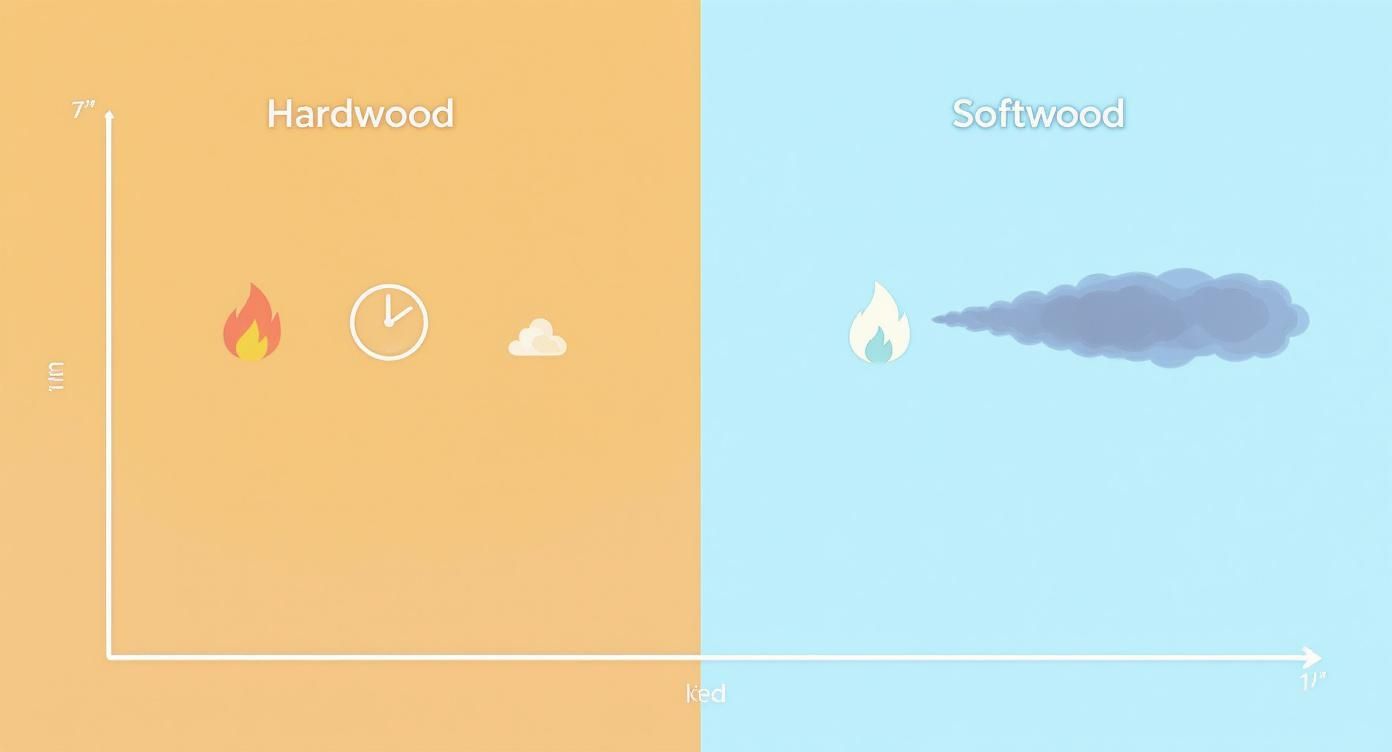
As you can see, hardwoods just perform better across the board. They give you more heat, last longer, and produce way less smoke than their softwood cousins.
Comparing the Best Hardwoods for Fire Pits
To make it even easier to choose, here’s a quick side-by-side comparison of our top picks. Each one has its strengths, whether you’re looking for maximum heat, a pleasant smell, or just a beautiful flame.
| Wood Type | Heat Output (BTU/Cord) | Burn Time | Smoke Level | Aroma |
|---|---|---|---|---|
| Oak | Very High (24-29 million) | Excellent | Very Low | Mild, classic campfire |
| Ash | High (23-24 million) | Good | Very Low | Subtle, neutral |
| Maple | High (20-24 million) | Good | Low | Pleasant, slightly sweet |
| Beech | Excellent (24-27 million) | Very Long | Low | Pleasant, nutty |
| Birch | Medium-High (20 million) | Fair | Low | Pleasant, slightly sweet |
This table highlights why these five are at the top of their class. While they all burn clean and hot, the subtle differences in burn time and aroma can help you tailor the fire to the specific vibe you’re going for.
Oak: The Undisputed King
If firewood had a king, its name would be Oak. This stuff is the gold standard for a reason—it’s incredibly dense and packed with energy, delivering a long, hot fire that needs very little attention once it’s roaring. It’s also one of the most widely available hardwoods out there.
An oak fire is all about endurance. It might take a bit more effort to get it lit compared to other woods, but your patience pays off with flames that last for hours. Even better, it leaves behind an amazing bed of glowing coals that will keep radiating heat long after the flames die down. Perfect for those chilly nights that stretch on.
- Heat Output: Very high. Oak packs a serious BTU punch.
- Burn Time: Excellent. It burns incredibly slow and steady.
- Smoke Level: Very low, giving you a clean burn with almost no annoying sparks.
- Aroma: Mild and classic—that traditional campfire scent that never gets old.
Pro Tip: Oak has a lot of water in it when it’s freshly cut, so it needs a long time to season—often a full year or more. Make sure your oak is properly dried to really unlock its potential.
Ash: The Easy-Lighting All-Rounder
Ash is a fantastic choice, especially if you hate struggling to get a fire started. It naturally has a lower moisture content, which means it seasons faster and lights up with less fuss. It’s often called the “lazy man’s firewood” because it can burn pretty well even when it’s not perfectly seasoned (though properly seasoned is always the goal).
Once it’s lit, ash gives you a bright, steady, and beautiful flame. It won’t produce the same long-lasting coal bed as oak, but its reliability and user-friendly nature make it a top contender. For great heat without the hassle, ash is hard to beat.
- Heat Output: High and incredibly steady.
- Burn Time: Good, offering a reliable burn that won’t quit on you.
- Smoke Level: Very low. It’s one of the cleanest-burning woods you can get.
- Aroma: A very subtle, neutral scent that won’t overpower the conversation.
Maple: The Balanced Performer
Maple is another crowd-pleaser that strikes a perfect balance between performance and ambiance. It’s not quite as dense as oak, but it still delivers impressive heat and a solid burn time. It’s a fantastic middle-ground option that does everything well.
What a lot of people love about maple is the pleasant, slightly sweet smell it gives off as it burns. It adds a wonderful sensory layer to your backyard gathering without being overwhelming. It’s just a great, reliable fuel that provides a beautiful fire with no real downsides.
There are two main types you’ll run into:
- Sugar Maple (Hard Maple): This is the denser variety, with a heat output that can compete with the top-tier woods.
- Red Maple (Soft Maple): While it’s still a hardwood, it’s less dense and will burn a bit faster, but it’s often easier to find and more affordable.
Beech: The Heat Powerhouse
If your main goal is to generate as much warmth as possible, beech is your wood. This is a true powerhouse, often mentioned in the same breath as oak for its density and heat output. It has a smooth, pale bark and a super tight grain, which translates to a long, hot, and slow burn.
Just like oak, beech creates an incredible bed of long-lasting coals, making it ideal for cooking over or just keeping the cold away all evening. It has a low moisture content and seasons pretty quickly for such a dense wood. The only potential downside? It can sometimes be harder to find, depending on where you live.
- Heat Output: Excellent, nearly on par with oak.
- Burn Time: Very long and consistent.
- Smoke Level: Low, with minimal sparking.
- Aroma: A pleasant, nutty aroma that many people really enjoy.
Birch: The Bright and Beautiful Burner
Birch is a real standout, known for its beautiful, bright flame and its famous papery bark—which happens to be an amazing natural firestarter. It’s not as dense as the other hardwoods on this list, so it burns hotter and faster. That makes it perfect for when you want a brilliant, lively fire right away.
One of the cool things about birch is that it can burn surprisingly well even when it isn’t fully seasoned, thanks to the oils in its bark. The trade-off is that it gets consumed much more quickly than woods like oak or ash. If your fire is more about visual appeal and immediate warmth than all-night endurance, birch is a superb choice.
- Heat Output: Medium-high, but it burns up fast.
- Burn Time: Fair. Be prepared to add logs to the fire more often.
- Smoke Level: Low.
- Aroma: A pleasant, slightly sweet fragrance.
Why Seasoning Your Firewood Is Not Optional
Picking out a great hardwood is only half the battle. If that wood isn’t properly dried—or “seasoned,” as we call it—it’s practically useless. Trying to burn freshly cut “green” wood is like trying to light a wet sponge. It’s a recipe for a frustrating, hissing fire that smothers you in thick, nasty smoke and always feels like it’s about to go out.
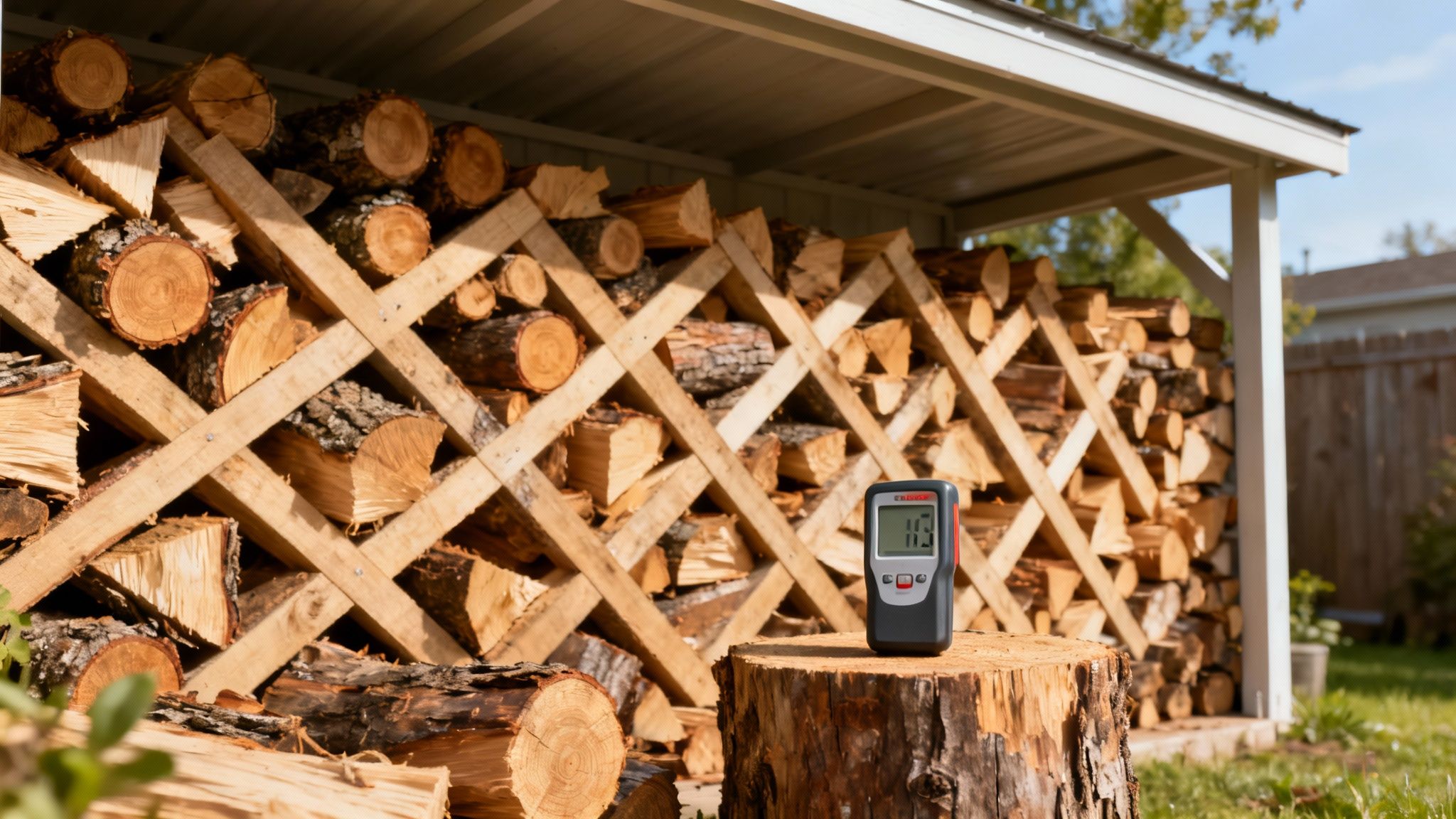
When you toss green wood into a fire, the flames have to waste a massive amount of energy just boiling off all the water trapped inside. That’s heat that should be warming you and your friends, but instead, it’s just making steam. The result is a weak, smoldering fire that produces way more smoke than flame.
This is why seasoning isn’t just a friendly suggestion; it’s the single most critical step in preparing the best wood for your fire pit.
The Science Behind Seasoned Wood
So what exactly is seasoning? It’s just the natural process of letting wood dry out over time, which drastically reduces its internal moisture. A log that was just cut down can be up to 50% water by weight. The whole point of seasoning is to get that moisture level down to 20% or less.
The difference this makes is huge. Properly seasoned hardwood will burn 30-40% more efficiently than its green counterpart, giving off far more heat and way fewer harmful emissions. If you want to dive deeper into how moisture impacts burn quality, you can discover additional insights on firewood efficiency at Pingewood.com.
Simply put, less water means a hotter, cleaner, and much more enjoyable fire.
How to Properly Season Your Firewood
Seasoning wood isn’t rocket science, but it does demand a bit of patience and the right setup. The name of the game is maximizing airflow and sun exposure to help all that trapped moisture escape.
Here’s a simple game plan to get it right:
- Split the Wood: Split logs dry out infinitely faster than whole ones. Splitting opens up more surface area to the air, letting moisture evaporate much more easily. Try to get your pieces down to about 6 inches in diameter.
- Stack It Off the Ground: Never, ever stack your firewood directly on the dirt. That’s just asking for moisture, rot, and pests to move in. Use a firewood rack, some old pallets, or even a couple of 2x4s to create a raised platform.
- Ensure Proper Airflow: Don’t just jam the wood into a tight pile. Stack it in loose rows, leaving plenty of space between the logs for air to move through. A crisscross pattern at the ends of your stack will add stability and boost airflow.
- Cover the Top Only: You’ll want to protect your pile from rain and snow, but only cover the very top. A tarp or a simple sloped cover works perfectly. Leave the sides completely open to the air—if you wrap the whole thing, you’ll just trap moisture and end up with moldy, rotten wood.
- Be Patient: How long does it take? That really depends on the type of wood and your local climate. Dense hardwoods like oak can easily take a full year, sometimes even two, to season properly. Lighter woods like birch or ash might be ready to burn in as little as six months.
The most common mistake people make is getting impatient. Rushing the seasoning process will always leave you with a smoky, underwhelming fire. Giving your wood the time it needs is the real secret to a perfect burn.
Simple Tests for Ready-to-Burn Wood
So, how can you tell when your wood is finally ready for the fire pit? Thankfully, you don’t need any fancy equipment to get a good idea.
Just look for these dead giveaways:
- Appearance: Seasoned wood tends to look faded, grayish, and a bit dull. You’ll almost always see cracks, or “checks,” spreading out from the center on the ends of the logs.
- Weight: It will feel noticeably lighter than a piece of green wood of the same size. All that water weight is gone.
- Sound: This is my favorite and most reliable test. Grab two pieces and knock them together. If you hear a sharp, hollow “clink” or “clack,” the wood is dry and ready. If you hear a dull, heavy “thud,” it’s still holding too much water.
If you want to be absolutely certain, a wood moisture meter is a fantastic and affordable tool. Just press the prongs into a split face of the log for an instant, accurate reading. If it shows a moisture content below 20%, your firewood is good to go.
Firewood You Should Never Burn in Your Fire Pit
Knowing the right wood to burn is half the battle. Knowing what not to burn? That’s essential for your safety. Tossing the wrong stuff into your fire pit can do a lot more than kick up some extra smoke—it can pump toxic chemicals into the air, shoot off dangerous sparks, and even wreck your fire pit over time.
Think of your fire pit as a specialized tool for creating warmth and good vibes, not as a backyard incinerator. To keep your get-togethers safe and fun, make sure you steer clear of the materials below.
Avoid Most Softwoods for Sustained Burning
Sure, a few pieces of dry pine or fir are fantastic for getting a fire going. They catch fast and burn hot, making them perfect kindling. But that’s where their usefulness ends. Using softwoods as your main fuel source is a recipe for trouble.
Softwoods are absolutely loaded with resin, a sticky, flammable sap that causes a couple of major headaches when you burn too much of it at once:
- Excessive Sparks and Popping: As that resin heats up, it boils and literally explodes, launching a shower of hot embers out of your pit. On a dry or windy night, that’s a serious fire hazard waiting to happen.
- Thick, Acrid Smoke: The resin is also what creates that thick, nasty smoke that stings your eyes and lungs. It’s a guaranteed way to have your guests constantly playing musical chairs to find a spot upwind.
My advice? Use softwoods to get the fire started, then switch over to quality hardwoods once you have a good bed of coals.
Never Burn Treated or Manufactured Wood
This is the single most important rule of fire pit safety, so please pay attention here. Any wood that has been painted, stained, pressure-treated, or glued together is strictly off-limits. It might be tempting to toss in old scrap wood from a project, but the risk is immense.
Burning treated, painted, or manufactured wood releases a nasty cocktail of toxic chemicals—we’re talking arsenic, formaldehyde, and cyanide—directly into the air you and your family are breathing. It is simply not worth it.
Keep these items far, far away from your fire:
- Pressure-Treated Wood: This is the wood often used for decks and outdoor construction. You can sometimes spot it by its greenish tint. It’s injected with chemicals to prevent rot, and those chemicals become highly toxic when burned.
- Painted or Stained Wood: It doesn’t matter how old it is. The chemicals in paints, varnishes, and stains create hazardous fumes when they go up in smoke.
- Plywood, Particle Board, or MDF: All of these are engineered products held together with powerful glues and resins. Burning them releases formaldehyde and other dangerous compounds.
- Pallet Wood: This one is tricky. While some pallets are perfectly safe, many are treated with nasty chemicals like methyl bromide to stop pests during shipping. Unless you can find a stamp that clearly says “HT” (for heat-treated), you have to assume it’s unsafe to burn.
Other Materials to Keep Out of the Fire
Beyond the bad wood, a few other things should never find their way into your fire pit.
Driftwood you find on the beach might seem like a rustic, natural choice, but it’s been soaking in salt water. When that salt burns, it releases chlorine, which can form harmful dioxins. Not only is that toxic to breathe, but it’s also incredibly corrosive and can eat away at your fire pit.
And it should go without saying, but rotten or moldy wood is a poor choice, too. It’s full of moisture, so it won’t burn well, and it will just smolder and produce clouds of smoke with very little heat.
By being a little picky about what you burn, you can make sure every fire pit night is a safe, warm, and memorable one.
Matching Your Wood to the Occasion
Choosing the right wood for your fire pit isn’t as simple as grabbing the biggest log you can find. It’s more like a chef picking ingredients for a specific dish. The perfect wood for a quiet, cozy night is worlds apart from what you’d use for a lively cookout or a big backyard party.
The key is to think about what you want from your fire before you even strike a match. Once you know your goal for the evening, you can move from just building a fire to crafting the perfect outdoor experience, making sure every moment is just right.
For Maximum Warmth on a Chilly Evening
When the temperature really starts to drop, your fire pit needs to transform into an outdoor furnace. This is where the heavyweights of the hardwood world come into play. You’re looking for dense woods with the highest BTU output that can build a deep, glowing bed of coals and radiate serious heat for hours.
For this job, your top picks are:
- Oak: The undisputed king of long, hot fires. Oak burns incredibly slowly and throws off a ton of heat, making it the perfect choice for those nights when you want to linger outside as late as possible.
- Beech: A very close second to oak in both heat and burn time. Beech is fantastic for creating a solid coal bed that will keep you toasty long after the flames have died down.
These dense woods are your best bet when warmth is the number one priority. For even more ways to keep your patio comfortable, check out our guide on choosing an outdoor patio heater to work alongside your fire pit.
For Cooking and Grilling
There’s something timeless about cooking over an open flame, but it demands a specific kind of wood. You need a clean-burning fire that produces excellent, long-lasting coals and imparts a subtle, pleasant flavor to your food without making it taste like an ashtray.
The best choices for a campfire feast are always fruit and nut woods:
- Hickory: A classic for a reason. Hickory gives off a strong, savory smoke that pairs beautifully with just about any meat you can think of.
- Apple: This wood offers a much milder, sweeter smoke that’s absolutely fantastic for chicken, pork, and even fish. It burns hot and leaves a great coal base for cooking on.
In colder countries like the United States and Canada, standard hardwoods make up over 70% of the firewood market. But specialty cooking woods are a growing niche. Woods like apple and hickory are seeing market growth of about 5% per year as more people discover the joy of aromatic fire pit cooking. To learn more about these trends, you can read more about firewood types and their uses.
For a Relaxed Social Gathering
Sometimes, the fire is more about ambiance and conversation than anything else. On these nights, your priorities change. You want a fire that’s beautiful, easy to manage, and—most importantly—doesn’t produce a lot of smoke. Nothing kills a good chat faster than playing musical chairs to dodge a billowing cloud of smoke.
For these situations, go for woods known for their clean burn and lovely flames:
- Ash: This wood is famous for being low-smoke and easy to light. It provides a steady, bright flame that encourages conversation, not coughing fits.
- Birch: Known for its gorgeous, bright fire, birch creates a wonderful atmosphere right away. It burns a bit faster than others, but its low-smoke qualities make it a top-tier choice for social events.
Common Questions About Fire Pit Wood
Jumping into the world of firewood can definitely spark a few questions. To wrap things up, I’ve put together answers to the most common queries I hear. This way, you’ll have everything you need to build that perfect fire, every single time. Let’s clear up any last bits of confusion.
How Can I Tell if Firewood Is Properly Seasoned?
You can actually tell if wood is ready to burn just by using your senses. Properly seasoned wood feels surprisingly light for its size and usually looks a bit faded or grayish. Look for cracks spreading from the center on the ends of the logs—woodworkers call this “checking,” and it’s a great sign.
When you knock two pieces together, you want to hear a sharp, hollow clink sound, not a dull thud. If you want to be absolutely sure, a wood moisture meter is the way to go. You’re looking for a reading below 20%.
Is It Safe to Burn Wood from a Dead Tree in My Yard?
Generally, yes, as long as it’s a good hardwood and it’s completely dry. The key is making sure the wood hasn’t started to rot. Decayed, punky wood won’t give you much heat; it will just smolder and produce a ton of smoke.
You’ll also want to be certain it hasn’t been sprayed with any pesticides. To be on the safe side, it’s always best to let wood from a freshly dead tree season for at least six to twelve months after you cut it up.
How Much Firewood Do I Need for One Evening?
For a typical fire pit gathering that lasts about 3-4 hours, a good rule of thumb is to have between six and ten average-sized logs of seasoned hardwood ready to go. Of course, the exact amount will shift depending on your fire pit’s size and how big of a blaze you’re aiming for.
Keep in mind that denser woods like oak burn slower, so you’ll need fewer logs compared to something lighter like birch. I always recommend having a little extra stacked nearby—it’s better to have it and not need it! Speaking of keeping things in top shape, once the evening’s over, cleaning your pit is key. If yours has metal parts, our guide on how to clean stainless steel has some great tips.
