



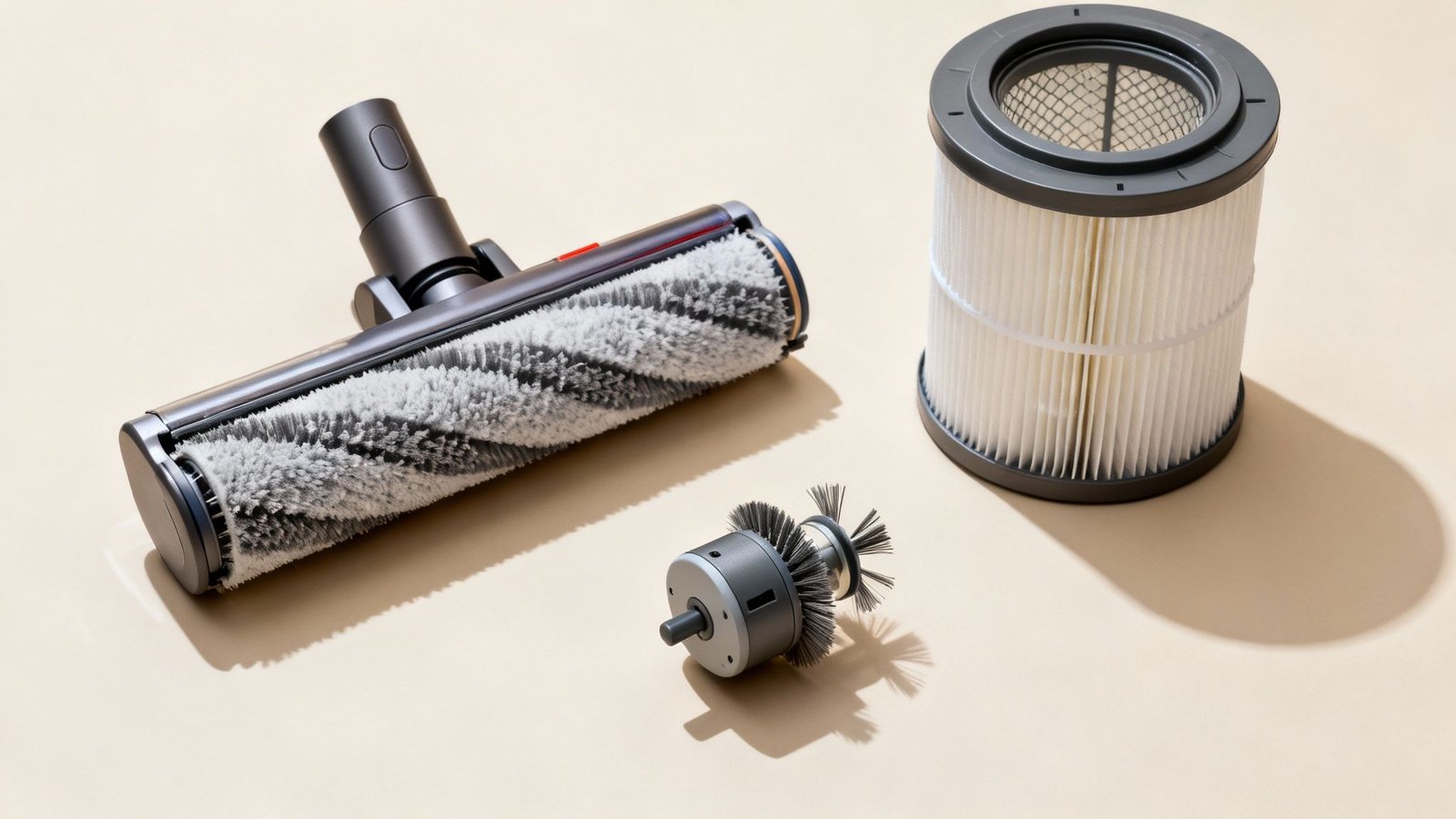
If you’re deep in the trenches of the pet hair war, you’ve probably heard the big names tossed around. For sheer, brute-force carpet cleaning, the Dyson Ball Animal 3 Extra is often the go-to recommendation. On the other hand, the Shark Navigator Lift-Away Pet Pro consistently comes up for its incredible versatility and bang for your buck. And for those of us who just need to tackle daily dust bunnies without wrestling a cord, the Levoit LVAC-300 is a feather-light champ for quick pickups on any surface.
Your Definitive Guide to a Fur-Free Home
Welcome. If you’re here, it’s likely because you’re tired of finding pet hair in your food, on your clothes, and woven into the very fabric of your couch. This guide is for you. We’re cutting through the marketing noise to give you practical, real-world advice on choosing a vacuum that can actually keep up with your furry family members.
Navigating the sea of vacuums can feel overwhelming, but it gets a lot simpler once you know what actually matters. We’ll break down the core criteria for a truly effective pet hair vacuum, moving beyond just suction power to look at the features that separate the good from the great—like filtration, brush design, and maneuverability.
A truly great pet vacuum needs to check a few key boxes:
- Powerful, Sealed Suction: This is non-negotiable for pulling embedded fur out of carpet fibers and upholstery.
- Anti-Tangle Brush Roll: A lifesaver. This feature prevents hair from wrapping around the roller, which can kill performance in a hurry.
- HEPA Filtration: Absolutely essential for trapping microscopic pet dander and keeping your home’s air quality in check.
- Specialized Pet Tools: Attachments like a motorized mini-brush can make or break your ability to clean furniture, pet beds, and stairs.
Understanding the Growing Market
If it feels like there are more “pet-specific” cleaning tools than ever, you’re not wrong. As more people bring pets into their homes, the demand for better cleaning solutions has exploded. The pet hair vacuum cleaner market was valued at around USD 2.5 billion in 2022 and is expected to hit nearly USD 4.1 billion by 2030. That’s a massive jump.
You can get a deeper look at the pet vacuum market analysis and its future outlook here. All this growth means more competition and innovation, which is great news for us—it gives us better, more effective options than ever before.
A great pet vacuum isn’t just about cleaning what you see. It’s about capturing the invisible dander and allergens that affect your home’s air quality. Prioritizing a sealed system with HEPA filtration is one of the best investments you can make for a healthier living space.
To make your search a little easier, we’ve organized our top picks into a quick-glance table to help you find the perfect fit.
Our Top Pet Hair Vacuum Picks at a Glance
Here’s a quick rundown of our favorite vacuums, categorized by what they do best. Think of this as your cheat sheet to finding the right tool for your specific fur situation.
| Category | Recommended Model | Best For | Key Feature |
|---|---|---|---|
| Overall Performance | Dyson Ball Animal 3 Extra | Homes with deep-pile carpets and heavy shedders. | De-tangling Motorbar™ cleaner head for deep cleaning. |
| Best Value | Shark Navigator Lift-Away | Versatile cleaning needs, from floors to ceilings. | Lift-Away technology for portable cleaning power. |
| Cordless Convenience | Levoit LVAC-300 | Quick daily cleanups and homes with hard floors. | Lightweight design with 5-stage HEPA filtration. |
| Robotic Automation | iRobot Roomba j7+ | Hands-free daily maintenance and allergen control. | Self-emptying base and P.O.O.P. guarantee. |
Each of these models shines in its own way, whether you need raw power for wall-to-wall carpet or a nimble, automated helper to keep things tidy day-to-day.
Comparing Vacuum Types for Pet Owners
Picking the right tool is the first step in winning the war against pet hair. The kind of vacuum you choose—upright, stick, canister, or robot—is the single most important decision you’ll make. This isn’t just about bells and whistles; it’s about matching the machine to your home, your floors, and the sheer volume of fur your four-legged family members leave behind.
We’re going to skip the generic pros and cons lists and get straight into real-world situations. A beast of an upright vacuum might be a lifesaver in a house with three dogs and plush carpets, but a nimble stick vacuum is a much better fit for quick cleanups on hardwood before guests pop over. Getting these practical trade-offs right is the key to finding a vacuum that actually works for you.
To make things a little easier, this decision tree can help you see which vacuum type lines up with your biggest cleaning headaches, whether that’s fur buried in carpets or tumbleweeds of hair on hard floors.
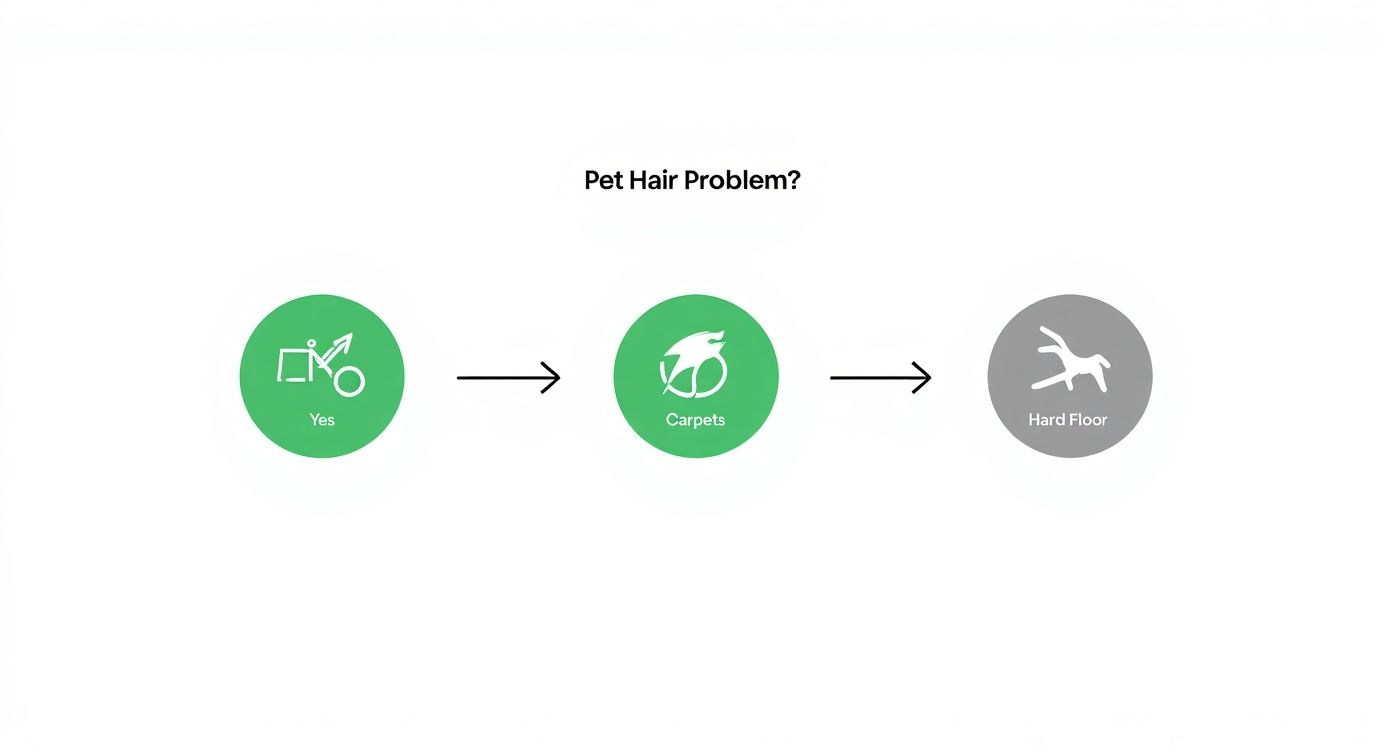
As the infographic lays out, the right choice really starts with your flooring. Carpeted homes with deeply embedded pet hair practically demand the aggressive agitation of an upright. On the other hand, hard floors often benefit more from the grab-and-go convenience of a stick or the pure, raw suction power of a canister.
Upright Vacuums: The Carpet Champions
Upright vacuums are the traditional heavy-hitters of the cleaning world, and they’ve earned that reputation for their incredible deep-cleaning power on carpet. The design puts the motor, suction head, and dustbin into one solid unit, which allows for seriously powerful, motorized brush rolls that dig into carpet fibers to yank out stubborn pet hair, dander, and dirt.
This makes them the undisputed champions for homes with medium- to high-pile carpeting where fur gets woven right into the fabric. If you have a couple of heavy shedders, the deep-cleaning muscle of an upright is pretty much non-negotiable for those big weekly cleans. Models like the one in our Dyson Ball Animal 2 review are a perfect example of how intense suction and smart brush design can bring even the fuzziest carpets back to life. The trade-off? They’re heavy and can be a pain to lug up and down stairs or use for quick spot-cleaning.
Stick Vacuums: The Quick Cleanup Specialists
There’s a reason stick vacuums have blown up in popularity—their lightweight, cordless design is just ridiculously convenient. They are the perfect tool for daily maintenance, letting you zap fur tumbleweeds, spilled kibble, and tracked-in dirt before it gets ground into your floors for good.
Their agility makes them ideal for homes with mostly hard flooring or low-pile rugs, and they’re fantastic for getting into tricky spots like under the couch or along baseboards. While they won’t give you the same carpet-reviving deep clean as a big upright, their sheer ease of use means you’ll probably vacuum more often, which stops hair from building up in the first place. This makes them a killer secondary vacuum or the perfect primary cleaner for smaller homes and apartments.
Canister Vacuums: The Versatile Powerhouses
Canister vacuums take a different approach by separating the motor and dustbin into a canister on wheels that you pull behind you, connected by a long hose to a cleaning wand. This design creates a unique combination of serious power and amazing versatility. Since the cleaning head is light and detached from the heavy motor, it’s incredibly easy to maneuver, making it perfect for cleaning stairs, upholstery, curtains, and even the car.
The biggest selling point for a canister vacuum is its ability to pair massive suction power with highly specialized attachments. For pet owners, this means you can snap on a motorized pet tool to de-fur the couch just as effectively as you clean a Berber carpet, giving you a level of flexibility that other vacuums just can’t touch.
The main downside is the canister itself, which can be a bit awkward to drag around corners and furniture. But for anyone who needs beastly suction for both floors and detailed above-floor cleaning, a canister is a fantastic all-in-one solution.
Robot Vacuums: The Automated Assistants
Robot vacuums have officially moved beyond being a novelty item; they are a genuinely useful tool for managing daily pet hair. Their superpower is automation. You can set a schedule and let them run every single day, preventing fur from ever reaching critical mass. This constant, low-effort maintenance dramatically reduces allergens and keeps your floors looking clean without you having to lift a finger.
Sure, they can’t replace the deep-cleaning power of a manual vacuum, especially on thick carpets, but they are brilliant at maintaining a baseline level of clean. For busy pet owners, having a robot handle the daily fur patrol can feel like a total game-changer, turning that dreaded weekly deep clean into a much faster, less daunting chore. They work especially well in homes with hard floors or low-pile rugs where pet hair tends to collect in corners and under furniture.
Key Features for Powerful Pet Hair Removal
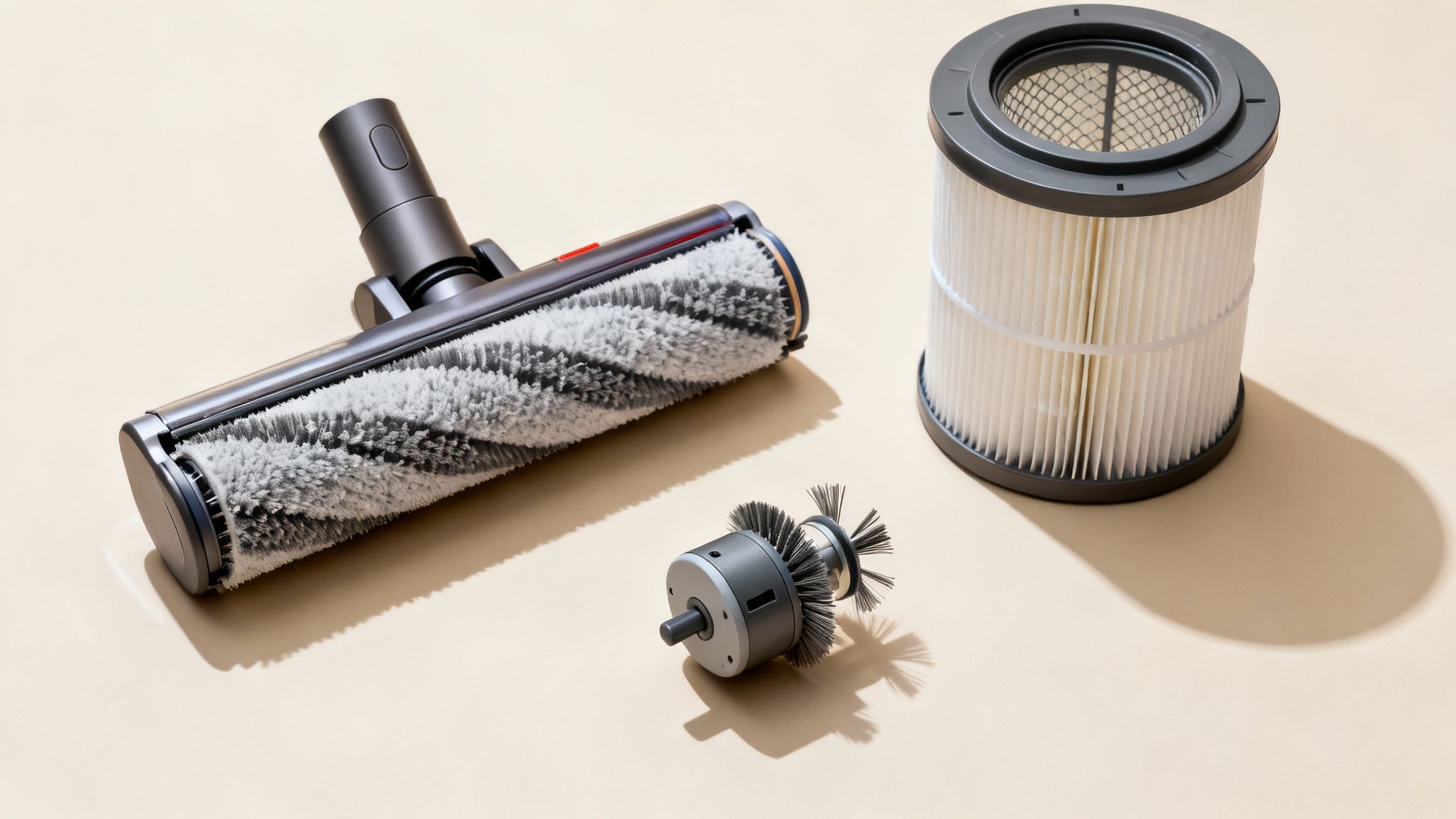
When you’re hunting for the best vacuum for pet hair, it’s easy to get lost in a sea of marketing jargon and flashy specs. But after years of testing these machines, I can tell you that only a handful of core features truly separate a mediocre cleaner from a fur-fighting powerhouse. Nailing these non-negotiables is the key to buying a vacuum you won’t regret.
It all boils down to what’s happening at the floor level. The real war against pet hair is won by three critical components working in harmony: the brush roll that digs up and lifts the hair, the suction that whisks it away, and the filtration system that makes sure it stays gone for good.
Advanced Anti-Tangle Brush Roll Technology
If you’ve ever spent a frustrating Saturday afternoon on the floor with a pair of scissors, cutting a tangled mess of hair from a vacuum roller, you already know this feature is a total game-changer. Standard brush rolls, with their simple rows of bristles, are magnets for long pet and human hair. They inevitably get wrapped up, choking performance and killing your suction.
Modern anti-tangle technology—often marketed as “self-cleaning” brush rolls—solves this with clever engineering. These systems use specialized bristle patterns, rubber fins, or even tiny integrated combs to actively slice through hair and shuttle it straight into the dustbin before it has a chance to wrap.
This isn’t just about convenience; it’s about maintaining peak performance. A tangled brush can’t agitate carpet fibers properly, leaving embedded fur deep in the pile. For anyone with long-haired pets (or long-haired humans), this technology is arguably the single most important feature to look for.
The Science of Powerful Sealed Suction
Raw suction power, often measured in Air Watts (AW), is important, but it’s only half the story. The real measure of a vacuum’s muscle is its ability to maintain that power from the cleaning head all the way to the bin without any leaks. This is where a sealed system becomes absolutely critical.
A sealed system guarantees that every bit of air pulled into the vacuum passes through its filters before being blown back out. Vacuums without this feature often leak dusty, allergen-filled air from tiny cracks and seams in their casing, effectively spewing the very dander you’re trying to eliminate back into your home.
Think of it like trying to drink through a straw with a hole in it. No matter how hard you suck, you lose pressure. A sealed vacuum is like a perfect, airtight straw, ensuring every ounce of power is focused where you need it—pulling stubborn fur from deep within your carpet and upholstery.
The combination of a powerful motor and a completely sealed air path creates the consistent, high-velocity airflow needed to lift and capture fine pet dander, which is often much smaller and lighter than visible hair.
This sealed design is what makes the next feature so incredibly effective.
HEPA Filtration for Cleaner Air
For pet owners, vacuuming isn’t just about clean floors; it’s about improving the air you breathe. This is where a High-Efficiency Particulate Air (HEPA) filter becomes non-negotiable, especially for households with allergy sufferers.
A true HEPA filter is certified to capture 99.97% of airborne particles as small as 0.3 microns. To put that into perspective, pet dander—those microscopic skin flakes that trigger allergic reactions—typically ranges from 5 to 10 microns. A HEPA filter traps these irritants with ease, along with dust mites and pollen.
When you pair a HEPA filter with a sealed system, you get a machine that ensures the air leaving your vacuum is actually cleaner than the air that went in. Here’s a quick rundown of what you’ll see:
- Standard Filters: These catch the big stuff like dirt and hair but can let smaller particles like dander pass right through.
- “HEPA-like” Filters: This is an unregulated marketing term. They might be better than standard filters, but they don’t meet the strict HEPA standard. Don’t fall for it.
- True HEPA Filters: This is the gold standard for allergy sufferers and pet owners. They capture nearly all microscopic allergens, period.
Choosing a vacuum with a certified HEPA filter is a direct investment in your family’s health.
Specialized Pet Tools and Attachments
Finally, the best pet vacuums extend their cleaning power way beyond the floor. Pet fur has a knack for ending up everywhere: sofas, stairs, pet beds, and even your car’s interior. The right attachments are essential for tackling these spots effectively.
Look for vacuums that come with tools specifically designed for pet hair, not just generic crevice and dusting brushes. The most valuable of these is the motorized mini-brush or “pet power brush.” Think of it as a tiny, handheld version of the main cleaning head, with its own spinning brush roll that’s perfect for digging stubborn fur out of fabric surfaces.
Other incredibly useful attachments include:
- Upholstery Tool: Often has a soft, fabric strip that helps grab hair from delicate surfaces without causing damage.
- Crevice Tool: A must-have for cleaning along baseboards and deep between couch cushions where fur loves to hide.
- Flexible Hose: Gives you the reach needed to clean stairs, curtains, and other high places without throwing your back out.
The right set of specialized tools transforms your vacuum from a simple floor cleaner into a complete, whole-home pet hair removal system. It becomes an indispensable part of your cleaning arsenal.
Cordless Freedom vs. Corded Power: The Big Pet Hair Debate
Choosing between a nimble cordless vacuum and a brawny corded model is one of the biggest forks in the road for any pet owner. This isn’t just about convenience versus power; it’s about matching the tool to your home, your pet’s shedding season, and how you actually like to clean. Each one brings something different to the fight against fur, and knowing the trade-offs is the first step to victory.
Cordless vacuums have become the go-to for daily skirmishes with pet hair. They offer an unmatched grab-and-go simplicity that’s hard to beat. When you spot a fresh clump of fur under the coffee table or a trail of kibble from the kitchen, you can zap it in seconds. There’s no ceremony of unwinding a cord and hunting for an outlet.
This agility is their superpower. It makes them perfect for high-traffic zones, quick sweeps before guests arrive, and chasing down those tumbleweeds of fur that materialize out of thin air. Their lightweight design is also a lifesaver for awkward jobs like cleaning stairs, sucking fur off the dog’s bed, or de-shedding the car’s interior. For apartments or homes with mostly hard floors, a great cordless might be the only vacuum you need.
The Allure of Cordless Convenience
The main draw here is how immediate they feel. Cordless vacuums completely remove that mental barrier to cleaning, turning a dreaded chore into a quick, surprisingly satisfying task.
But that freedom has its limits. The two big compromises are runtime and sustained suction. Even the best cordless models have a finite battery life, often tapping out after just 15-20 minutes on their highest power setting—which is exactly the setting you need for stubborn pet hair on carpets. It’s a real pain to have your vacuum die mid-clean, forcing you to stop and recharge.
The real secret to using a cordless vacuum effectively with pets is to see it as a “first responder.” It’s brilliant for immediate, targeted cleanups, stopping daily shedding from getting ground into your floors. Think of it as your daily fur patrol, not your deep-cleaning commando.
The demand for this kind of convenience is changing the game. Cordless vacuums are one of the fastest-growing categories, especially with the rise in pet ownership. While corded models traditionally held the crown for raw power, battery technology is closing the gap fast. As noted by industry analysts, the home segment is what drives pet hair vacuum sales, thanks to more people having pets and a bigger focus on keeping homes clean and hygienic. You can dig into more of the pet hair vacuum market trends at Archive Market Research.
The Unwavering Strength of Corded Power
On the other side, you have the corded vacuums—the undisputed champs of raw, unrelenting power. When you plug one into the wall, you get consistent, deep-cleaning suction that never fades, period. This makes them the obvious choice for homes with thick, plush carpeting where pet hair gets tangled and woven deep into the fibers.
A corded vacuum’s motor drives a seriously aggressive brush roll that digs into the carpet pile, pulling up stuck-on fur, dander, and dirt that a lighter cordless might just skim over. If you have multiple heavy-shedding pets, this deep-cleaning muscle isn’t a luxury; it’s a flat-out necessity for a truly clean house.
The trade-off, of course, is the cord. Wrestling with it as it snags on furniture corners can be a pain, and their heavier build makes them a poor choice for a quick spot clean. They really shine during those methodical, weekly deep-cleaning sessions where you’re tackling the whole house at once.
Making the Right Call for Your Home
So, which is the best vacuum for pet hair? The honest answer is: it depends entirely on your situation. There’s no single right choice.
- Go Cordless if: You live in a smaller space, have mostly hard floors or low-pile rugs, and prefer to clean in short, frequent bursts. A cordless is also the perfect sidekick to a larger corded vacuum, handling all the daily messes that pop up between deep cleans.
- Go Corded if: You have a larger home with lots of carpeting, own multiple pets or a breed that sheds like crazy, and need maximum power for a weekly deep clean. Its non-stop performance is key to keeping carpets fresh and allergens under control.
In the end, many pet owners land on a two-vacuum strategy as the ultimate solution: a powerful corded upright for the heavy lifting and a lightweight cordless stick for everything else. It’s the best of both worlds.
Finding the Right Vacuum for Your Budget
Let’s be honest, buying a quality pet hair vacuum can feel like a major investment. But it doesn’t have to mean emptying your savings account. The trick is to figure out where the sweet spot is for your home and your wallet—finding that perfect balance between price and performance.
It’s a decision more and more of us are making. The global pet industry hit a staggering $261 billion in 2022, which tells you everything you need to know about how much we value keeping our homes clean for our furry family members. If you’re curious, you can dig into more data on the booming pet fur remover market here.
So, where does your money actually go? Let’s break down the budget tiers.
Entry-Level Vacuums Under $200
In this price range, you’re hunting for a workhorse, not a show pony. Forget the fancy bells and whistles; the goal here is solid, core performance. You can absolutely find great vacuums that deliver the suction needed for pet hair, but you’ll likely be trading off things like advanced filtration, slick anti-tangle tech, or premium materials.
These models are perfect for smaller homes, apartments dominated by hard floors, or even as a second “quick cleanup” vacuum. Look for trusted brands known for their motors, even if the included attachments are a bit basic. You might not get a sealed HEPA system, but many offer decent washable filters and enough oomph for low-pile carpets and rugs.
Mid-Range Vacuums: $200 to $500
For most pet owners, this is the sweet spot. This is where you get the best bang for your buck, balancing power, useful features, and a reasonable price tag. Moving into this range unlocks some serious upgrades that make a genuine difference in the daily war against fur.
Vacuums in the mid-range tier often introduce game-changing features like sealed HEPA filtration systems and effective anti-tangle brush roll technology. This makes them a fantastic investment for allergy sufferers and owners of long-haired pets who need more than just basic suction.
Expect stronger motors, better battery life on cordless models, and a much better set of specialized pet tools. Machines in this category are usually built to handle both carpets and hard floors without breaking a sweat and are durable enough to be the main vacuum for most households.
Premium Vacuums: $500 and Up
When you step into the premium tier, you’re paying for top-tier engineering, long-term durability, and the very latest in cleaning tech. These vacuums are built for people who need uncompromising performance—think large homes, multiple pets, or floors that are notoriously tricky to clean.
Here’s what really sets them apart:
- Exceptional Suction: We’re talking about the highest levels of raw, sustained power that doesn’t fade over time.
- Advanced Engineering: This is where you find features like intelligent power adjustment based on floor type, laser dirt detection, and the most sophisticated anti-tangle systems on the market.
- Superior Filtration: Multi-stage, fully sealed HEPA filtration is the standard here, trapping the maximum amount of dander, dust, and allergens.
- Build Quality: These machines are made with higher-grade plastics and metals. They’re designed to last for years, not just a couple of cleaning seasons.
Yes, the upfront cost is steep. But for homes with serious pet messes, the reliability and deep-cleaning power of a premium model often make it a smart investment in the long run.
Deciding which features matter most at each price point can be tough. This table breaks down what you can generally expect as you move up in budget.
Pet Hair Vacuum Features by Budget Tier
| Budget Tier | Price Range | Expected Suction Power | Typical Filtration | Common Attachments |
|---|---|---|---|---|
| Entry-Level | Under $200 | Good to Strong | Basic; often washable filters | Crevice tool, basic upholstery brush |
| Mid-Range | $200 – $500 | Very Strong to Excellent | Often sealed systems; HEPA common | Specialized pet hair tools, motorized brushes |
| Premium | $500+ | Exceptional; Sustained | Fully sealed, multi-stage HEPA | Advanced pet tools, self-cleaning brushes |
Ultimately, the best vacuum isn’t just about the price tag—it’s about matching the machine’s capabilities to your home’s specific challenges. A premium vacuum is overkill for a small apartment, just as a budget model will struggle in a large, multi-pet house with deep-pile carpets.
Maintaining Your Pet Vacuum for Peak Performance
Your investment in a great pet hair vacuum only pays off if the machine actually works. The secret to keeping it running like new isn’t complicated—it’s just a little bit of consistent, simple maintenance. Do it right, and that vacuum will be pulling stubborn fur from your carpets and furniture for years.
If you ignore the basics, a powerful vacuum can quickly turn into a frustratingly weak one. Clogged filters, tangled brush rolls, and blocked hoses are the usual suspects when suction disappears, leaving behind the exact hair and dander you bought the thing to eliminate. A few minutes of care every few uses makes all the difference.
Keeping the Brush Roll Tangle-Free
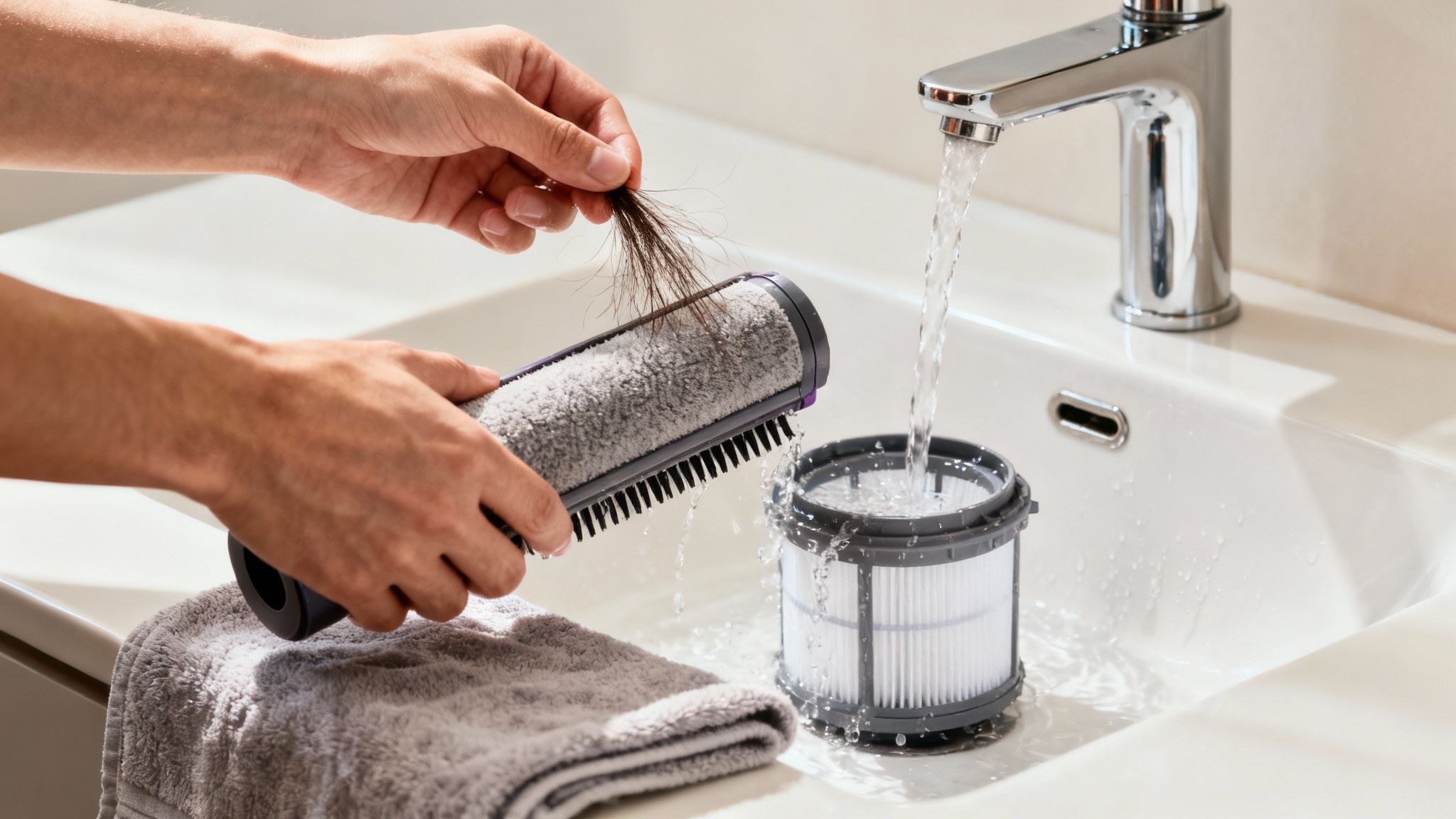
The brush roll is where the rubber meets the road—or in this case, where the bristles meet the fur. It’s your vacuum’s first line of defense, and if it’s wrapped in hair, it can’t properly agitate carpet fibers. This doesn’t just reduce cleaning power; it can actually strain the motor. Keeping it clean is a simple but critical task.
Here’s a quick guide to keeping it spinning freely:
- Unplug and Remove: Always, always disconnect the vacuum from power before doing any maintenance. Flip the cleaner head over and pop out the brush roll. This usually just involves undoing a couple of clips or screws.
- Cut Away Hair: Grab a pair of scissors or a seam ripper and carefully snip through any tightly wound hair and string. Just be careful not to cut the bristles themselves.
- Wipe and Reassemble: Use a dry cloth to wipe down the roller and the housing to get rid of any lingering dust. Once it’s clean, pop it back in, secure it, and you’re good to go.
A clean brush roll isn’t just about picking up hair; it’s about protecting your vacuum’s motor. When a roller struggles to spin because it’s tangled, it can overheat and wear out prematurely. That turns a minor annoyance into a costly repair.
Why Filter Care is Non-Negotiable
If the brush roll is your vacuum’s muscle, the filters are its lungs. A dirty, clogged filter basically suffocates your machine, causing a massive drop in suction—often by more than 50%. Even worse, it can start blowing fine dust and pet dander right back into your home’s air.
Most modern pet vacuums come with washable filters, which makes upkeep easy and cheap. Just rinse the filter under cool water until it runs clear, squeeze out the extra moisture, and let it air dry completely for at least 24 hours before putting it back in. A damp filter is a recipe for mildew and can seriously damage the motor.
For vacuums with HEPA or other non-washable filters, just follow the manufacturer’s replacement schedule, which is typically every six months to a year. Taking care of your filters restores suction and helps keep your home’s air clean. This kind of proactive maintenance is key, much like it is for other smart household items. You can learn more about how technology simplifies pet ownership by exploring how PETKIT merges innovation with pet care.
Clearing Clogs for Maximum Airflow
Finally, don’t forget the airways. If your vacuum still feels weak after you’ve cleaned the brush and filter, a clog in the hose or intake port is the likely culprit. Disconnect the hose and take a look inside for any blockages. A broom handle is often the perfect tool to gently push out stubborn clumps of fur or debris. Checking these pathways ensures airflow stays wide open, letting your vacuum deliver the power you need to keep your home fur-free.
Common Questions About Pet Hair Vacuums
Picking out the perfect vacuum for pet hair usually brings up a few last-minute questions. It’s one thing to choose a machine, but it’s another to know how to use it right. Let’s tackle some of the most common things pet owners ask, so you can keep your home fresh and fur-free.
Getting a handle on these details helps you set real-world expectations for your cleaning routine. The goal isn’t just to get rid of the hair you can see, but to actually manage the dander and allergens that come along for the ride.
How Often Should I Vacuum With Pets?
Honestly, there’s no magic number here. How often you need to vacuum really comes down to your specific situation—your pet’s shedding habits, how many furry friends you have, and whether anyone in your house deals with allergies.
If you live with a heavy shedder (looking at you, Golden Retrievers and German Shepherds) or have family members with allergies, you’ll probably want to vacuum high-traffic areas daily. For most other pet parents, a deep clean 2-3 times per week is enough to keep the fur and dander under control. A robot vacuum handling daily touch-ups can be a game-changer, seriously cutting down on how often you need to pull out the big machine.
Bagged vs. Bagless Vacuums For Pet Hair
This is the classic debate, and both sides have good points, especially for pet owners. The decision really boils down to what you value more: convenience and long-term cost, or a cleaner, more hygienic disposal process.
- Bagless vacuums save you money in the long run since there are no replacement bags to buy. The downside? Emptying the canister can be a messy affair, sometimes kicking up a cloud of dust and allergens you just worked so hard to capture.
- Bagged vacuums are hands-down the more hygienic option. All the fur, dander, and dirt get sealed away in a bag, making disposal a clean, simple toss in the trash. This makes them a much better choice for anyone with asthma or allergies.
It’s a trade-off: bagless models are easier on the wallet over time, but bagged models give you a cleaner, more allergy-friendly experience when it’s time to empty the vacuum.
What Does a HEPA Filter Actually Do?
A High-Efficiency Particulate Air (HEPA) filter isn’t just marketing fluff—it’s a must-have feature for homes with pets. Its main job is to trap tiny particles from the air that your vacuum sucks up, so they don’t get blown right back into your room.
A true HEPA filter is designed to capture 99.97% of airborne particles as small as 0.3 microns. We’re talking about the microscopic stuff that really triggers allergies: pet dander, pollen, dust mites, and mold spores that standard filters just can’t catch. When you have a HEPA filter in a completely sealed vacuum system, you’re not just cleaning your floors—you’re actively scrubbing allergens from the air you breathe. For more tips on keeping your home clean with pets, check out our other guides on comprehensive pet care.
At Reva Housing, we provide in-depth, real-world reviews to help you make confident choices for your home. Discover more guides and comparisons at https://revahousing.com.
